

Which Tableware Materials Are Dishwasher Safe?
Commercial dishwashers expose tableware to aggressive alkalis and 85°C sanitizing cycles. If your plates degrade or leach after 50 washes, you face severe replacement costs and compliance failures.
The most resilient dishwasher-safe materials include high-fired porcelain, stoneware, and commercial-grade polymers like PP and melamine. These substrates withstand high thermal stress, resist caustic detergents, and maintain structural integrity without exceeding strict EU EC 1935/2004 migration limits.
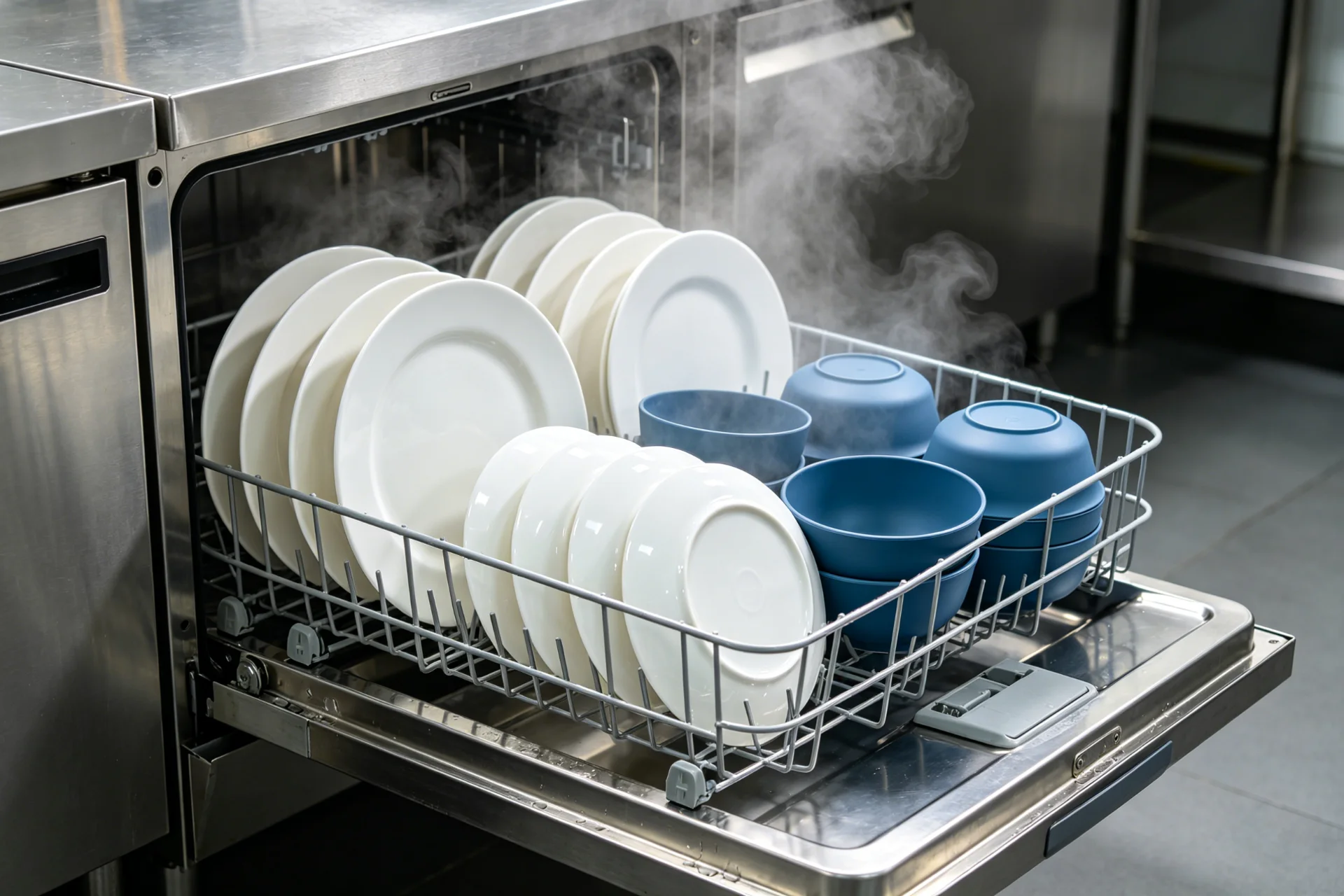
Selecting the right tableware requires understanding how molecular structures and firing temperatures react to the harsh environment of an industrial wash cycle. At Aveco Group, we analyze polymer stability, thermal mass, and glaze formulations to ensure products survive high-volume commercial sanitation while remaining fully compliant with global food contact regulations.
What Are the Most Common Dishwasher Safe Dinnerware Materials?
Choosing materials strictly on price often leads to accelerated glaze erosion or polymer warping. You need substrates engineered for continuous thermal shock and chemical exposure.
Porcelain, bone china, and specialized plastics dominate commercial environments. Their performance depends entirely on high firing temperatures and cross-linked molecular structures that block water ingress and prevent chemical degradation.
Fine China and Bone China Construction
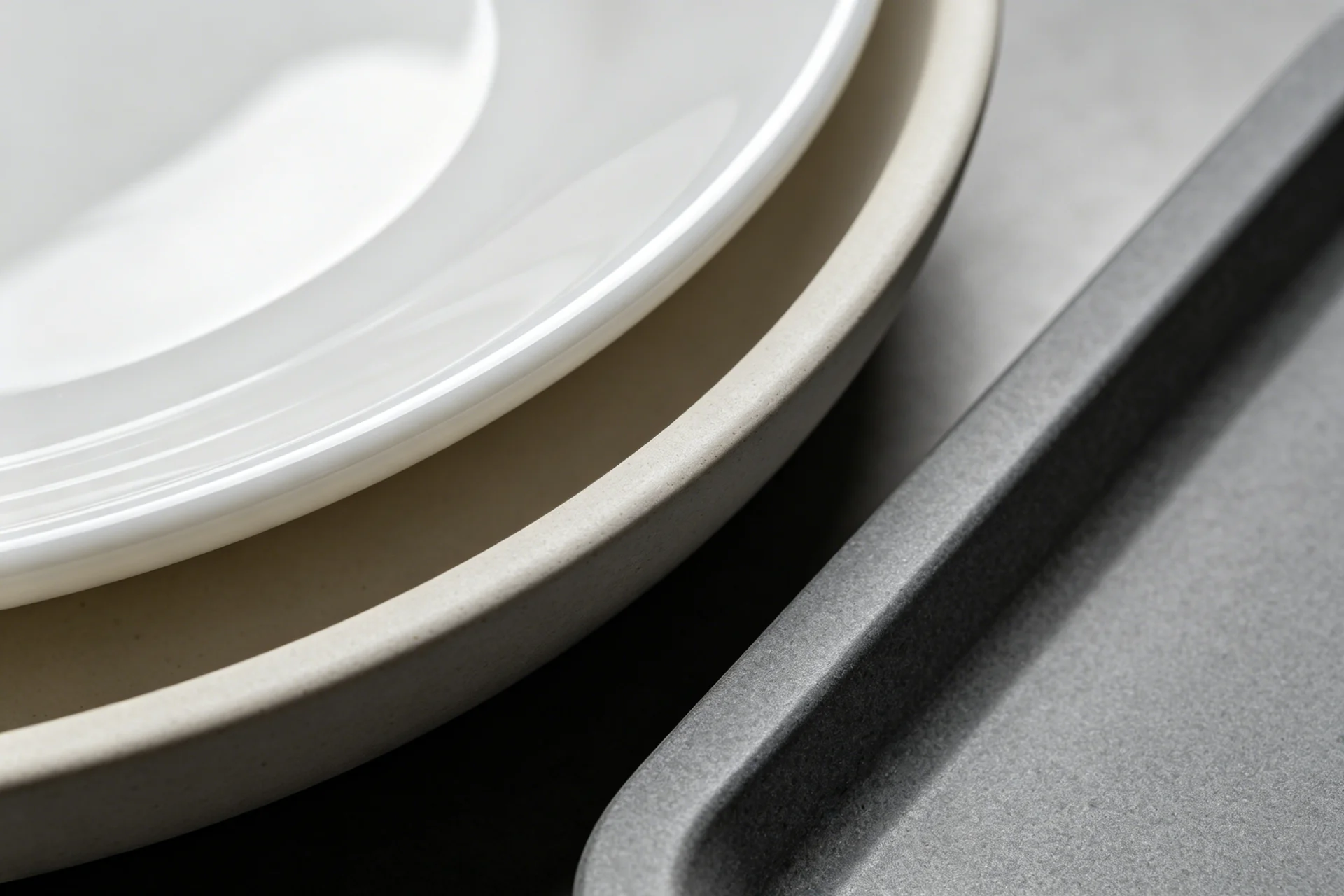
Despite its delicate appearance, bone china is exceptionally durable in commercial dishwashers. The inclusion of bone ash (often up to 50%) combined with firing temperatures exceeding 1200°C creates a highly dense, non-porous matrix. This tight molecular structure gives it high mechanical strength and prevents the expansion and contraction that typically causes micro-cracking during rapid thermal shifts.
Porcelain and Stoneware Durability
Porcelain and high-grade stoneware are the heavy-duty workhorses of the hospitality sector. Fired between 1200°C and 1400°C, the clay undergoes vitrification—a process that melts silica into a glass-like state, filling the microscopic voids within the clay body. A fully vitrified porcelain plate boasts a water absorption rate of less than 0.5%, making it practically immune to the internal steam pressure generated during a dishwasher's drying cycle.
Melamine for Outdoor and Casual Use
Melamine is a thermosetting plastic, meaning its polymer chains are heavily cross-linked during the molding process. This irreversible chemical bond creates a rigid, shatter-resistant surface that handles high-pressure water jets with ease. However, as an experienced manufacturer, we strictly monitor curing times and temperatures; improperly cured melamine risks formaldehyde and melamine migration under LFGB testing when repeatedly exposed to wash water exceeding 70°C.
Earthenware Limitations and Care
Earthenware is fired at much lower temperatures (around 1000°C), leaving the underlying clay body highly porous. It relies entirely on its surface glaze to repel water. If that glaze suffers from micro-cracking—known as crazing—due to thermal shock or physical impact, the alkaline dishwasher water will penetrate the clay. The absorbed water expands during the drying phase, rapidly accelerating the destruction of the plate.
| Material Type | Manufacturing Process | Water Absorption Rate | Dishwasher Suitability | B2B Compliance Focus |
|---|---|---|---|---|
| Vitrified Porcelain | Fired at 1300°C+ | < 0.5% | Excellent | Heavy metal limits in glaze |
| Earthenware | Fired at ~1000°C | 5% - 15% | Poor to Fair | Glaze crazing under thermal shock |
| Melamine (Thermoset) | High-pressure compression | 0% | Excellent (Temp limited) | Formaldehyde migration limits |
| Polypropylene (PP) | Injection molded | 0% | Excellent | Warping resistance, overall migration |
How Do Different Materials Perform in Dishwashers?
Industrial washing cycles subject materials to extreme physical and chemical stress. Poorly engineered tableware will warp, craze, or leach toxic compounds under these conditions.
Dishwasher performance is dictated by thermal mass, alkali resistance, and porosity. Tableware must handle rapid temperature fluctuations up to 85°C and aggressive pH levels without compromising its protective surface layers.
Temperature Resistance and Heat Distribution
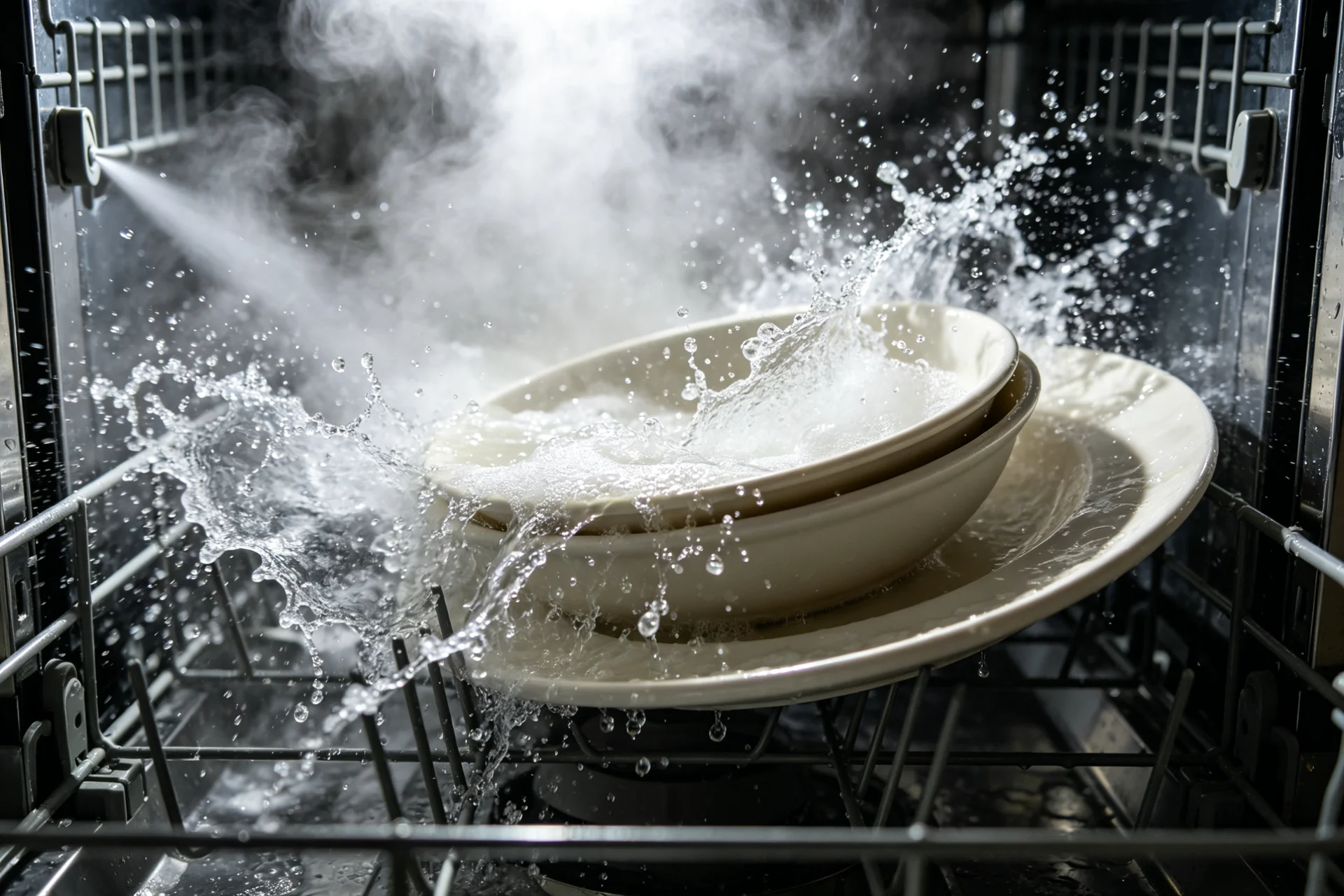
A standard commercial sanitizing cycle blasts tableware with water temperatures between 82°C and 85°C. Ceramics handle this well due to their high thermal mass, absorbing the heat which subsequently aids in flash-drying. Plastics, such as food-grade Polypropylene (PP) or bio-based PLA blends, require precise structural engineering. Without proper injection molding pressure and cooling cycle management, internal stresses within the plastic will release at high temperatures, causing the plate or tray to permanently warp.
Chemical Resistance to Detergents
Commercial dishwasher detergents are highly caustic, often hitting a pH of 10 to 12 to strip away fats and proteins. This alkaline environment is aggressively corrosive. Low-quality ceramic glazes will experience silica dissolution, turning cloudy and dull over time. For polymer-based tableware, alkali exposure can degrade weak polymer chains. We ensure our materials undergo rigorous simulated wash tests to guarantee they maintain compliance with EU EC 1935/2004 migration limits even after hundreds of chemical exposures.
Impact Resistance and Breakage Prevention
Inside a high-pressure commercial dishwasher, plates clatter against each other and the washing racks. Impact resistance is crucial. Melamine and reinforced PP excel here due to inherent impact modifiers in their polymer blends. For ceramics, survival depends on physical design—specifically rolled edges and thicker cross-sections—as well as glaze compression. A well-fitted glaze puts the ceramic body under slight compression, significantly increasing its resistance to mechanical impacts.
Water Absorption Rates and Longevity
The longevity of any tableware in a dishwasher is inversely proportional to its water absorption rate. When a porous material absorbs wash water, the subsequent high-heat drying cycle turns that moisture into steam. The expanding steam exerts massive internal pressure, leading to hidden internal fracturing. Fully vitrified ceramics and pure polymer structures block this moisture transfer entirely, ensuring a predictable, long lifecycle in commercial use.
Which Features Indicate Dishwasher Safe Tableware?
Identifying true dishwasher safety goes beyond a printed symbol on the base. It requires verifying precise manufacturing parameters and surface integrity.
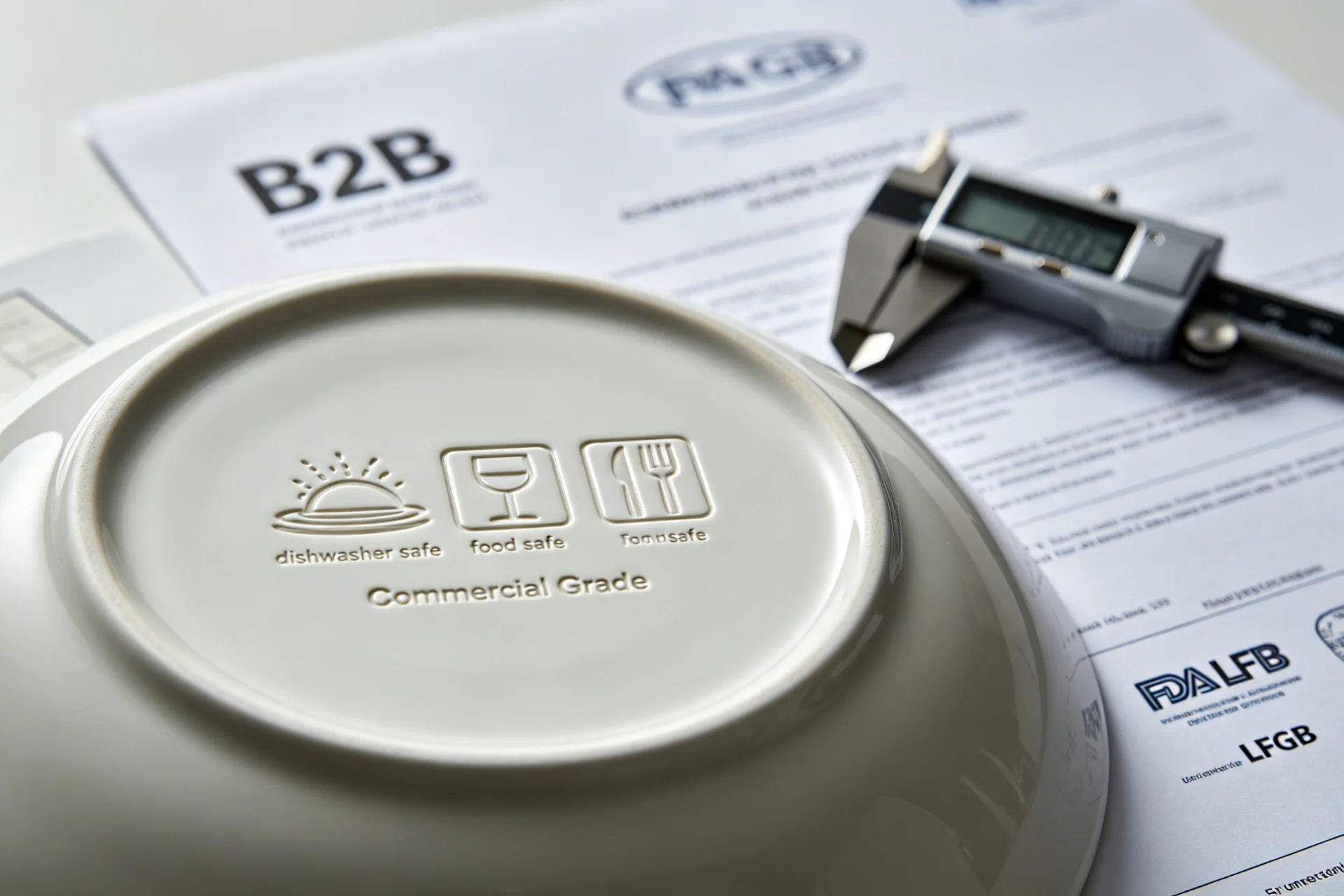
Genuine dishwasher compatibility is proven through vitrified material bodies, high-temperature fired glazes, and verifiable testing certificates that meet rigorous safety standards like LFGB and FDA.
Material Composition and Manufacturing Process
Dishwasher safety starts at the raw material blending and molding phase. For ceramics, it requires high purity alumina and silica to achieve proper vitrification. For reusable plastics like rPET or PP, the injection molding process must minimize residual internal stress. If a factory runs injection cycles too fast to cut costs, the resulting tableware will possess high internal stress memory, guaranteeing deformation the moment it hits the heat of a commercial dishwasher.
Glaze Quality and Surface Treatments
The glaze is the primary shield against chemical attack. Hardness on the Mohs scale and exact firing temperatures dictate a glaze's chemical resistance. A properly formulated, high-fire glaze remains impermeable and glossy after heavy alkali exposure. Furthermore, the glaze must be strictly formulated without lead or cadmium fluxes, as the corrosive wash environment will cause these heavy metals to leach, resulting in immediate compliance failure.
Commercial-Grade Certifications
True B2B dishwasher safety is backed by data, not claims. Validated tableware undergoes standardized testing regimes, such as EN 12875 for mechanical dishwasher resistance. Products are subjected to hundreds of wash cycles with specified alkaline detergents, followed by visual inspections for gloss retention and color fading, and chemical analyses to ensure migration limits strictly align with LFGB and FDA requirements.
Microwave and Oven Compatibility
While microwave compatibility often correlates with dishwasher safety due to shared requirements for thermal resilience, the two are not mutually inclusive. High-fired porcelain handles both with ease. However, thermoset plastics like melamine are highly rated for commercial dishwasher cycles (provided temperatures stay within specification) but are strictly prohibited from microwave use. Microwaves cause rapid, localized heating in melamine that degrades the polymer structure, leading to blistering and severe chemical migration.
Buyers often struggle with customs rejections or product recalls due to non-compliant tableware materials. Fines and brand damage compound when suppliers fail to grasp the nuances of European food safety laws. Securing EU market entry requires strict adherence to documented material purity and controlled migration rates.
Achieving compliance means going beyond basic material safety data sheets. Tableware must pass stringent Overall Migration Limits (OML) and Specific Migration Limits (SML) testing under EU EC 1935/2004 and the German LFGB. This requires using certified, traceable resins and maintaining tight control over manufacturing additives.
Core Requirements of EU EC 1935/2004 and LFGB
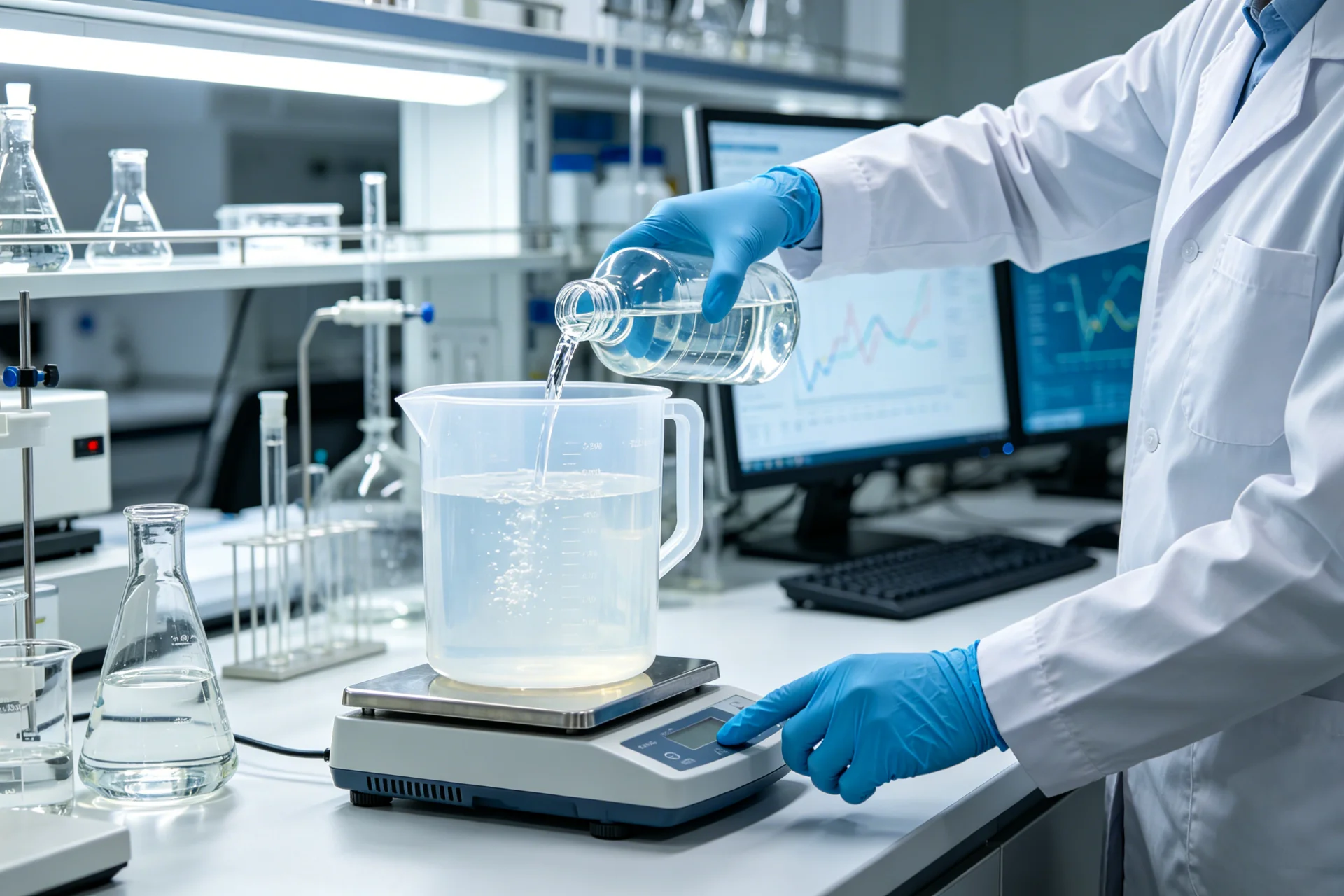
The European framework for Food Contact Materials (FCM) is anchored by Regulation (EC) No 1935/2004, which mandates that materials must not transfer constituents to food in quantities that endanger human health or bring about an unacceptable change in food composition. In manufacturing practice, this means we must rigorously audit every input, from the base polymer resin to color masterbatches and mold release agents.
The German LFGB standard takes this further by introducing rigorous sensory testing. We frequently encounter buyers whose previous suppliers failed LFGB Section 30 and 31 tests simply because the plastic transferred a faint chemical odor to the food. Preventing this requires using high-purity virgin or certified food-grade recycled resins, optimizing injection temperatures to prevent polymer degradation, and entirely eliminating volatile organic compounds (VOCs) during the molding process. A robust Declaration of Compliance (DoC) must trace these variables across the entire production batch.
Controlling Overall and Specific Migration Limits (OML & SML)
Migration testing simulates the worst-case scenarios for tableware usage. Overall Migration Limits (OML) measure the total mass of non-volatile substances released into food simulants. The EU limit is strictly capped at 10 mg/dm² of the food contact surface area.
Specific Migration Limits (SML) are far more complex. They target individual toxicological substances based on their acceptable daily intake. For example, when manufacturing with certain PP copolymers or rPET, we must test against heavy metal migration (like antimony in PET production) and specific plasticizers. To ensure our tableware passes, we utilize standard simulants such as 3% acetic acid (for acidic foods) and 50% ethanol (for dairy and alcoholic environments) at elevated temperatures (typically 70°C for 2 hours or up to 100°C depending on intended use). By locking the polymer matrix through proper crystallization and avoiding low-molecular-weight additives, we prevent migration failure before the product ever reaches a third-party testing lab.
Material Science: Optimizing Polymers for Reusable Tableware
Transitioning from single-use to reusable food-contact materials introduces significant engineering challenges. Polymers degrade after repeated commercial washing cycles, leading to microcracking and surface porosity. Selecting the right polymer structure and optimizing it for specific end-use environments prevents premature material failure.
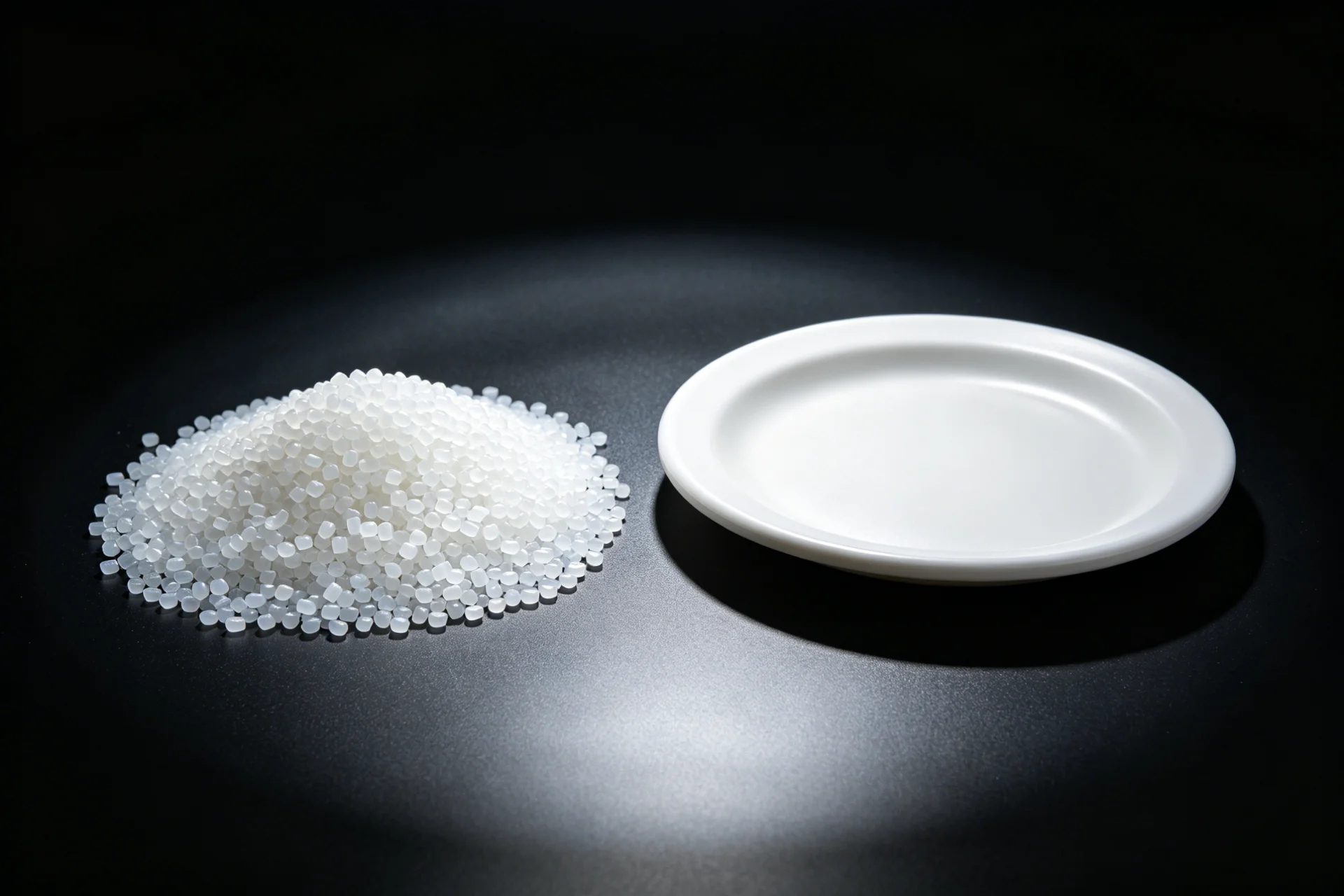
Reliable reusable tableware relies on carefully selected semi-crystalline polymers. By utilizing high-flow Polypropylene (PP) and food-grade rPET, manufacturers can achieve the necessary thermal stability and mechanical strength to withstand repeated commercial dishwashing cycles without compromising food safety.
Thermal Stability in PP and rPET Processing
Polypropylene (PP) and recycled Polyethylene Terephthalate (rPET) require highly specific thermal management during injection molding. When processing PP for reusable plates and bowls, we typically maintain melt temperatures between 220°C and 240°C. If the temperature drops, the material suffers from high internal shear stress; if it exceeds 260°C, polymer chain scission occurs, resulting in brittle tableware that fractures under impact.
rPET presents a different challenge: managing intrinsic viscosity (IV). Moisture present in rPET pellets during melting causes hydrolysis, which breaks down the polymer chains and dramatically lowers the IV. To maintain the structural integrity required for heavy-duty food containers, rPET must be desiccated to moisture levels below 50 ppm before entering the barrel. This strict thermal and moisture control results in a durable, shatter-resistant product that retains its clarity and strength over long-term use.
Bio-based Alternatives: Managing PLA Vulnerabilities
Polylactic Acid (PLA) is highly requested for sustainable tableware, but standard PLA suffers from a notoriously low Heat Deflection Temperature (HDT) of around 55°C. At this temperature, a PLA cup or bowl will warp when exposed to hot soups or coffee.
To utilize PLA for hot food applications, we engineer Crystallized PLA (CPLA). By introducing nucleating agents and adjusting mold temperatures to around 90°C to 100°C, we force the PLA to rapidly crystallize within the mold cavity. This physical transformation raises the HDT to roughly 85°C, making it viable for high-temperature food contact and standard washing. However, this process increases cycle times and requires precise thermodynamic control to prevent the parts from sticking to the mold core.
| Material Type | Heat Deflection Temp (HDT) | Tensile Strength | Dishwasher Safe (Reusable) | Primary Application |
|---|---|---|---|---|
| Standard PP | 90°C - 100°C | High | Yes (Commercial) | Reusable hot/cold food containers, plates |
| rPET (Food Grade) | 65°C - 70°C | Very High | Hand-wash / Low-temp | Cold deli cups, beverage tumblers, trays |
| Standard PLA | 50°C - 55°C | Moderate | No | Single-use cold drink cups, salad bowls |
| CPLA (Crystallized) | 80°C - 85°C | High | Yes (Domestic) | Hot coffee lids, hot food clam-shells |
Advanced Manufacturing Controls for Defect-Free Production
Inconsistent wall thickness and residual internal stress often plague mass-produced plastic tableware. These defects not only cause warping but can create microscopic fissures where bacteria thrive. Controlling the physical manufacturing process is just as critical as raw material selection.
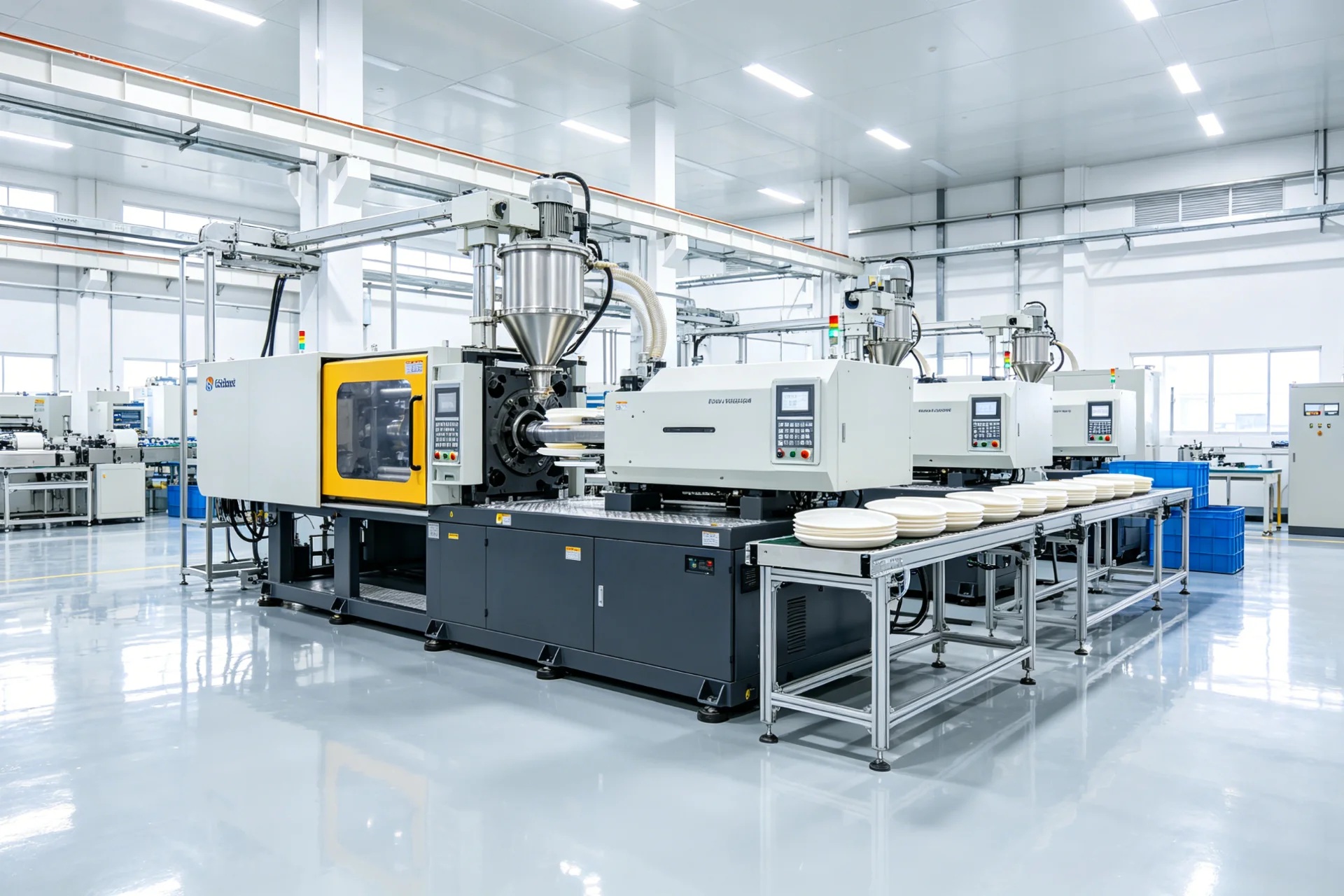
Precision manufacturing dictates that every mold cycle operates under exact thermodynamic constraints. Maintaining uniform mold cooling rates and precise injection pressure prevents polymer chain degradation and eliminates internal warping, ensuring structural integrity in finished tableware.
Precision Injection Molding Parameters
Producing a perfectly flat, structurally sound reusable plate requires calculating the exact volumetric shrinkage of the chosen polymer. For semi-crystalline materials like PP, shrinkage rates can be as high as 1.5% to 2.0%. To combat this, we implement specific holding pressure profiles during the injection cycle. Once the mold cavity is filled, holding pressure is applied to pack extra molten plastic into the cavity, compensating for the material's natural contraction as it cools.
Gate design and placement also heavily influence the final product. A poorly placed gate forces the polymer to travel too far, dropping in temperature and increasing shear stress, which manifests as visible flow marks or weak weld lines on the tableware. Utilizing hot runner systems keeps the polymer in a uniform molten state right up to the gate, minimizing material waste and ensuring a homogenous structure capable of withstanding heavy mechanical loads.
Quality Assurance in High-Volume Runs
In high-volume manufacturing, quality assurance must be embedded directly into the production line. Relying solely on end-of-line spot checks is insufficient for food-grade products. We utilize inline automated sensors to monitor injection pressure and cooling water temperatures continuously. A deviation of even 5°C in mold temperature can cause differential shrinkage, resulting in warped trays that will not stack correctly in automated packaging lines.
Additionally, batches undergo regular Izod impact strength testing to simulate drops on hard restaurant floors. Dimensional tolerances are verified using digital calipers to ensure lids fit tightly onto containers without leakage. By strictly controlling both the chemistry of the polymers and the physics of the injection molding process, we eliminate structural defects and ensure every unit meets exacting commercial standards.
Final. Securing food-grade reusable tableware requires strict adherence to EU FCM regulations, advanced polymer selection, and precise manufacturing controls. By mastering OML/SML migration limits and optimizing thermal stability in PP, rPET, and PLA, manufacturers deliver durable, compliant solutions that meet global safety standards without compromising structural integrity.