

rPET vs PP: Which Is Better for Tableware?
Choosing between rPET and PP for tableware dictates tooling costs, LFGB compliance, and end-of-life viability. Make the wrong choice, and you risk warped products or massive regulatory fines.
The choice depends on thermal demands. PP (Polypropylene) dominates high-heat and microwave applications due to its high melting point, while rPET excels in cold-service clarity and established circular recycling streams. PP offers fatigue resistance; rPET delivers premium transparency and lower virgin polymer reliance.
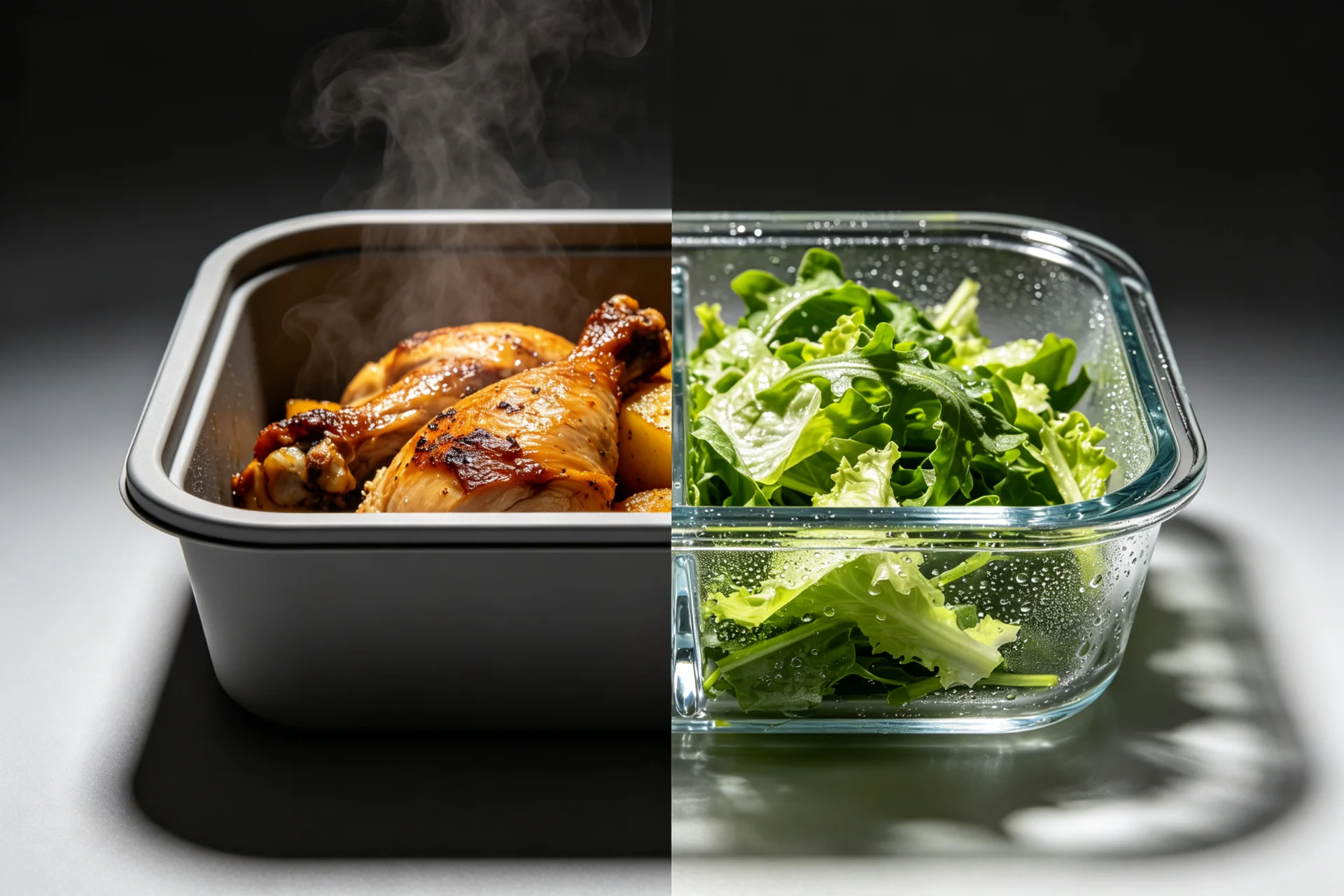
Before committing capital to steel molds, buyers must understand the molecular behaviors that dictate how these plastics perform on the factory floor and in the hands of the end user. Material selection directly dictates manufacturing parameters, cycle times, and compliance testing protocols under EU regulations.
What Are the Core Material Differences Between rPET and PP in Tableware Manufacturing?
You cannot force a polymer to act against its chemical nature. Misunderstanding these foundational structures leads to catastrophic molding defects and failed migration tests.
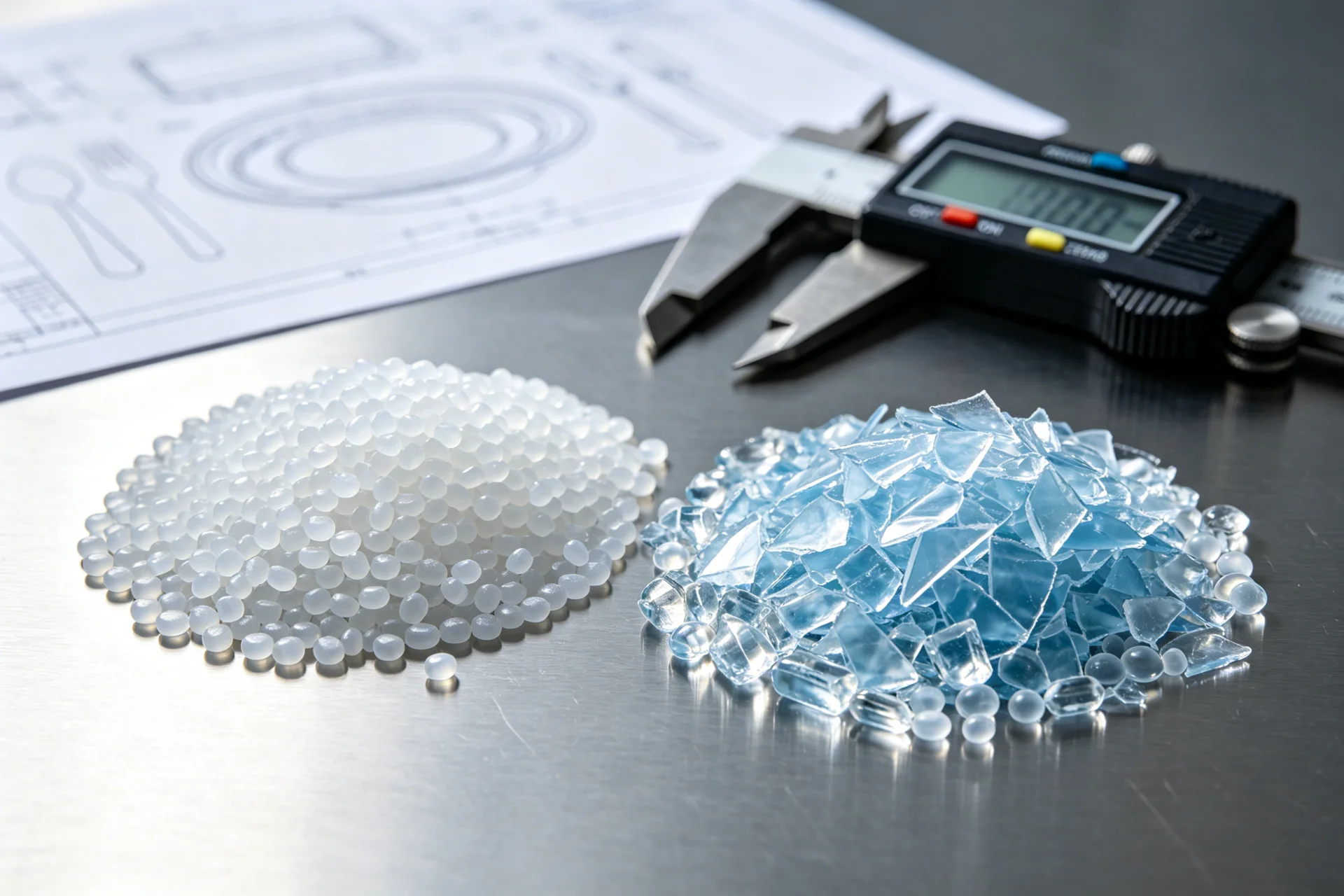
rPET is an amorphous or semi-crystalline polyester derived from mechanically or chemically recycled PET waste. PP is a semi-crystalline polyolefin polymerized directly from propylene gas. This structural divergence creates vast differences in molding temperatures, shrinkage rates, and final product rigidity.
How Do rPET and PP Differ in Polymer Structure and Feedstock Origin?
The fundamental difference lies in their chemistry. Polypropylene (PP) is built on a carbon-carbon backbone. Most PP used in tableware today originates from virgin fossil fuels, as food-grade recycled PP (rPP) remains scarce and heavily restricted by European Food Safety Authority (EFSA) migration standards.
Conversely, recycled Polyethylene Terephthalate (rPET) contains ester bonds and is sourced directly from post-consumer waste—primarily beverage bottles. The feedstock undergoes intensive decontamination, solid-state polycondensation (SSP), and repelletization to restore its intrinsic viscosity, making it safe for direct food contact.
What Are the Key Physical Properties (Clarity, Rigidity, Heat Tolerance) of Each Material?
The physical characteristics of these materials govern their application scope. Below is a concrete comparison of how they behave under operational stress.
| Property | rPET (Recycled Polyethylene Terephthalate) | PP (Polypropylene) |
|---|---|---|
| Optical Clarity | High (Glass-like transparency) | Low (Translucent to opaque) |
| Rigidity / Stiffness | High (Prone to cracking under heavy impact) | Moderate to High (Excellent flexural strength) |
| Heat Deflection Temp | ~65°C - 70°C (Warps at high temps) | ~100°C - 120°C (Highly heat resistant) |
| Cold Tolerance | Excellent (Maintains impact strength) | Poor (Becomes brittle below freezing) |
| Mold Shrinkage | 0.2% - 0.6% | 1.0% - 2.0% |
How Do Manufacturing Processes for rPET vs PP Tableware Compare in Industrial Settings?
On the factory floor, rPET and PP demand entirely different processing parameters. rPET is highly hygroscopic. If it is not aggressively pre-dried to moisture levels below 50 ppm before entering the injection barrel, the polymer chains suffer hydrolysis. This drops the molecular weight, resulting in brittle tableware that shatters during transit.
PP ignores ambient moisture. It does not require pre-drying, which speeds up cycle times and reduces energy overhead. However, PP exhibits significant mold shrinkage (up to 2%). A factory cannot simply swap rPET into a mold designed for PP; the tooling dimensions must be precisely engineered for the specific resin to ensure the lids fit securely onto the bases without leaking.
Which Material Offers Superior Performance for Commercial Foodservice Applications?
A container that looks perfect on the inspection line can fail instantly in a commercial kitchen. Temperature variations and grease exposure ruthlessly test material limits.
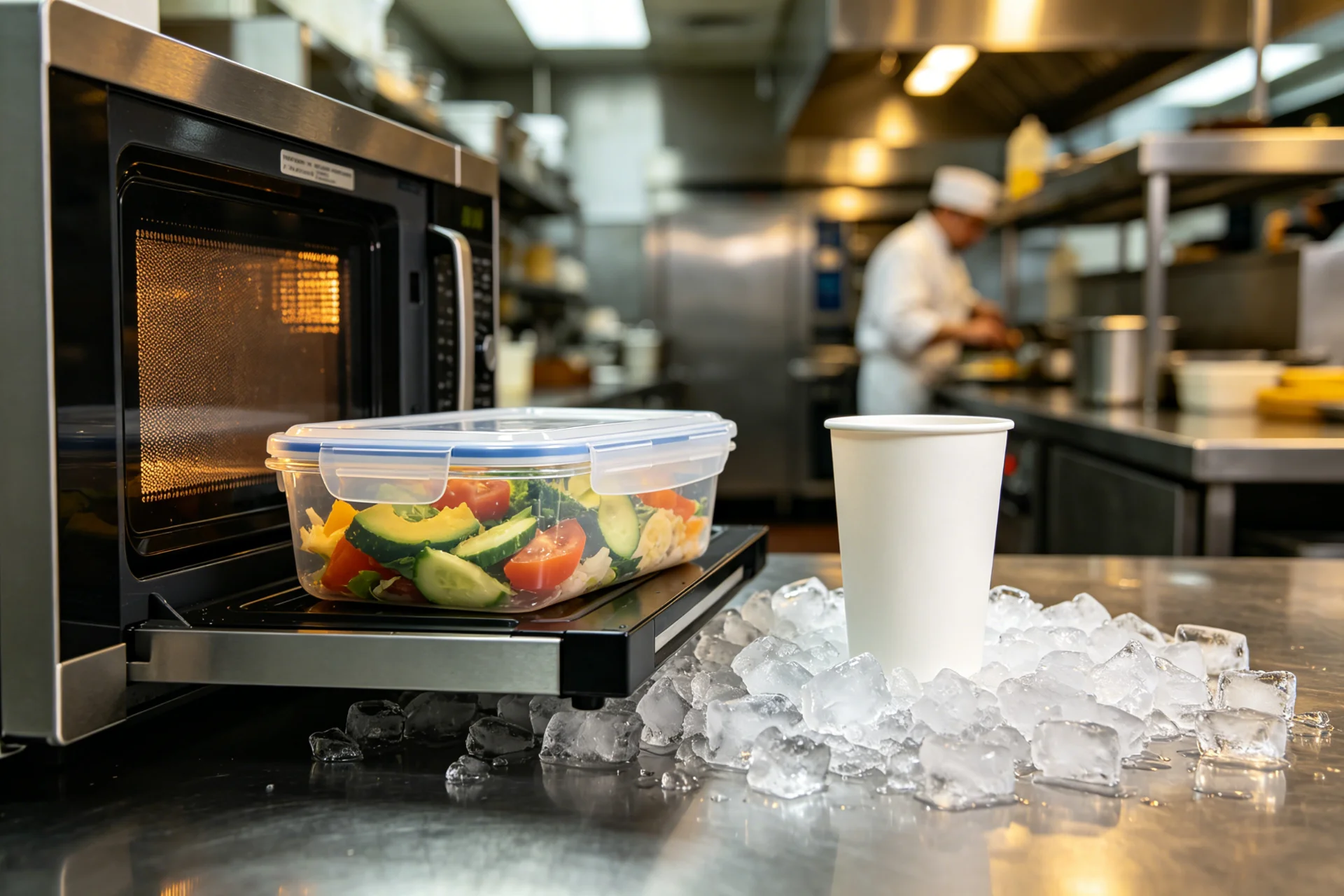
PP guarantees superior performance for hot foods and microwave reheating, remaining stable at 120°C. rPET dominates cold-chain applications, providing exceptional oxygen barriers and shatter resistance for chilled beverages or fresh salads, but will severely deform under high heat.
How Does Temperature Resistance Impact Real-World Usage in Hot vs Cold Food Service?
Thermal limits are non-negotiable. rPET has a low glass transition temperature. Pour hot soup into an rPET bowl, and it will immediately warp, buckle, and fail. Its maximum safe operating temperature hovers around 65°C.
PP thrives in thermal stress. With a melting point around 160°C and a safe continuous use temperature up to 120°C, PP is the mandatory choice for hot food takeout, roasted goods, and boiling liquids. However, in blast chillers or commercial freezers, PP's impact strength plummets, whereas rPET maintains structural integrity.
What Are the Durability and Drop-Resistance Trade-Offs Between rPET and PP Containers?
Durability is measured by flexural fatigue and impact resistance. PP features a unique "living hinge" capability. You can bend a PP container thousands of times without breaking it, making it ideal for reusable clamshells or durable meal prep containers. It absorbs impact by yielding.
rPET is significantly stiffer. While this provides excellent vertical crush resistance for stacking heavy pallets of food containers, it fails through brittle fracture. Drop a loaded rPET container on a hard floor, and it is more likely to crack or shatter, whereas a PP container will bounce and deform slightly.
Which Material Provides Better Barrier Properties for Moisture, Grease, and Oxygen?
Material permeability dictates food shelf life. rPET is an exceptional gas barrier. It blocks oxygen ingress, preventing oxidation in fresh salads, cut fruits, and raw proteins.
PP is a poor oxygen barrier but an outstanding moisture barrier. It stops water vapor transmission completely, keeping dry snacks crispy. Both materials resist oils and greases well, but rPET handles highly acidic foods (like tomato-based sauces) with less surface staining than standard PP.
How Do Microwave and Dishwasher Compatibility Differ Between rPET and PP Tableware?
For reusable B2B tableware, end-of-life and daily cleaning cycles define ROI. PP is microwave-safe. It handles the dielectric heating of food without structural degradation and survives thousands of cycles in commercial top-rack dishwashers.
rPET is strictly incompatible with microwaves and dishwashers. Subjecting rPET to a 90°C commercial sanitization cycle will instantly melt the product into an unrecognizable mass. If your B2B buyers require reusable, machine-washable food-contact items, PP is the only viable path.
What Is the Environmental Impact Comparison Between rPET and PP in the Circular Economy?
Sustainability claims face brutal scrutiny under EU EC 1935/2004 and local waste directives. Greenwashing destroys supplier credibility faster than a delayed shipment.
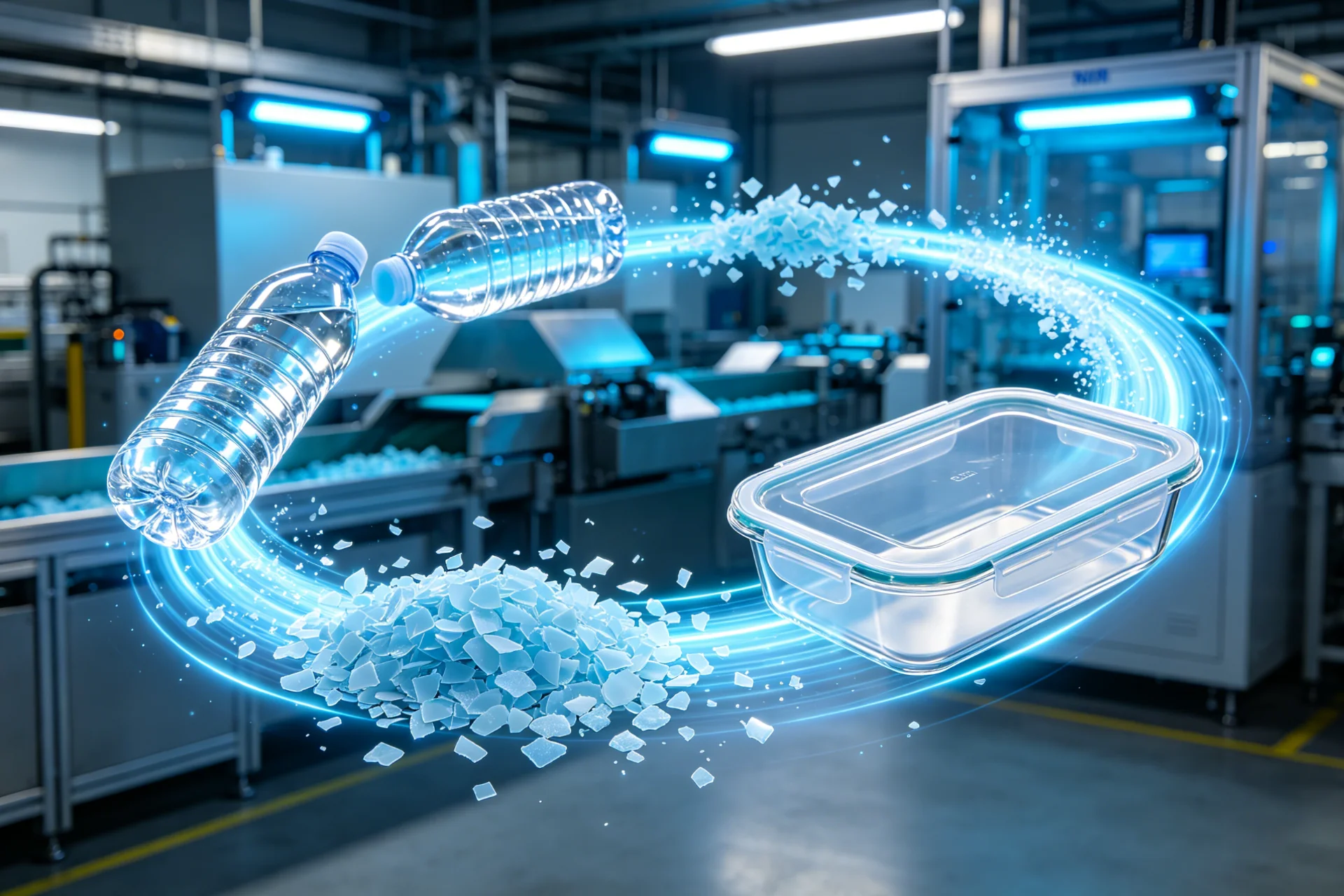
rPET operates within a mature closed-loop recycling infrastructure, actively reducing carbon footprints by reusing post-consumer waste. PP recycling streams are fragmented, meaning most PP tableware currently ends up downcycled or incinerated, despite being technically recyclable.
How Do Carbon Footprints Differ Between Virgin PP Production and rPET Recycling?
Extracting and refining crude oil to polymerize virgin PP generates a specific baseline of greenhouse gas emissions. While virgin PP is relatively lightweight and energy-efficient to mold, it still relies on fossil extraction.
rPET avoids raw extraction entirely. By processing existing post-consumer PET bales, factories bypass the high-energy polymerization phase. Even factoring in the intense heat required for solid-state polycondensation (SSP) to decontaminate the plastic, rPET cuts carbon emissions by roughly 50% compared to manufacturing virgin PET, giving it a strong carbon accounting advantage.
What Are the Actual Recycling Rates and Infrastructure Realities for PP vs rPET Globally?
Recyclability on paper means nothing if the municipal infrastructure does not exist. PET boasts the highest recycling rates globally. The bottle-to-bottle closed loop is fully operational in Europe and North America. Sorters easily identify PET using near-infrared (NIR) optical scanners.
PP infrastructure lags severely. While rigid PP food tubs are collected in many regions, they are heavily mixed with other polyolefins. Food-grade PP recycling is incredibly difficult because PP retains food odors and chemical migrants far more aggressively than PET. As a result, recovered PP is usually downcycled into park benches or car bumpers, not new tableware.
Which Material Degrades More Responsibly in Non-Ideal Disposal Scenarios (Landfill/Leakage)?
Neither rPET nor PP is biodegradable. If they leak into the environment, they persist for centuries. In a landfill setting, both materials remain inert, which prevents the immediate release of methane gas (a common issue with bio-plastics like PLA if they decompose anaerobically).
However, under UV exposure in marine or terrestrial environments, PP degrades through photo-oxidation faster than rPET, shedding microplastics into the ecosystem rapidly. rPET is highly resistant to UV degradation, keeping its macro-structure intact longer but still acting as a permanent pollutant. Proper mechanical recycling is the only responsible endpoint for both.
How Do Regulatory Frameworks (EU SUP Directive, EPR Laws) Favor or Penalize Each Material?
The regulatory environment heavily dictates factory material selection. Under the EU Single-Use Plastics (SUP) Directive and stringent EFSA guidelines, recycled content in food contact materials is heavily monitored.
rPET is heavily favored by regulators because the decontamination technology is proven and standardized. EFSA has approved hundreds of rPET recycling processes. Conversely, EFSA rarely approves mechanically recycled PP for direct food contact due to the high risk of cross-contamination from non-food PP waste entering the recycling stream. Therefore, factories must often rely on virgin PP to guarantee compliance with EU EC 1935/2004 migration limits.
Non-compliance with European Food Contact Materials (FCM) regulations consistently results in border rejections and costly product recalls. Many buyers rely on superficial lab reports that fail to account for batch-to-batch polymer variance under EU EC 1935/2004 or Germany's notoriously stringent LFGB standards. Understanding the specific mechanics of chemical migration prevents regulatory failures before raw polymer pellets even enter the drying hopper.
Securing LFGB and EU EC 1935/2004 compliance requires strict control over polymer formulation to ensure that chemical transfer from tableware to food remains below 10 mg/dm² under prolonged heat and acidic exposure.
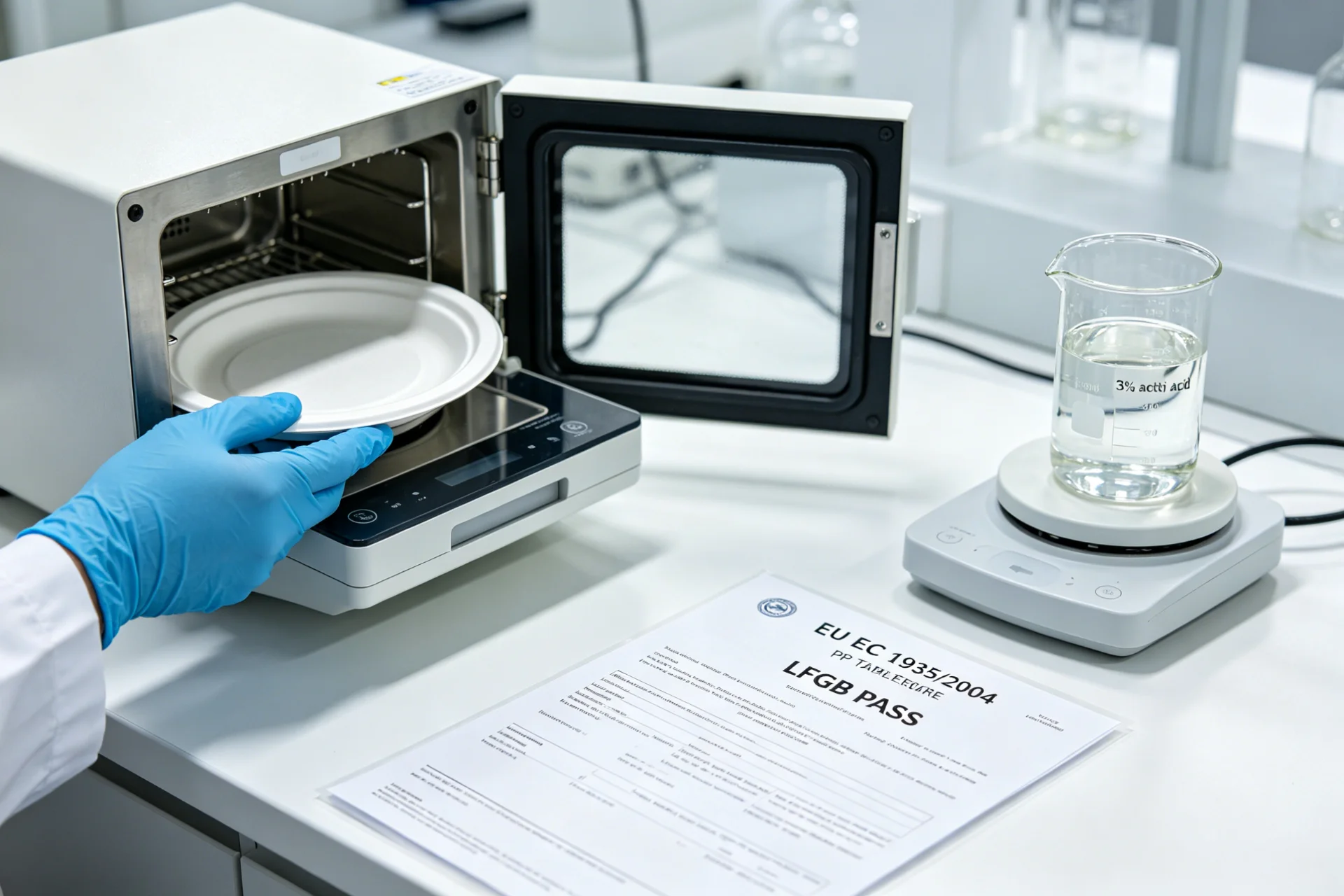
Understanding Overall Migration Limits (OML)
Overall Migration Limits (OML) dictate the maximum permitted total mass of non-volatile substances that can transfer from a plastic material into food. For standard European compliance, this limit is rigidly set at 10 mg per square decimeter of food contact surface area. Testing for OML requires subjecting the tableware to specific food simulants—such as 3% acetic acid for acidic foods or 50% ethanol for dairy and alcohol—under accelerated temperature and time conditions that mimic long-term commercial use.
From a manufacturing standpoint, failing an OML test usually points to unstable low-molecular-weight compounds in the base polymer or excessive use of processing aids like mold release agents. We mitigate this by using high-purity virgin or strictly decontaminated rPET resins, tightly controlling barrel temperatures during injection to prevent thermal degradation, and eliminating unnecessary additives that could leach when exposed to aggressive food matrices.
The Role of Specific Migration Limits (SML) in Polymer Stability
While OML measures total transfer, Specific Migration Limits (SML) target individual hazardous substances, such as heavy metals, primary aromatic amines, or specific monomers like bisphenol A (BPA) and phthalates. LFGB standards are highly sensitive to these individual migrants, often requiring parts-per-billion detection thresholds.
Polymer stability is the primary defense against SML failures. When manufacturing with bio-based materials like PLA or recycled polymers like rPET, the polymer chains must be adequately protected against hydrolysis and thermal scission. If the melt temperature is set too high during injection, the polymer backbone fractures, creating free monomers that easily migrate into food simulants. Maintaining tight process controls over the melt flow index and utilizing conformal cooling ensures that the cross-linking and structural integrity of the polymer remain intact, effectively trapping potential migrants within the plastic matrix.
Precision Injection Molding for Reusable Tableware
Inconsistent wall thickness and internal stresses compromise the physical durability of reusable tableware. When production speed is prioritized over precise process control, polymer chains fail to orient correctly during the molding phase, leading to warping, crazing, or micro-cracking after repeated commercial dishwashing cycles. Calibrating injection speed, holding pressure, and tooling temperatures is necessary to guarantee structural integrity across tens of thousands of use cycles.
Optimizing reusable tableware durability relies on balancing melt temperature and injection pressure to minimize internal stress and prevent polymer degradation during the molding and cooling phases.
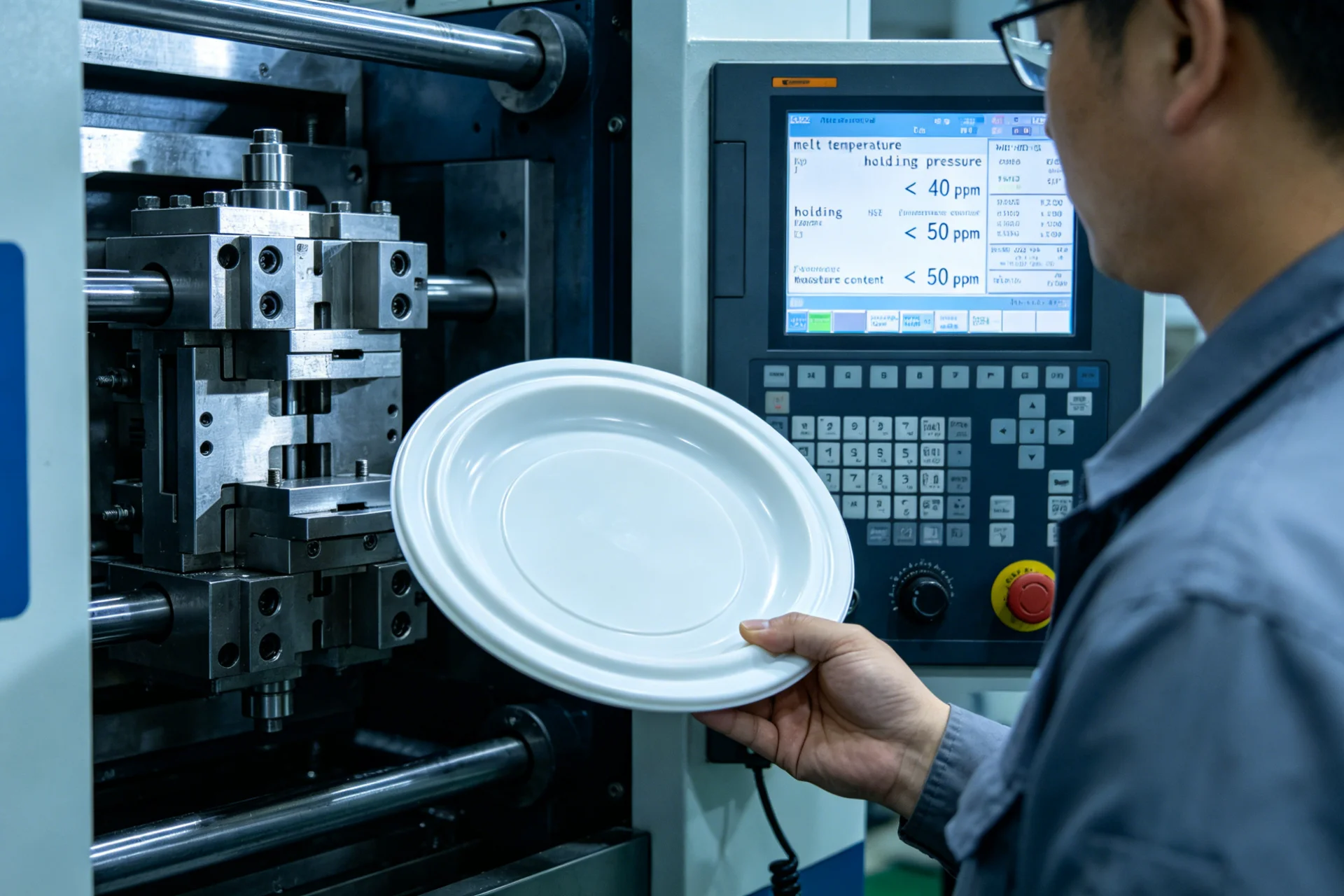
Temperature Control and Polymer Degradation
Every polymer possesses a strict thermal processing window. Extruding or injecting plastic outside of this window physically damages the material. For example, processing rPET requires rigorous pre-drying to drop moisture levels below 50 parts per million. If moisture remains during the melt phase, hydrolysis occurs—water molecules sever the ester bonds, drastically reducing the molecular weight and intrinsic viscosity of the plastic. This results in brittle tableware that shatters upon impact.
Similarly, PLA is highly sensitive to shear heating. If the screw speed in the injection barrel generates too much friction, the localized temperature spikes cause the PLA to thermally degrade before it even enters the mold cavity. Factory floors must rely on closed-loop temperature controllers and optimized screw geometries to ensure uniform plasticization without crossing the degradation threshold of sensitive eco-friendly polymers.
Minimizing Defects in High-Volume Production
High-volume manufacturing of food-grade containers and utensils requires strict defect mitigation. Common issues like sink marks, warping, and gate shear not only ruin aesthetics but also create weak points where bacteria can accumulate, violating hygiene standards. Sink marks occur when thick sections of the tableware cool and shrink slower than adjacent thin sections.
To resolve this, engineers adjust the packing pressure and hold time, forcing additional molten material into the cavity to compensate for volumetric shrinkage. Warping is controlled by maintaining uniform mold temperatures via strategically placed cooling channels. By utilizing chilled water systems that adapt to the specific thermal conductivity of the polymer—whether it is highly crystalline PP or amorphous PET—we ensure the part solidifies evenly, locking in dimensional stability and eliminating post-molding distortion.
Comparing Eco-Friendly Tableware Materials
Selecting the wrong bio-based or recycled polymer often leads to catastrophic field failures, such as containers melting in commercial microwaves or plates shattering when dropped. General data sheets rarely reflect how these materials perform after enduring hundreds of industrial wash cycles at 85°C, leaving buyers exposed to end-user complaints and replacement costs. Evaluating polymers based on thermal deflection, impact resistance, and end-of-life viability aligns material capabilities with actual commercial demands.
Choosing the correct eco-friendly polymer depends on matching the material's heat deflection temperature, tensile strength, and degradation profile against the specific mechanical and thermal stresses of its intended environment.
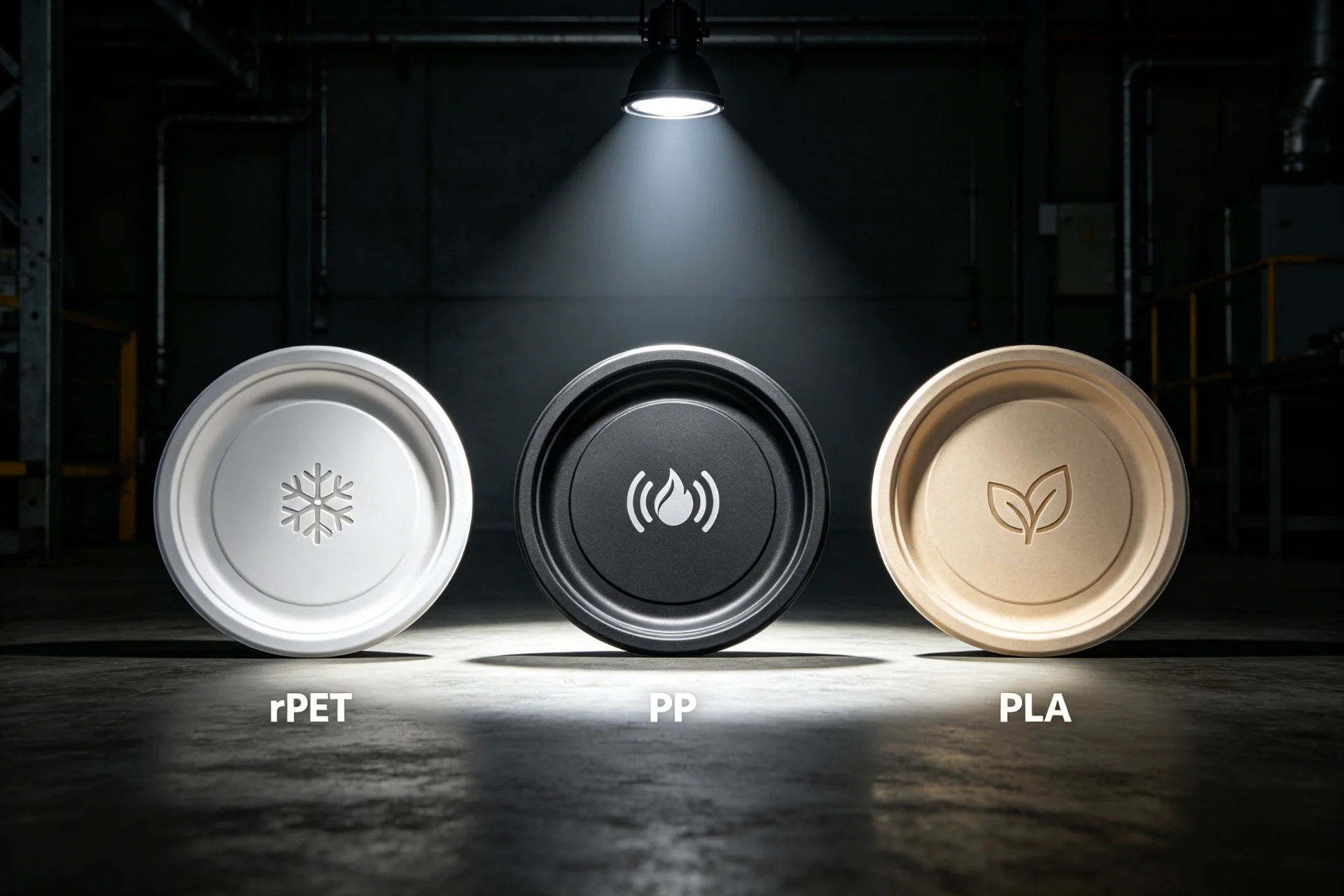
rPET vs. PP vs. PLA: A Manufacturing Perspective
Each polymer requires specific handling on the factory floor and offers distinct mechanical properties. The table below outlines how these common tableware materials perform under manufacturing and end-use conditions.
| Material | Heat Deflection Temp (HDT) | Impact Resistance | Manufacturing Considerations | Compliance Suitability |
|---|---|---|---|---|
| rPET | 65°C - 70°C | High | Requires strict moisture control (<50ppm) and advanced decontamination. | Excellent for cold/warm foods. EU EC 1935/2004 approved. |
| PP | 90°C - 100°C+ | Very High | High shrinkage rate; requires precise packing pressure to avoid sink marks. | Ideal for hot foods and microwaves. LFGB compliant. |
| PLA | 50°C - 55°C (Standard) | Moderate to Low | Highly sensitive to shear stress and thermal degradation during injection. | Suitable for cold use only unless crystallized (CPLA). |
Polypropylene (PP) remains the standard for durability and heat resistance, thriving in high-temperature wash cycles due to its high fatigue resistance. Standard Polyactic Acid (PLA), while bio-based, suffers from brittleness and low heat deflection, meaning it will deform if exposed to hot soups or intense dishwasher heat. Recycled PET (rPET) bridges the gap, offering excellent clarity and impact resistance for cold-to-warm applications, provided the factory employs robust solid-state polycondensation (SSP) to restore its mechanical strength post-recycling.
Balancing Durability with End-of-Life Sustainability
Sustainability in manufacturing is not just about raw material sourcing; it dictates the end-of-life reality of the tableware. While PLA is heavily marketed as compostable, it requires highly controlled industrial composting facilities—sustaining temperatures of 58°C+ with specific humidity levels—to break down effectively. If thrown into standard landfills, it behaves much like conventional plastic.
Polypropylene is derived from fossil fuels but boasts a highly robust lifecycle, capable of being ground down and remelted multiple times without severe loss of mechanical integrity, making it a staple in circular closed-loop systems. rPET provides a massive reduction in carbon footprint by utilizing post-consumer waste, but maintaining food-grade safety requires intensive sorting and super-cleaning technologies to strip volatile organic compounds (VOCs) out of the recycled flake. True sustainability requires selecting the polymer that best fits the regional recycling infrastructure of the final market while surviving the physical demands of daily commercial use.
Validating polymer stability, controlling injection molding parameters, and adhering to strict migration limits ensure tableware meets rigorous European FCM standards. Balancing material properties like thermal deflection and impact resistance with lifecycle sustainability remains critical for manufacturing safe, durable, and compliant food-grade products.