

How to Design a Premium Look and Feel with Glossy rPET Tableware?
Struggling to replace heavy, fragile ceramics or non-recyclable melamine without sacrificing high-end aesthetics? Downgrading to standard commercial plastics is a fast track to losing your premium brand positioning.
Glossy rPET provides the weight, surface tension, and high-gloss finish of fine ceramics while maintaining strict European FCM compliance. Through precision injection molding, it delivers an impact-resistant, fully recyclable tableware solution that meets the visual demands of premium hospitality.
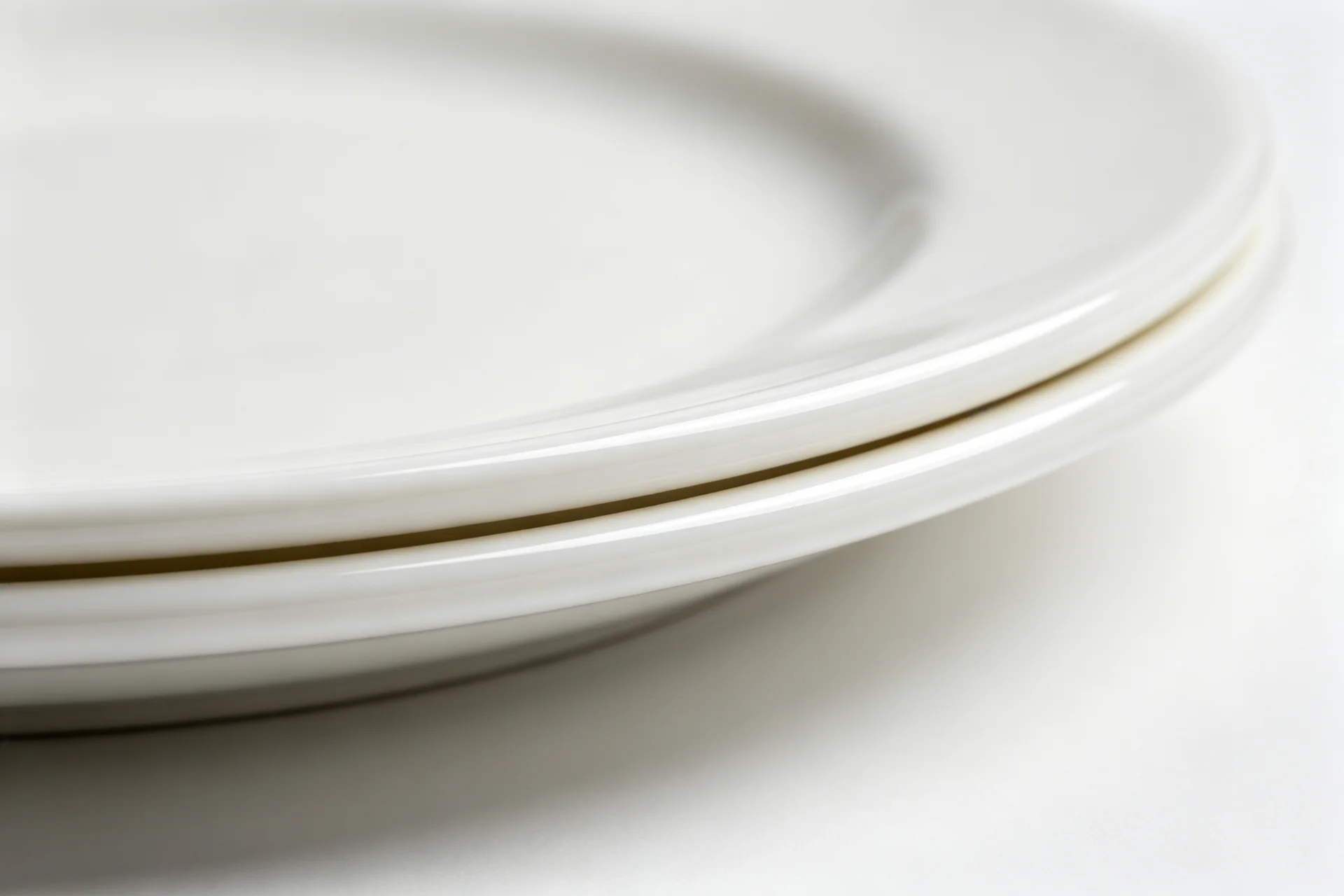
Replicating the sensory experience of traditional dining ware in a recycled polymer requires exact temperature control and mold surface treatments. For B2B buyers and hospitality groups, mastering this material transition means analyzing what currently sells and re-engineering it through rigorous material science.
1. Understanding the Glossy rPET Advantage
High-end hospitality demands flawless presentation. Tableware that feels hollow, warps under heat, or scratches easily immediately cheapens the dining experience and damages your brand reputation.
The core advantage of glossy rPET lies in its high polymer density and smooth light refraction. Unlike standard PP, rPET can be molded to achieve a ceramic-like tactile weight and surface brilliance without the heavy environmental toll or breakage risks.
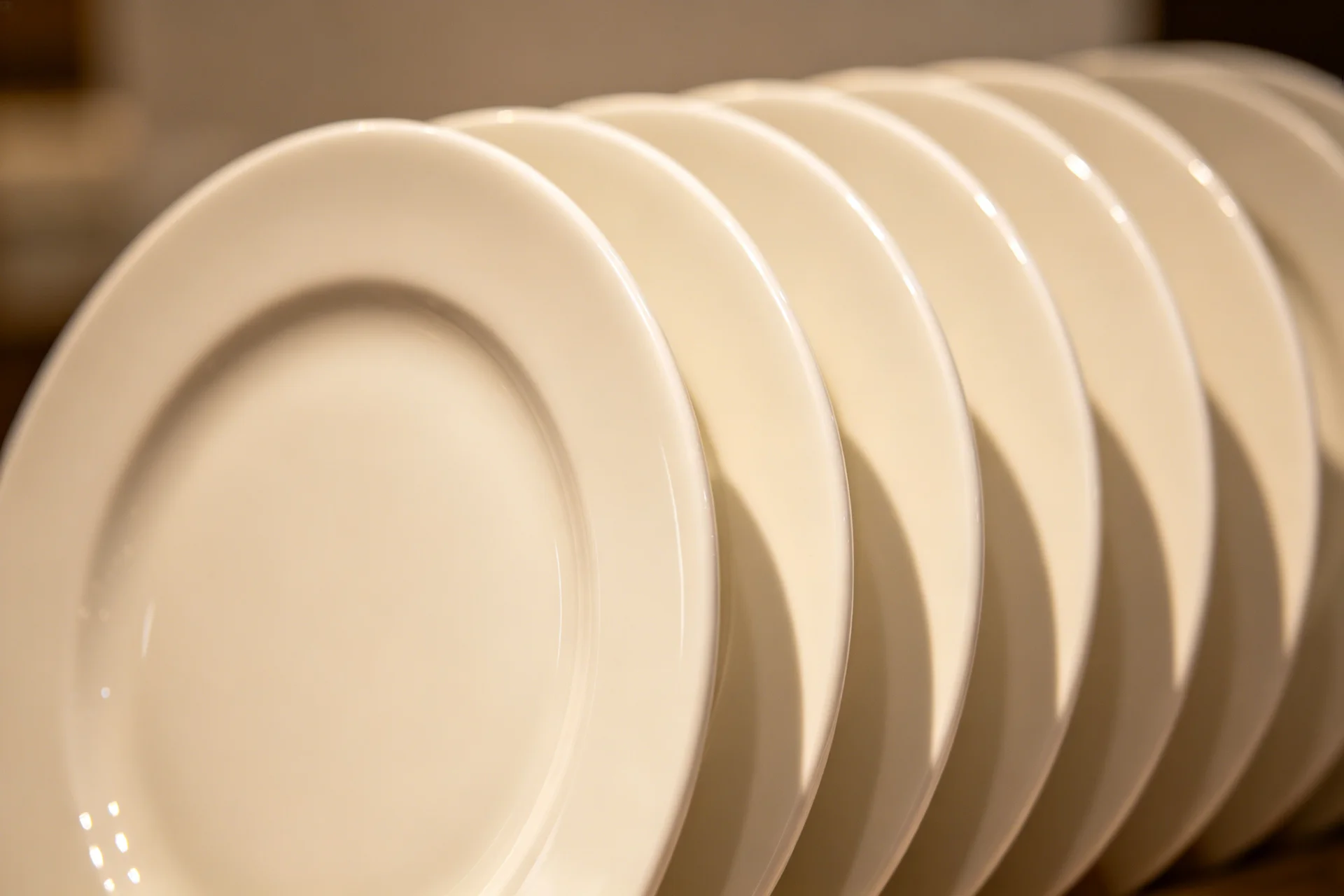
Visual and tactile advantages of white glossy rPET
White glossy rPET closely mimics the light reflection properties of bone china. Achieving this requires precise control over polymer crystallization during the cooling phase. If the mold temperature fluctuates, the material can become cloudy or develop unwanted stress marks. By maintaining strict thermal parameters, we ensure the material reflects light evenly across its surface. The tactile advantage stems directly from the material's specific gravity. We engineer the wall thickness and base geometry to give the plate a substantial, balanced weight in the hand, avoiding the flimsy, hollow feel associated with disposable plastics.
Gloss and texture compared to ceramic and Melamine
When selecting materials for commercial dining, B2B buyers must weigh aesthetic appeal against regulatory compliance and durability. The table below outlines how glossy rPET performs against traditional materials on the production floor and in the dining room.
| Material | Surface Gloss Level | Impact Resistance | EU FCM Compliance (EC 1935/2004) | End-of-Life |
|---|---|---|---|---|
| Glossy rPET | High (Ceramic-like) | Excellent | Fully Compliant | 100% Recyclable |
| Ceramic | Very High | Poor (Shatters easily) | Fully Compliant | Landfill |
| Melamine | High | Good | Strict limits (Formaldehyde migration) | Non-recyclable |
Appearance requirements for tableware in high-end dining
Premium dining environments require zero flow marks, invisible injection gates, and perfectly uniform rims. To achieve this, our engineering team does not rely on guesswork. We deeply analyze market sales data to identify which ceramic or melamine plates currently dominate high-end dining. We deconstruct their dimensions—measuring the exact curve radii, visual weight, and structural proportions—and then migrate these exact specifications into an rPET format. By evaluating the pros and cons of these hit products, we engineer a mold that replicates the premium footprint of a top-selling ceramic plate, while delivering the structural stability and safety of food-grade rPET.
2. Color, Texture, and Finish Options
Poorly executed color matching results in a cheap, plastic-like appearance. Variations in mold temperature or inconsistent masterbatch dispersion can cause unwanted dull spots across a production run.
Controlling color and texture in rPET requires precise masterbatch formulation and mold cavity temperature regulation. By engineering the mold tooling surface, factories can dictate whether a plate exhibits a high-gloss reflection or a refined matte finish.
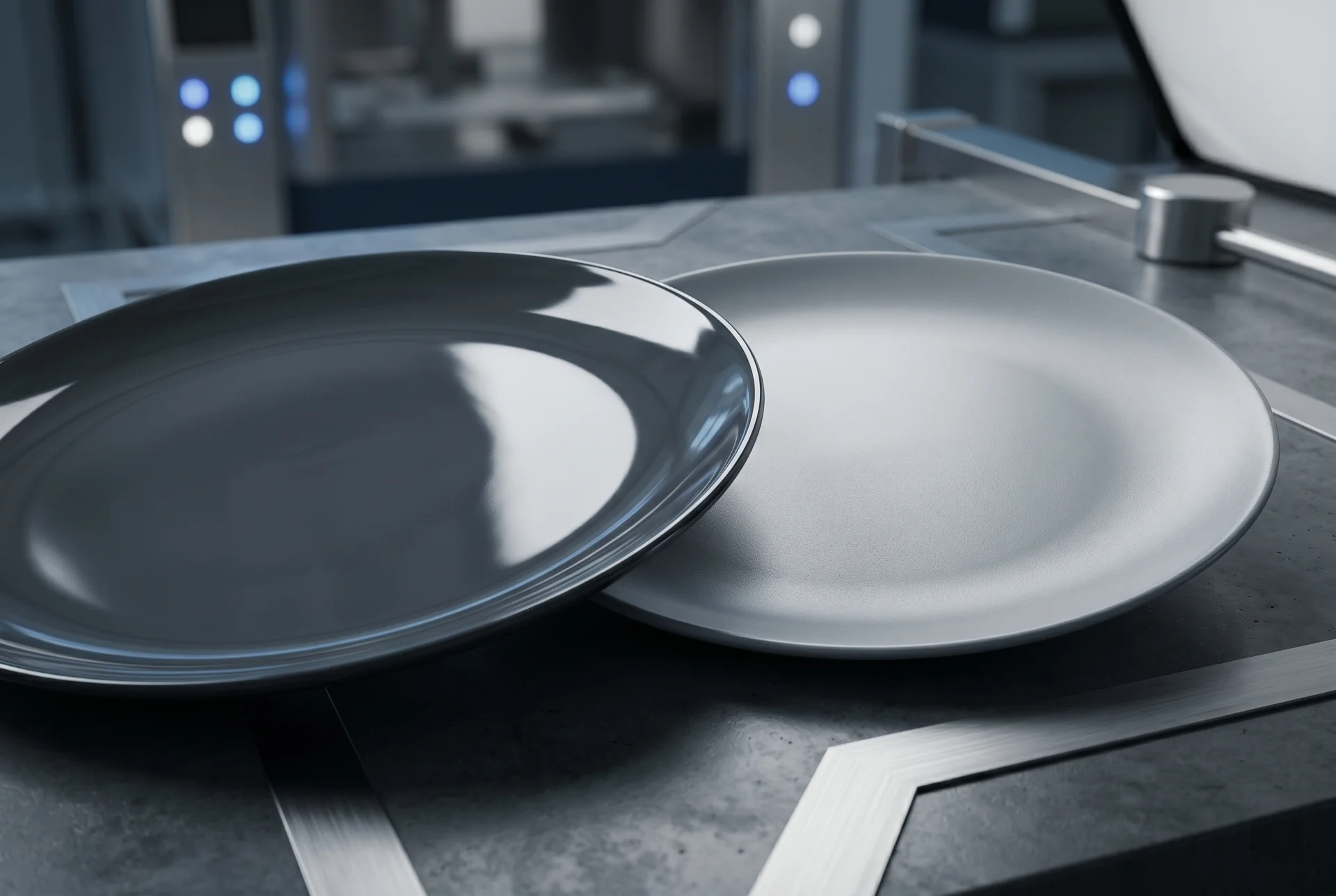
How to choose solid colors, glossy, matte, or gradient effects
Choosing the right finish depends on your target dining environment and the physical properties of the food being served. Solid colors demand high-quality, food-contact-safe pigments that will not exceed the overall migration limits (OML) set by LFGB standards. A glossy white finish is standard for minimalist, fine-dining setups, whereas matte finishes effectively hide micro-scratches and suit rustic, earthy brand identities. Gradient effects are complex; they require precise multi-shot injection parameters to prevent polymer degradation and ensure the structural integrity of the plate remains intact at the transition zones.
Gloss adjustment techniques (spraying, polishing)
In food-grade manufacturing, we strictly avoid post-mold chemical spraying to adjust gloss. Spray coatings risk delamination over time and often fail rigorous European food safety tests. Instead, we achieve our finishes entirely through mold tooling. To create a true glossy finish, we use highly polished steel molds (such as SPI A-1 or A-2 standards). If a client requires a matte texture, we apply specific sandblasting or chemical etching to the mold cavity (VDI surface finish). This transfers the exact texture directly into the polymer matrix during injection, ensuring the finish is permanent and completely food-safe.
Coordinating surface details with overall tableware design
Surface details must align with the physical geometry of the product. When benchmarking against high-volume tableware currently circulating in the market, or even analyzing competitors' bestselling items, we deconstruct their success. We study their subtle rim curves, base textures, and stacking lugs, then redesign comparable rPET versions. Achieving these coordinated surface details almost always requires opening completely new molds. While this extends the design chain, it guarantees that every tactile element—from a textured base that prevents sliding to a polished rim for comfortable dining—functions perfectly.
3. Surface Printing and Customization Techniques
Standard commercial inks easily degrade under heavy industrial dishwashing cycles. If your custom branding flakes off into hot food, you face immediate compliance failures and severe regulatory penalties.
Reliable surface customization on rPET demands food-grade, high-adhesion inks that withstand high-temperature washing. Techniques must strictly pass heavy metal and chemical migration testing to maintain EU EC 1935/2004 compliance.
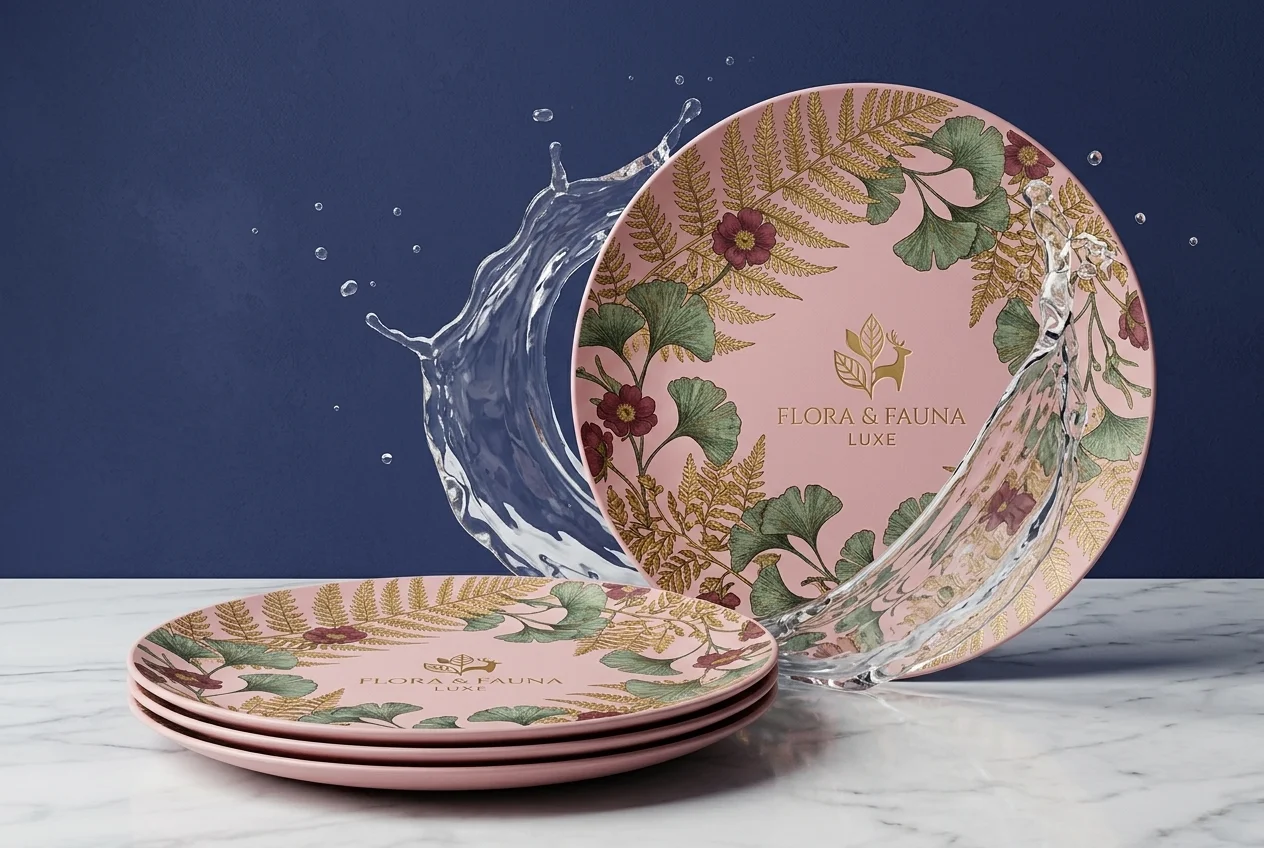
Diverse customization methods: printing, silk screen, heat transfer
Applying graphics to rPET requires understanding how ink binds to the polymer substrate. Silk screen printing is highly effective for bold, single-color logos, laying down a thick, durable layer of ink. For complex, multi-color designs, heat transfer printing is utilized. However, the process must be carefully monitored. The curing and transfer temperatures must be precisely calibrated to ensure the ink cross-links completely with the rPET surface without causing the base plate to warp from excessive heat exposure.
Patterns, brand logos, and restaurant theme designs
Customizing tableware goes beyond simply pasting a logo onto a plate. The applied patterns must survive aggressive commercial environments. We formulate inks that resist acidic foods, fats, and industrial alkaline detergents. Before any custom branded rPET tableware leaves the facility, it undergoes accelerated aging and wash-testing to ensure the logo or theme design remains vibrant and intact, protecting the restaurant's visual identity over hundreds of use cycles.
How high-end dining can enhance brand experience using rPET
High-end hospitality brands require precise matching to their established identity. To elevate their brand message, we design proprietary rPET collections that highlight their specific market positioning and sustainability goals. Because these high-end clients need distinct geometries and bespoke branding to stand out, off-the-shelf molds rarely suffice. We engage in a rigorous development process—designing new tooling, testing polymer flow, and perfecting custom ink adhesion. This extended design chain requires significant engineering investment, but it results in a fully customized, compliant tableware line that clearly communicates the brand's premium status and commitment to ecological responsibility.
Functional Design Considerations
Tableware that looks premium but fails under commercial stress is a massive operational liability. Plates that warp under heat, scratch easily, or feel unbalanced in the hand immediately disrupt service and drive up ongoing replacement costs for hospitality groups.
Proper functional design in rPET relies on precise wall thickness distribution and thermal stability engineering to guarantee the product survives industrial wash cycles and physical impact without losing its structural integrity.
Ergonomics and tableware feel design
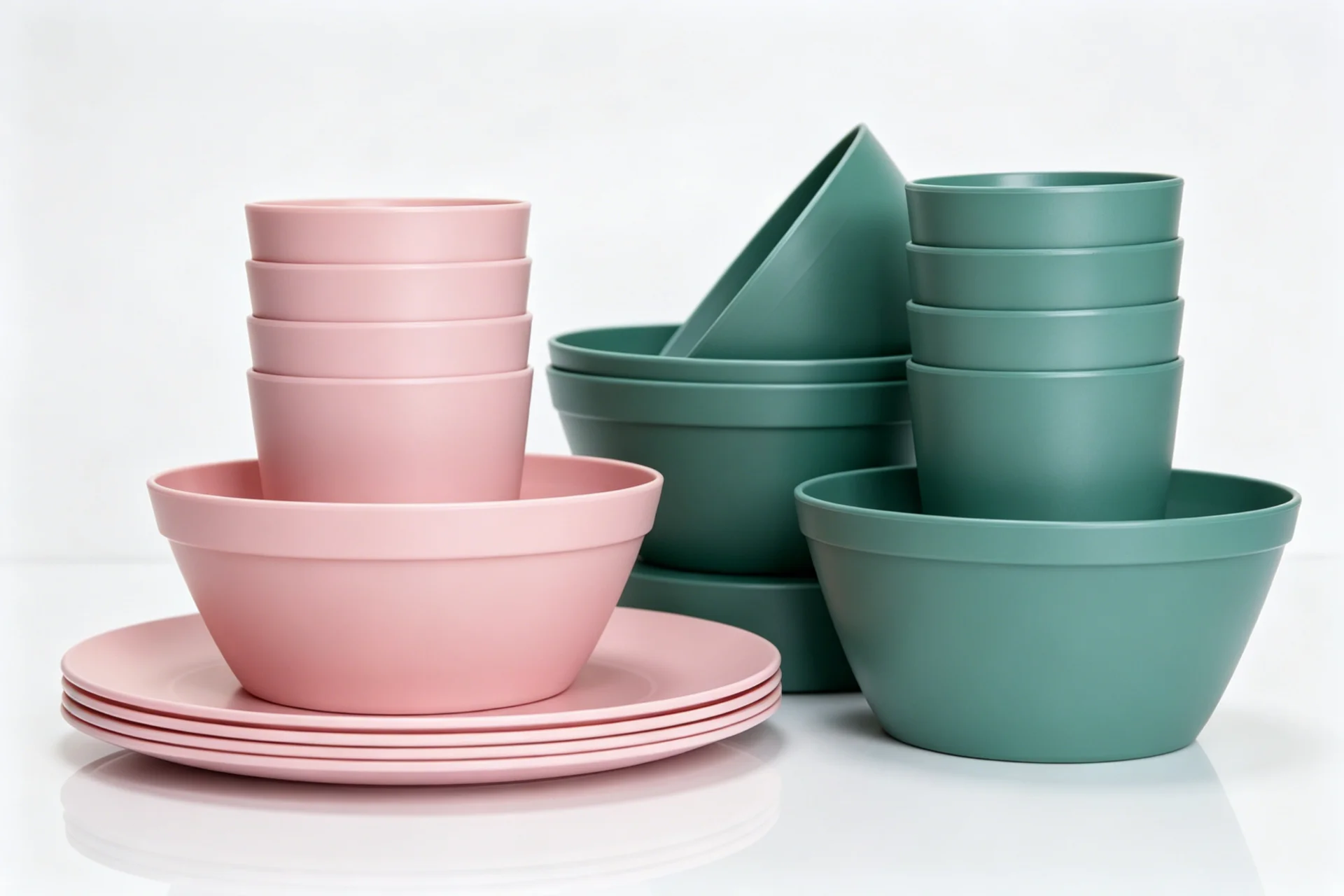
Achieving the correct tactile feedback requires analyzing the specific gravity of the polymer and how it is distributed throughout the mold cavity. A premium plate cannot feel flimsy or top-heavy. By controlling the injection speed and packing pressure, we push the rPET material densely into the base of the mold, creating a stabilized, weighted bottom. We rigorously deconstruct high-volume ceramic plates to capture their exact ergonomic data—such as rim angle and grip radius—and translate those dimensions directly into our CNC-machined steel molds. This ensures the final rPET product feels substantial and balanced when carried by serving staff or handled by diners.
Impact resistance, microwave safety, dishwasher compatibility
Material survival in commercial environments comes down to polymer chain orientation and thermal resistance. While standard rPET offers exceptional impact resistance compared to shattering ceramics, it requires careful formulation to withstand the alkaline detergents and thermal stress of commercial dishwashers. Standard rPET has specific temperature thresholds; exceeding them causes the polymer chains to relax, leading to warping.
To clarify how glossy rPET stacks up in functional commercial metrics, the following table compares its core properties against common alternatives on the factory floor:
| Functional Metric | Glossy rPET | Standard Polypropylene (PP) | Commercial Melamine |
|---|---|---|---|
| Drop/Impact Resistance | Very High (Absorbs shock) | Moderate (Prone to stress whitening) | High (But chips on hard impact) |
| Dishwasher Compatibility | Yes (Engineered for commercial cycles) | Yes | Yes (But degrades surface over time) |
| Microwave Safety | Low (Susceptible to heat deformation) | High | Low (Formaldehyde release risk) |
| Tactile Weight (Density) | High (Ceramic-like density) | Low (Feels light and plastic) | High (Heavy, rigid) |
Balancing aesthetics and practicality
High-gloss surfaces are visually striking but inherently prone to showing micro-scratches if not engineered correctly. To protect the visual finish, we incorporate functional geometry, such as raised stacking lugs on the base, to ensure plates nest together without the bottom of one scratching the glossy face of another. By analyzing the most successful designs circulating in the market, we deconstruct their structural pros and cons. We then redesign similar rPET tableware that retains the exact aesthetic appeal of the original high-selling items while engineering in these practical, wear-resistant features.
Bringing Premium rPET to the Table
Transitioning from fragile ceramics to compliant, sustainable polymers often stalls when generic market options fail to reflect a brand's unique identity. Forcing standard catalog items into a high-end dining environment creates an immediate visual disconnect for the consumer.
Executing a premium tableware transition requires comprehensive product deconstruction, bespoke mold tooling, and precise material formulation to directly match a restaurant's established market positioning.
Aveco's customization and sample services
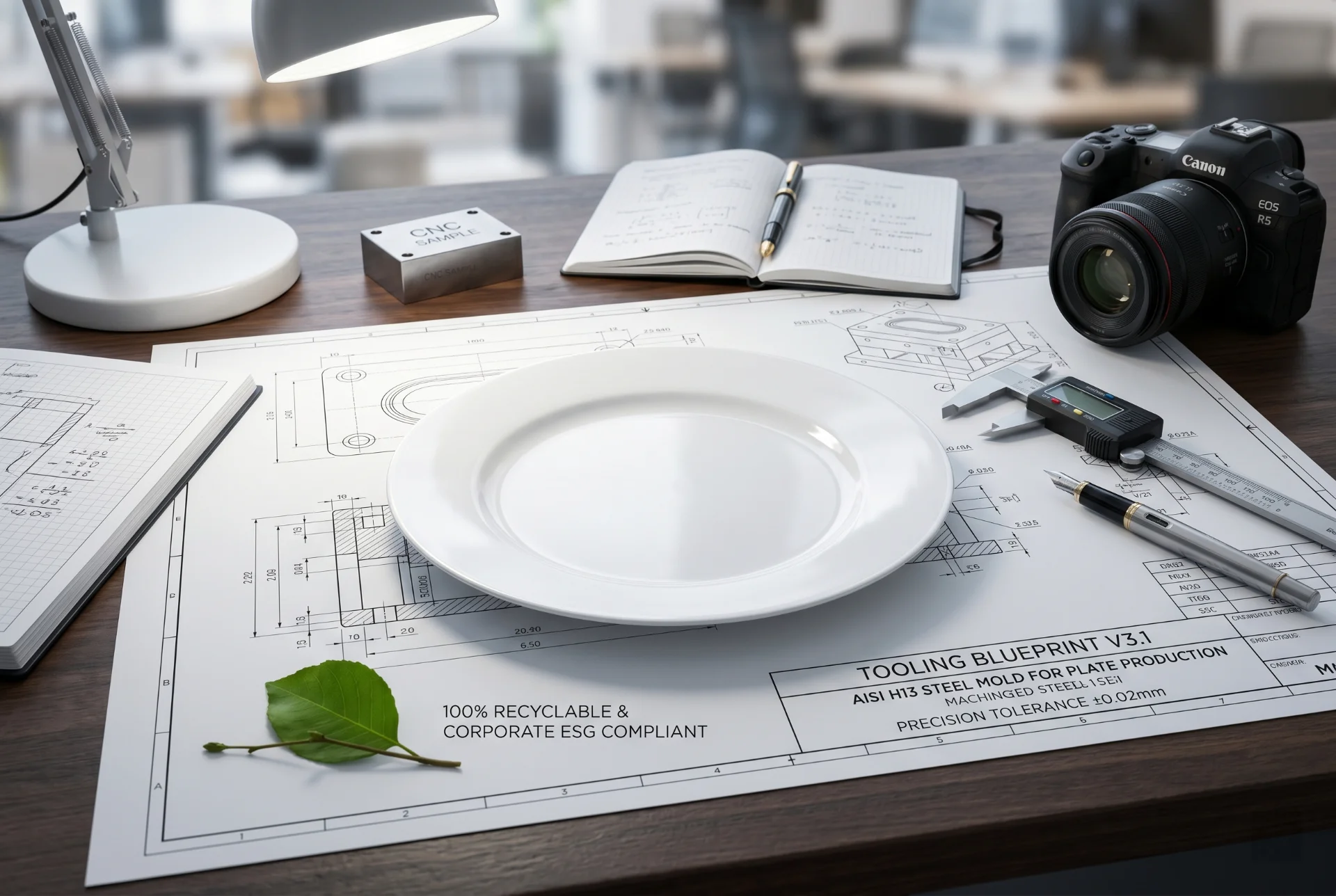
Our production process begins with hard data. The market department closely monitors which ceramic or melamine plates currently generate high sales volumes. Based on this data, we deconstruct these hit products and migrate their exact dimensions and visual weights into an rPET format. Before mass production begins, we supply pre-production samples run from prototype tooling. This allows B2B buyers to physically test the shrinkage rate, surface tension, and overall EU FCM compliance (such as specific migration limits testing under EC 1935/2004) to ensure the material performs safely with acidic or hot foods.
Case studies or application suggestions for high-end dining
Consider a high-volume luxury resort struggling with severe chipping rates on their outdoor dining stoneware. Replacing these with standard plastics damages the resort's premium aesthetic. By benchmarking their existing plates, we engineer a custom glossy rPET alternative that maintains the thick rim profile and heavy base they require. Because rPET is shatterproof and fully recyclable, the resort eliminates breakage hazards around pool areas while maintaining the visual standard of fine china. The transition cuts replacement budgets significantly while ensuring the material remains safe for direct food contact.
How to strengthen restaurant brand image and sustainability concepts with rPET
High-end brands have highly specific aesthetic and structural demands that off-the-shelf products simply cannot meet. To properly highlight a brand's message and match its precise market positioning, we analyze the client's needs and design bespoke rPET tableware that visually aligns with their specific aesthetic. In this tier of custom manufacturing, we almost always need to open completely new molds. While this bespoke tooling process creates a longer design chain, it is an absolute necessity. It guarantees the final product strictly aligns with the brand's premium identity, delivering a highly customized, 100% recyclable tableware solution that authenticates their commitment to sustainability.
Final. Transitioning to glossy rPET requires strict material science and precise mold engineering to replicate the tactile quality of ceramics. By deconstructing proven designs and prioritizing EU-compliant manufacturing, brands achieve durable, recyclable tableware that withstands commercial demands without compromising their high-end identity.