

Can rPET Be Used for Hot Food and Drinks?
Buyers often struggle to find sustainable tableware that withstands commercial dishwashers and hot meals. Warped plates and melted cups lead to immediate product failure and compliance nightmares.
Standard rPET cannot handle hot food, as it deforms above 60°C. However, modified rPET compounded with mineral additives can safely withstand temperatures up to 150°C, making it fully microwave and dishwasher safe for demanding food service environments.
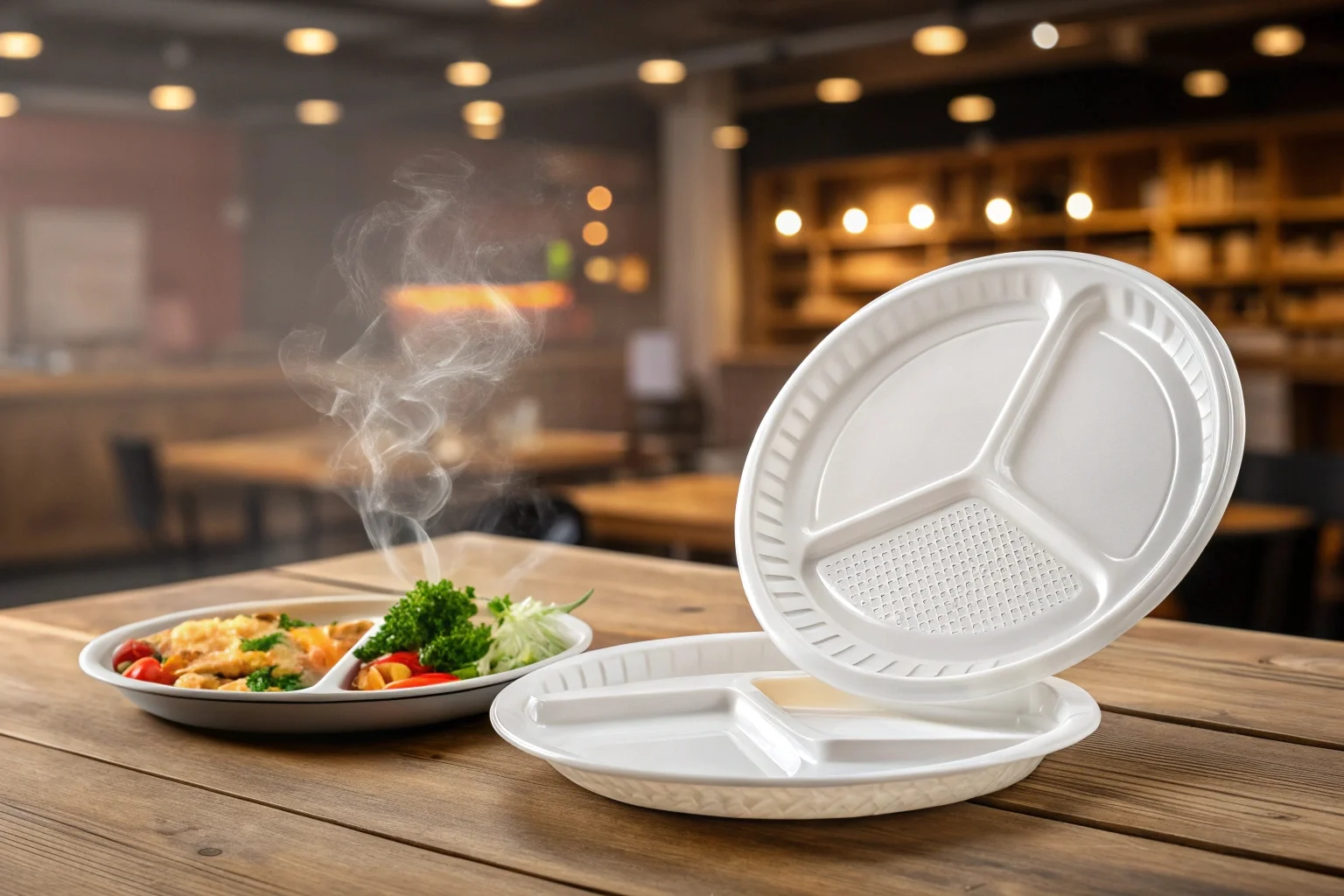
Understanding polymer behavior under thermal stress is critical before committing to a material. Here is the exact manufacturing reality behind rPET thermal limits and structural integrity.
What is rPET and how is it different from virgin plastic?
Sourcing teams often confuse recycled plastics with degraded materials. Specifying the wrong polymer grade means risking mechanical failure and failing strict European migration tests.
rPET is chemically identical to virgin PET but is recovered from post-consumer waste. Through solid-state polycondensation (SSP), we restore its intrinsic viscosity and molecular weight, ensuring the final food-grade polymer performs exactly like virgin material.
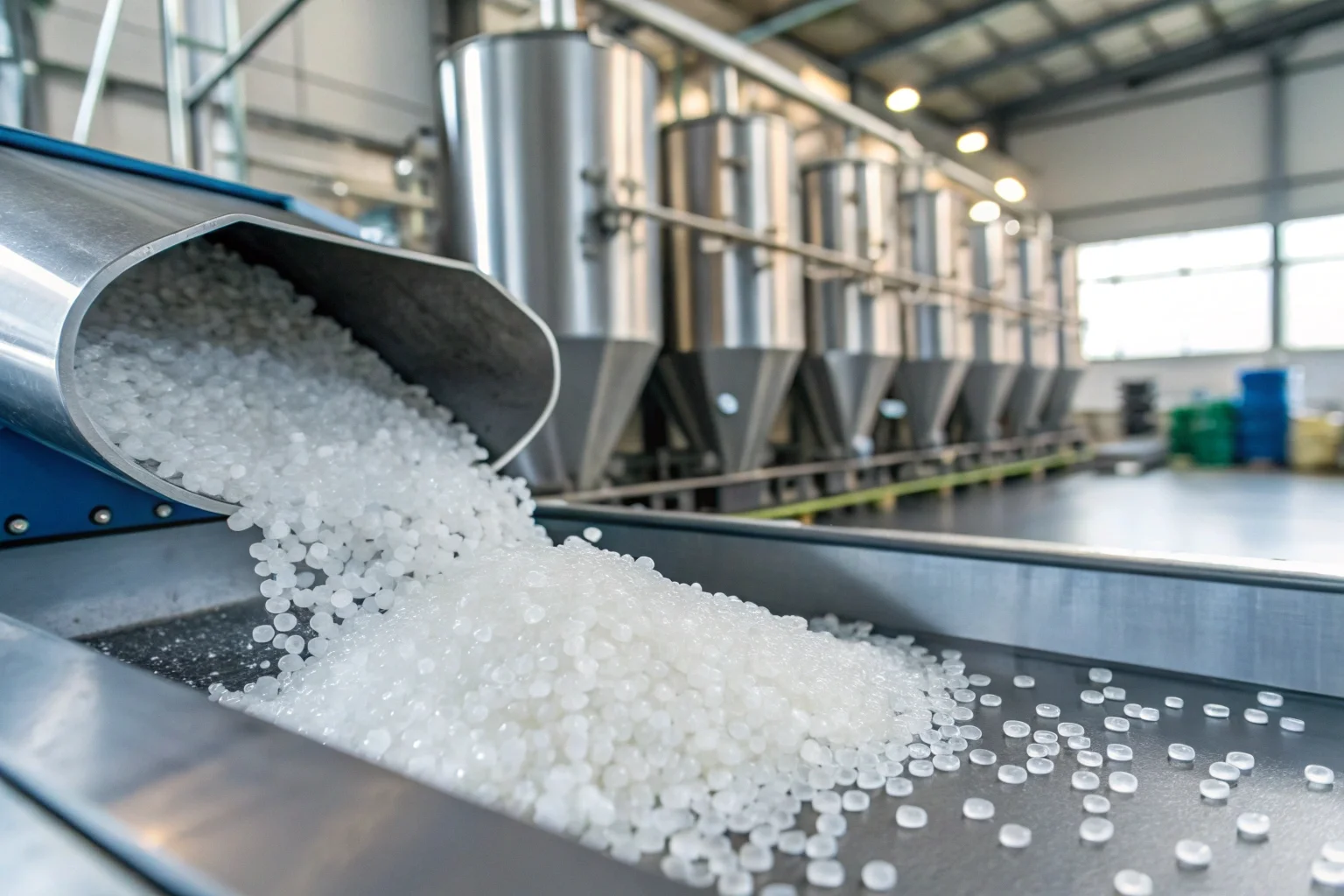
The Polymerization and Recycling Reality
Virgin PET (polyethylene terephthalate) is synthesized directly from petrochemical resources. rPET uses existing PET products—like water bottles—as its feedstock. When standard PET is melted and reprocessed, the polymer chains break down, resulting in a lower intrinsic viscosity (IV). A lower IV means the plastic is brittle and unfit for durable tableware.
In a proper manufacturing environment, we do not simply melt and inject scrap plastic. We subject the washed flakes to solid-state polycondensation. This process takes place in a vacuum under high heat, effectively extracting moisture and stitching the shortened polymer chains back together. The result is a high-density, durable raw material that mirrors the mechanical strength of virgin PET.
Food-Grade Decontamination Processes
The physical difference between virgin PET and rPET primarily lies in the required decontamination. Virgin plastic is inherently clean. rPET requires aggressive, multi-stage decontamination to meet strict food contact material (FCM) regulations like EU EC 1935/2004.
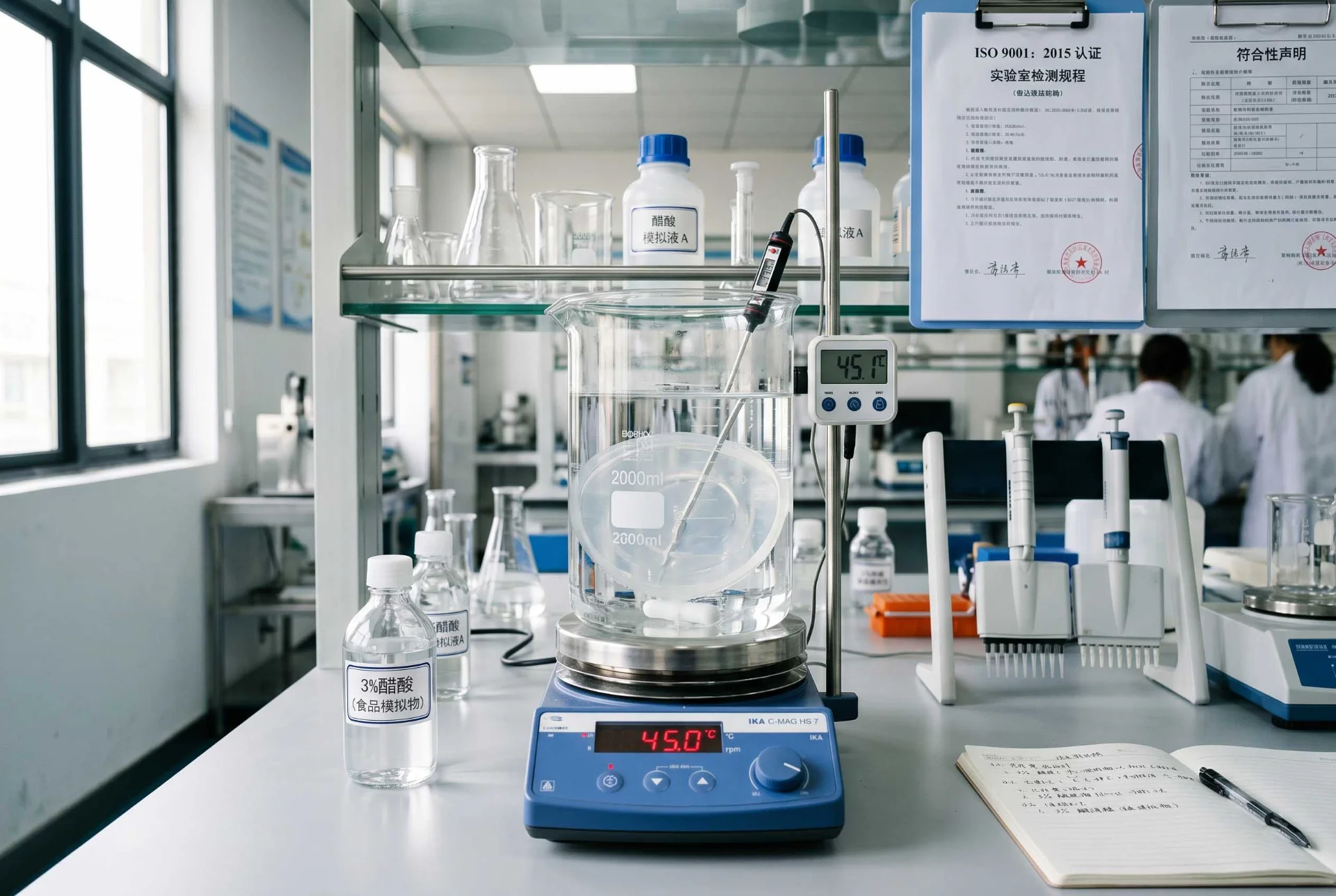
During our extrusion and SSP phases, volatile organic compounds (VOCs) and potential contaminants from the plastic's previous life cycle are stripped away. We run rigorous migration testing using simulants like 3% acetic acid and 50% ethanol at specific temperatures. Only when the heavy metal and monomer migration falls strictly below LFGB and FDA limits is the rPET approved for direct food contact.
Can rPET safely handle hot food and beverages?
Replacing hazardous melamine with sustainable plastics often hits a thermal roadblock. Serving boiling soups in standard recycled containers will cause immediate warping and potential chemical migration.
Standard rPET fails in hot applications, but modified rPET handles hot food perfectly. By blending 80-90% rPET with additives like talc powder, we engineer a crystallizing matrix that resists heat, offering a safer alternative to melamine.
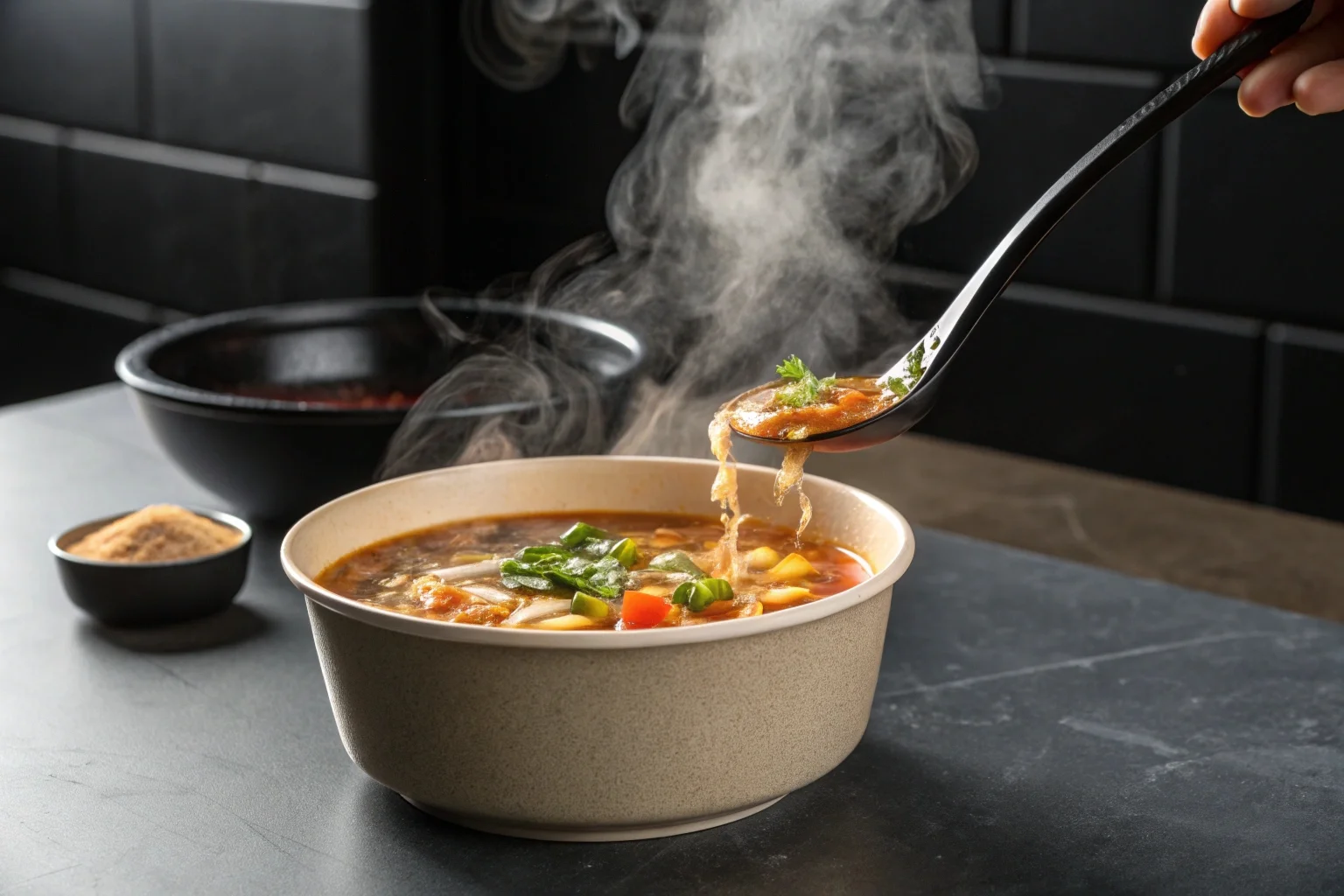
Standard rPET vs. Hot Applications
In its standard form, rPET is an amorphous polymer. During injection molding, the material cools rapidly inside the mold, preventing the polymer chains from forming organized, tightly packed crystal structures. Because of this amorphous state, standard rPET has a relatively low glass transition temperature (Tg) of approximately 60°C to 70°C.
When you pour hot coffee or boiling soup into a standard rPET container, the ambient temperature surpasses the polymer's Tg. The molecular chains begin to slide past one another. The immediate physical result is severe shrinking, warping, and loss of dimensional stability. For any application involving hot food, standard amorphous rPET is an absolute failure.
The Modified rPET Solution for High Temperatures
To successfully manufacture rPET tableware for hot food, we rely on precise material modification. Our engineering data shows that standard rPET is strictly limited to environments below 60°C. However, modified rPET can reach temperature tolerances of approximately 150°C.
Achieving this requires a specific compounding formula. Modified rPET cannot be 100% recycled PET; the matrix generally consists of 80% to 90% rPET. The remaining fraction contains vital additives, predominantly nucleating agents like talc powder. These additives force the polymer chains to crystallize rapidly during the molding process.
This specific modification makes rPET tableware a highly functional new trend in the B2B sector. It directly replaces melamine. While melamine poses severe safety risks—specifically formaldehyde and melamine monomer migration when exposed to high heat or acidic foods—modified rPET remains chemically stable and safe at 150°C.
What are the temperature limits of rPET products?
Vague temperature claims on technical data sheets mislead buyers. Knowing the exact thermal thresholds prevents catastrophic product failures in industrial dishwashers or consumer microwaves.
Standard rPET deforms at 60°C (140°F). In contrast, modified rPET maintains structural stability up to 150°C (302°F), ensuring complete safety during microwave heating cycles and prolonged exposure to boiling liquids.

Thermal Deformation Thresholds
Material performance is bound by its physical chemistry. The 60°C limit of standard rPET is a hard line. Exceeding it even briefly will warp the product. In commercial food service, food is routinely served at 75°C to 85°C.
By utilizing modified rPET compounded with talc powder, the crystalline structure locks the material in place up to 150°C. This massive jump in thermal resistance allows the tableware to handle deep frying oil splashes, boiling water, and direct steam without softening.
| Material Type | Max Temperature Tolerance | Microwave Safe | Commercial Dishwasher Safe | High-Heat Migration Risk |
|---|---|---|---|---|
| Standard rPET | 60°C (140°F) | No (Warps instantly) | No (Melts/Shrinks) | Low (if below 60°C) |
| Modified rPET | 150°C (302°F) | Yes | Yes (Tested >500 cycles) | None (Highly stable) |
| Melamine | 120°C (248°F) | No (Blisters/Cracks) | Yes | High (Formaldehyde release) |
Microwave and Dishwasher Compatibility
Commercial environments demand extreme durability. Industrial dishwashers rely on high-temperature sanitation cycles that easily reach 80°C to 85°C, coupled with harsh alkaline detergents. Standard rPET cannot survive a single cycle in these machines.
Modified rPET, however, is heavily engineered for this exact environment. Because its deformation threshold sits at 150°C, it absorbs the thermal shock of commercial dishwashing without microscopic stress fractures or dimensional warping. Furthermore, modified rPET is entirely microwave safe. It does not absorb microwave energy, meaning the vessel itself stays structurally sound while the food inside heats up. This combination of heat resistance and microwave compatibility is exactly why modified rPET is rapidly phasing out legacy thermoset plastics in hospitals, schools, and corporate cafeterias.
Material Selection: PP, PLA, and rPET in Reusable Tableware
Choosing the right polymer for food-contact tableware directly impacts product lifespan and regulatory compliance. A misstep in material selection leads to premature degradation, severe warping in commercial dishwashers, or failed chemical migration tests at customs. Analyzing the specific thermal and mechanical properties of PP, PLA, and rPET allows procurement teams to match the exact operational demands of their target commercial environments.
When selecting materials for commercial tableware, the defining factors are heat resistance, impact strength, and regulatory approval. Polypropylene (PP) offers the highest durability for hot-fill applications, while food-grade rPET provides unmatched clarity and tensile strength for cold items. PLA requires precise temperature controls during production but satisfies the strict requirements for industrially compostable bio-plastics.
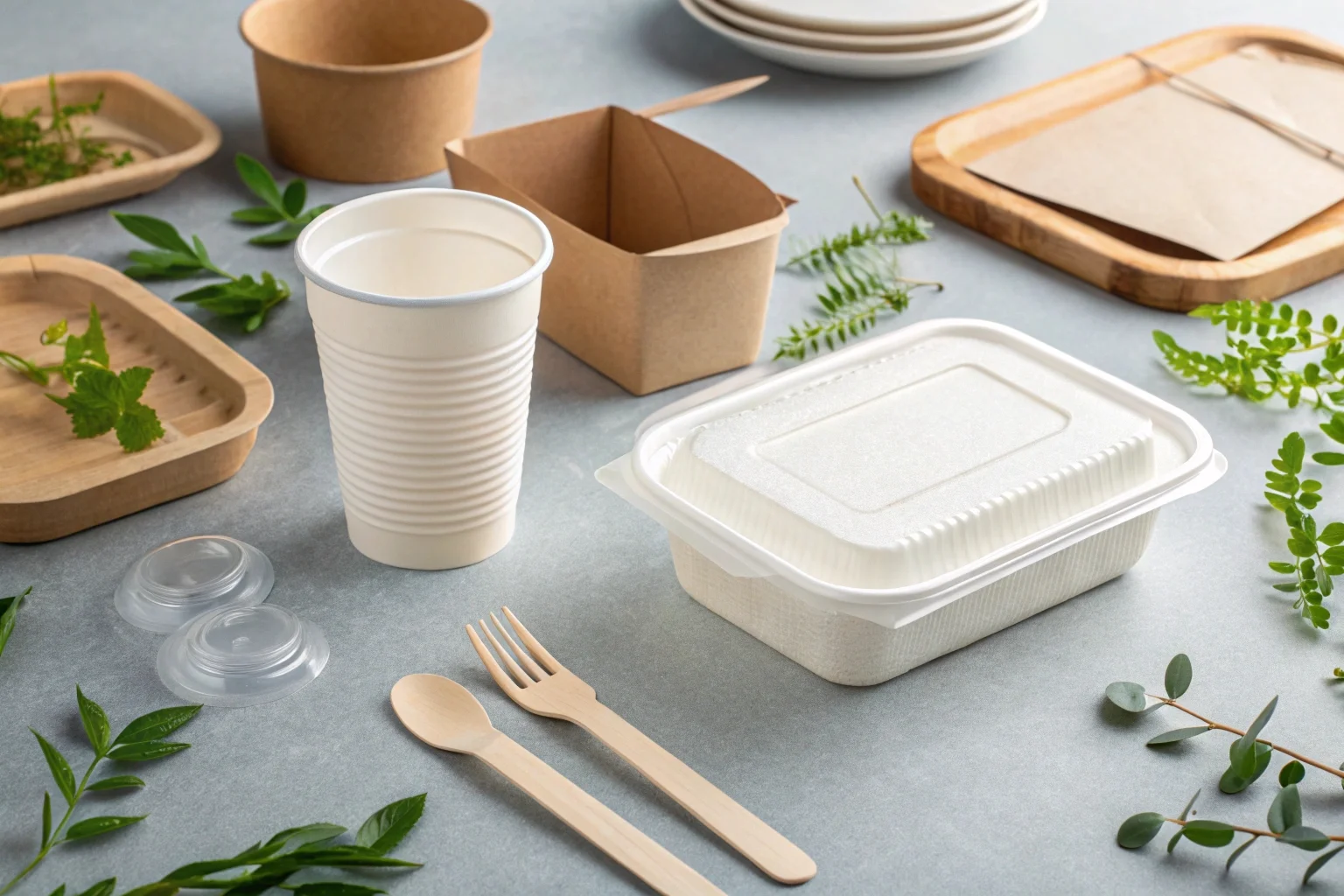
Polypropylene (PP): Thermal Stability and Durability
PP remains the foundational polymer for reusable tableware due to its exceptional thermal stability, boasting a melting point of roughly 160°C. This high heat deflection temperature means PP plates and bowls withstand repeated commercial dishwasher cycles and microwave exposure without structural warping. On the factory floor, we strictly monitor the Melt Flow Index (MFI) of incoming PP batches. An MFI that is too high can compromise the impact resistance of the final product under load, while too low an MFI requires excessive injection pressure, inducing internal stress. For long-term durability, we utilize specific impact co-polymers that maintain toughness even in sub-zero storage conditions.
| Material | Max Continuous Use Temp | Impact Strength | Primary Commercial Application | End-of-Life Profile |
|---|---|---|---|---|
| PP (Polypropylene) | Up to 120°C | Excellent | Hot food containers, heavy-duty reusable plates | Highly Recyclable |
| PLA (Polylactic Acid) | Up to 40°C (Standard)* | Moderate | Cold cups, bio-based cutlery | Industrial Compostable |
| rPET (Recycled PET) | Up to 60°C | High | Clear cups, rigid cold deli boxes | Highly Recyclable |
*Note: Crystallized PLA (CPLA) can withstand temperatures up to 85°C but requires careful integration of nucleating agents during the extrusion phase.
Polylactic Acid (PLA): Processing Bio-Based Polymers
Processing PLA presents unique thermodynamic challenges during injection molding. Because this bio-based polymer is highly hygroscopic, PLA resin must be dried using desiccant wheel dryers to achieve a dew point of -40°C, reducing moisture levels below 250 ppm before processing. Failure to execute this step results in hydrolytic degradation inside the machine barrel, snapping the polymer chains and leading to brittle, unusable tableware. We utilize specific barrel temperature profiles to maintain polymer chain length, ensuring the final product handles mechanical stress and compression without shattering.
Recycled PET (rPET): Achieving Food-Grade Purity
To utilize rPET safely in direct food-contact applications, the decontamination process is critical. The polymer must undergo solid-state polycondensation (SSP) to strip out volatile organic compounds (VOCs) and restore its intrinsic viscosity (IV). This advanced processing ensures the recycled resin meets strict EFSA (European Food Safety Authority) standards. In production, properly processed food-grade rPET performs identically to virgin PET in terms of transparency, barrier properties, and tensile strength, making it ideal for high-clarity cold beverage and deli applications.
Precision Manufacturing: Tooling and Injection Molding
Even the highest-grade polymer will fail in the field if the manufacturing process lacks precision. Poorly engineered molds or incorrect injection parameters cause internal stress, sink marks, and dimensional instability, resulting in stacked bowls that jam together or plates that crack upon first impact. Tight control over tooling design, holding pressures, and cycle parameters ensures consistent wall thickness and commercial-grade durability.
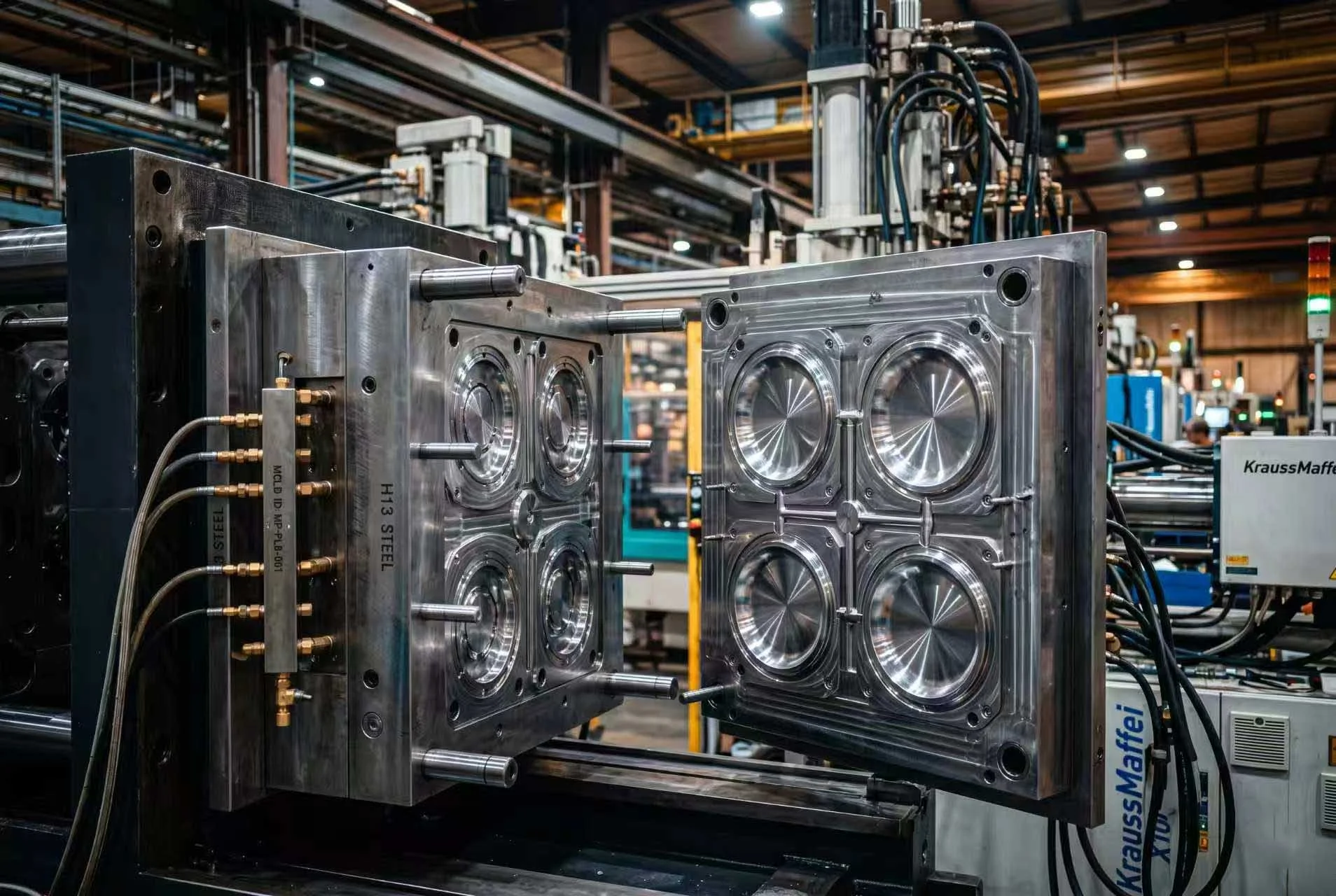
Achieving structural integrity in reusable tableware requires exact control over the injection molding process. Optimizing conformal cooling channels within the mold and maintaining highly consistent barrel temperatures prevents polymer degradation and internal thermal stress. This strict process control guarantees every unit meets the precise dimensional tolerances required for automated stacking and high-volume use.
Mold Design for Reduced Stress and Warpage
Tooling design dictates the mechanical lifespan of the product. In tableware manufacturing, achieving uniform wall thickness is necessary to prevent differential shrinkage during the cooling phase. If a plate's thick center cools slower than its thin rim, internal stresses form immediately, leading to inevitable warpage after just a few wash cycles. We engineer our molds using premium H13 or P20 tool steel, integrating conformal cooling channels that track the exact geometry of the part. This allows for rapid, uniform heat dissipation. Gate placement is mathematically calculated using mold flow analysis to minimize shear stress and flow marks, preserving the raw mechanical properties of the injected polymer.
Temperature Control During the Injection Cycle
Polymer stability relies heavily on exact thermal management during the injection and packing phases. For materials like food-grade PP, barrel temperatures must be kept strictly between 210°C and 240°C. If temperatures drift higher, thermal degradation occurs, increasing the risk of harmful chemical migration when the product eventually contacts hot food. We utilize closed-loop feedback systems and cavity pressure sensors on our injection machines to monitor and adjust melt temperatures and holding pressures in real-time. This eliminates sink marks and ensures high-density, impact-resistant tableware.
Ensuring Compliance with EU and FDA Regulations
Entering the global tableware market is impossible without navigating complex, heavily enforced food safety laws. Shipments are routinely rejected at European and American ports due to non-compliant heavy metal levels, sensory degradation, or excessive overall migration limits (OML). Partnering with a manufacturer that inherently understands and tests directly for EU EC 1935/2004, EU 10/2011, and FDA FDA 21 CFR standards guarantees a frictionless, compliant supply chain.
Regulatory compliance cannot be an afterthought in tableware production. Products must pass strict Overall Migration (OML) and Specific Migration (SML) testing using harsh chemical simulants under prolonged heat. Securing comprehensive Declaration of Compliance (DoC) documentation verifies that the base materials and colorants are safe for repeated food contact.
Migration Limits and LFGB Testing Protocols
The core of European Food Contact Material (FCM) regulations centers on migration—the transfer of chemical substances from the plastic into the food. Under LFGB testing protocols, we subject our PP and PLA products to rigorous simulants (such as 3% acetic acid, 50% ethanol, and vegetable oils) at elevated temperatures for extended periods, mimicking years of standard commercial use. We specifically formulate our base resins and source strictly approved color masterbatches to ensure that both Overall Migration Limits (OML) and Specific Migration Limits (SML) for monomers remain well below the strict thresholds set by EU Regulation 10/2011. Furthermore, we conduct sensory testing to ensure the material does not transfer any foreign odors or tastes to the food.
Supply Chain Traceability and Documentation
Compliance extends beyond laboratory tests; it requires exhaustive manufacturing traceability. Importers need a robust Declaration of Compliance (DoC) that details the specific testing conditions, surface-to-volume ratios, and material origins. Our facility maintains strict batch-level traceability. From the moment virgin PP or certified rPET resin enters our silos to the final automated packaging line, every critical production parameter is logged. This transparent data structure allows buyers to confidently clear customs and proves regulatory due diligence to major retail, catering, and hospitality clients.
Conclusion
Reliable reusable tableware demands rigorous material science, precise injection molding, and strict adherence to FCM regulations. By controlling thermal stability, minimizing internal mold stress, and strictly monitoring migration limits, manufacturers ensure that PP, PLA, and rPET products deliver both functional durability and unwavering global compliance.