

Commercial buyers often struggle to find recycled tableware that will not melt or warp in microwaves. Using standard recycled plastics leads to immediate product failures and severe compliance risks.
Yes, recycled plastic tableware can be microwave safe, but only if manufactured with modified, heat-resistant polymers. Standard recycled plastics melt under heat, whereas engineered composites like modified rPET withstand up to 150°C, ensuring LFGB and FDA compliance without hazardous chemical migration during microwave heating.
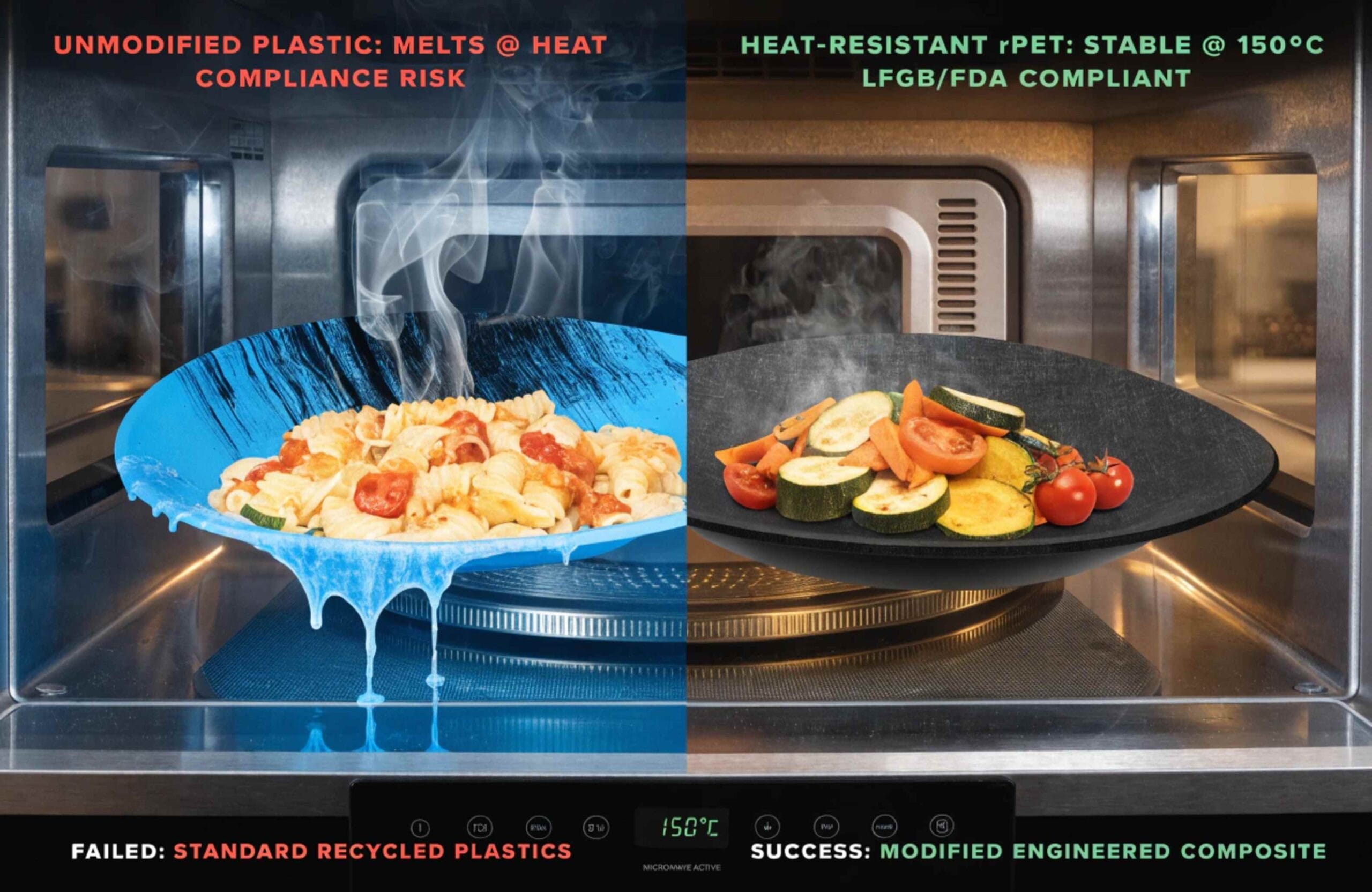
Understanding polymer thermal stability is non-negotiable for commercial tableware procurement. When evaluating post-consumer recycled materials for high-temperature applications, buyers must look beyond green claims and focus strictly on molecular structure, heat deflection temperatures, and migration testing data.
What Materials Make Recycled Plastic Tableware Microwave Safe?
Relying on standard recycling streams for high-heat applications is a recipe for structural failure. Conventional recycled resins deform at mere 60°C, risking severe food safety violations and ruining buyer reputation.
The safety of microwavable recycled tableware depends entirely on polymer modification. Engineered materials are structurally altered using specific nucleating agents to resist thermal breakdown, maintaining rigidity and chemical stability well past the boiling point of water.
Understanding rPET Material Properties and Heat Resistance
Through over a decade of manufacturing, our material engineers at Aveco Group have observed a critical distinction that many buyers miss: ordinary rPET cannot handle microwaves. Standard recycled polyethylene terephthalate has a low glass transition temperature, meaning it starts to soften and deform around 70°C. However, heat-resistant rPET—which is modified rPET—undergoes a targeted crystallization process during injection molding. This engineering modification allows the material to withstand high temperatures up to 150°C. Because of this enhanced thermal stability, modified rPET is entirely safe for both microwave reheating and commercial dishwasher cycles.
RPET vs Virgin Plastic: Structural Differences Under Microwave Heat
Virgin plastics like Polypropylene (PP) naturally possess high heat deflection temperatures. When converting post-consumer waste into rPET, the polymer chains are often shortened, reducing inherent strength. To match the microwave performance of virgin PP, modified rPET requires precise compounding. We introduce chain extenders and nucleating agents into the PCR (Post-Consumer Resin) matrix. This restores the molecular weight and creates a dense crystalline structure, preventing the micro-cracking and blistering that typically occur when standard recycled plastics absorb microwave energy.
| Material Type | Heat Deflection Temp | Microwave Safe | Dishwasher Safe | Molecular Stability |
|---|---|---|---|---|
| Standard rPET | ~65°C - 70°C | No (Will Warp) | No (Will Deform) | Low under thermal stress |
| Virgin PP (#5) | ~120°C - 130°C | Yes | Yes | High natural stability |
| Modified rPET | Up to 150°C | Yes | Yes | Engineered high crystallization |
How Bamboo Fiber Composites Enhance Microwave Safety
When engineering recycled plastics, integrating bio-based materials like bamboo fiber alters the thermal conductivity of the finished product. Bamboo fiber acts as a structural reinforcer within the polymer matrix. By distributing thermal load more evenly across the tableware, the composite material mitigates localized hot spots that occur during microwave heating. This dimensional stability prevents the polymer from expanding unevenly, ensuring the structural integrity of plates and bowls during aggressive reheating cycles.
FDA and LFGB Certification Standards for Microwave-Safe rPET
Material science means nothing without rigorous compliance testing. For modified rPET to be legally sold as microwave-safe, it must pass strict migration limits under EU EC 1935/2004 and LFGB standards, or FDA 21 CFR regulations. Testing involves exposing the tableware to food simulants (like 3% acetic acid or olive oil) at specific temperatures and durations—often 100°C for up to two hours. This guarantees that the high temperatures generated by a microwave do not cause the modified polymer structure to release volatile organic compounds (VOCs) or heavy metals into the food.
How Do You Identify Microwave-Safe Recycled Plastic Products?
Stamping a recycling triangle on a container does not guarantee heat resistance. Procurement managers who fail to verify technical specifications often end up with tableware that blisters during food reheating.
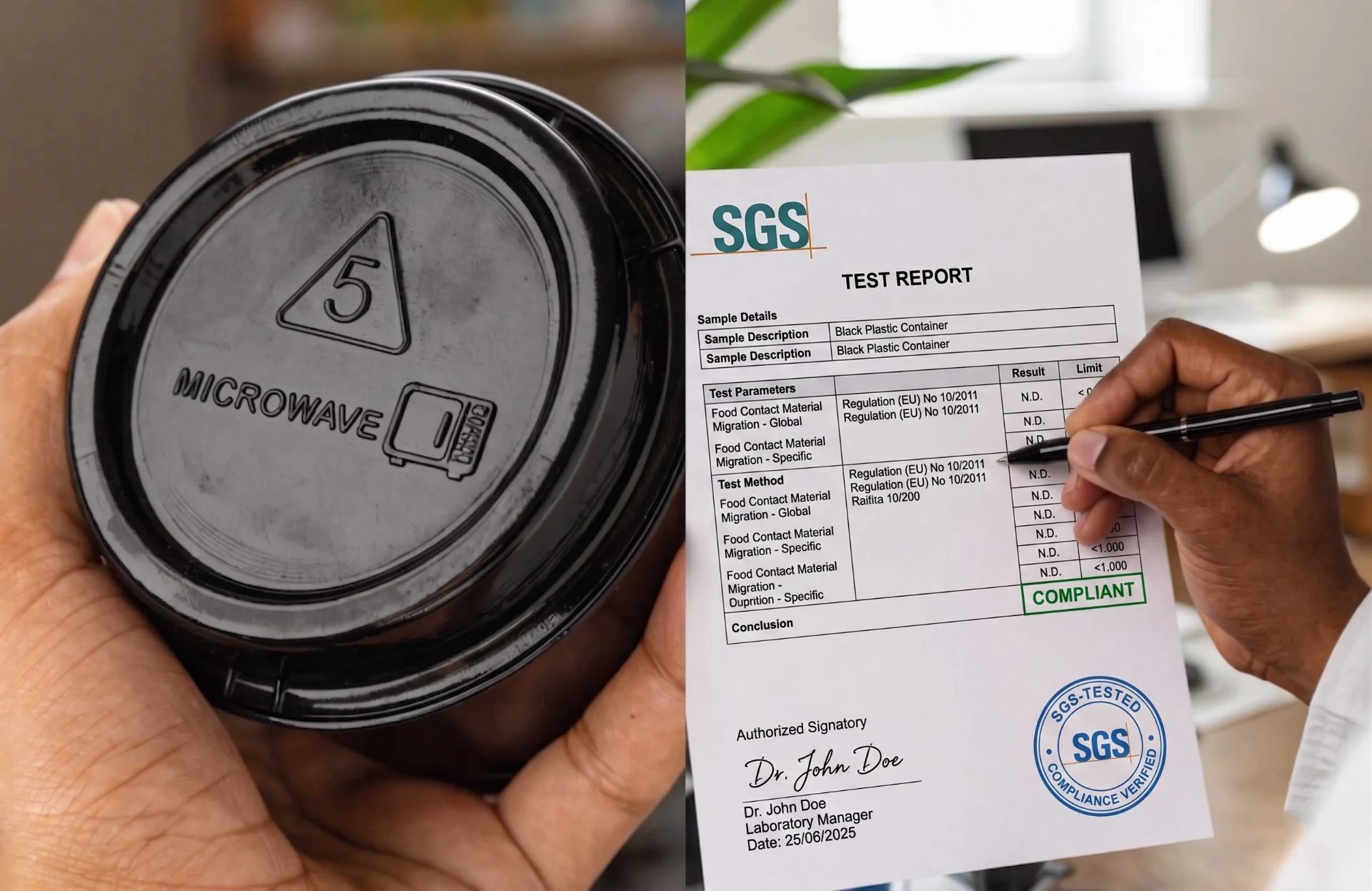
B2B buyers must identify microwave-safe products through formal certification documents and specific mold stamps. You cannot rely on visual inspection; verification requires checking the Resin Identification Code (RIC) alongside confirmed third-party migration test reports.
Decoding Microwave-Safe Symbols on Recycled Tableware
The standard microwave-safe symbol features a microwave oven icon with wavy lines representing heat. In professional manufacturing, this symbol must be physically embossed or debossed into the steel tooling so it permanently molds onto the bottom of the tableware. Screen-printed icons degrade over time. If a supplier offers recycled tableware with only printed microwave-safe logos, it indicates a lack of dedicated tooling for high-heat applications, which should be an immediate red flag for bulk buyers.
Reading Resin Identification Codes: Which Numbers Are Safe?
The Resin Identification Code (RIC) system classifies polymer types but does not guarantee thermal readiness. Code #1 indicates PET or rPET. As noted, standard #1 is never microwave safe. Only modified rPET (which still falls under the #1 or #7 category depending on regional labeling laws) is engineered for microwaves. Code #5 indicates Polypropylene (PP), which is naturally heat resistant. Buyers must understand that the RIC number dictates the base chemistry, but the manufacturer's technical data sheet dictates the actual thermal threshold.
Testing Methods: The Water Test for Microwave Compatibility
Beyond lab certifications, factories utilize functional tests. The water test involves filling the recycled tableware with water and microwaving it on high for several minutes. Because microwaves heat the water molecules and not the plastic itself, the container should only become warm from the conduction of the hot water. If the plastic itself becomes intensely hot to the touch or shows immediate signs of warping, the material composition lacks the necessary thermal stability and fails the fundamental requirements for microwave safety.
Manufacturer Guidelines: What B2B Buyers Must Verify
Procurement teams must demand specific documentation from their manufacturing partners. Always request the Declaration of Compliance (DoC) and the full testing report from accredited labs like SGS or TÜV. Look specifically for Overall Migration (OM) and Specific Migration (SM) results conducted under high-temperature test conditions (e.g., OM5 test conditions for high-temperature applications). Verifying these specific temperature thresholds in the test data is the only empirical way to confirm the recycled product can handle commercial microwave use.
What Are the Risks of Microwaving Non-Certified Recycled Plastics?
Ignoring temperature thresholds exposes end-users to dangerous toxins. Heating unstable polymers breaks chemical bonds, turning a simple meal service into a severe liability crisis for distributors.
Microwaving non-certified plastics triggers accelerated chemical migration and polymer degradation. When temperatures exceed the material's structural threshold, toxic monomers leach directly into food, causing severe regulatory violations and immediate product failures.
Chemical Leaching: BPA and Phthalates in Heated Plastics
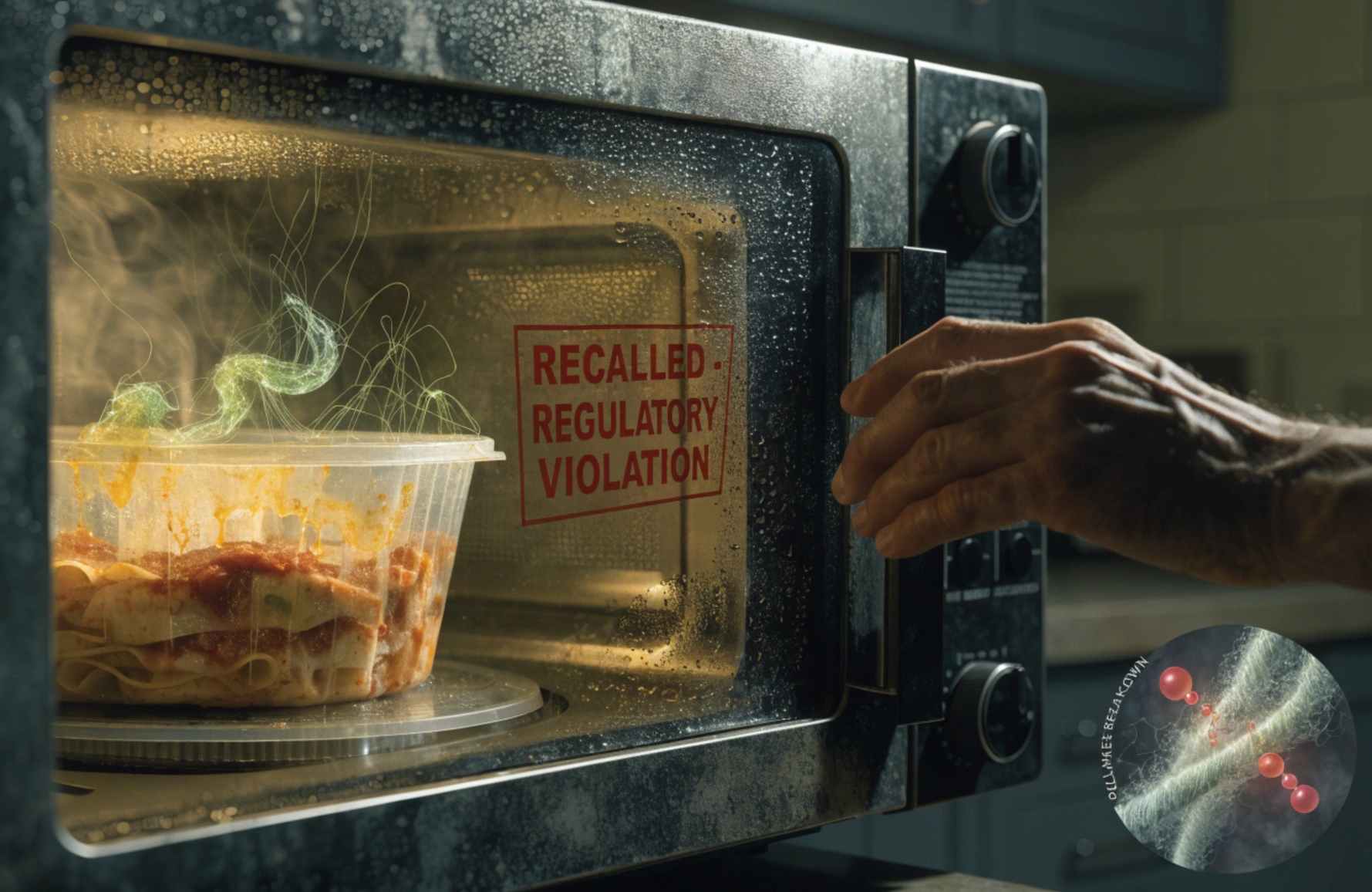
Heat acts as a catalyst for chemical reactions. When non-certified recycled plastics are microwaved, the thermal energy accelerates the migration of residual chemicals from the plastic into the food—especially fatty or highly acidic foods. If the post-consumer resin was poorly sorted or improperly decontaminated, harmful additives like phthalates (used as plasticizers) or trace amounts of BPA can break free from the polymer matrix. Proper manufacturing of food-grade rPET strictly prohibits these compounds, but unverified materials remain a severe contamination risk.
Structural Degradation: Warping and Melting Temperature Thresholds
Plastics possess a specific Glass Transition Temperature (Tg). Standard rPET has a Tg of approximately 70°C. When a microwave heats food well beyond 100°C, the heat transfers directly to the plastic. Non-certified recycled tableware will rapidly exceed its Tg, causing the polymer chains to relax. This results in immediate macroscopic structural degradation: plates will warp, bowls will sag, and the structural integrity fails entirely. This physical deformation creates immediate burn hazards for consumers attempting to handle the hot containers.
Food Safety Concerns: Toxin Migration During Reheating
Microwaves do not heat evenly; they create concentrated hot spots. If a recycled plastic container lacks the necessary nucleating agents to disperse thermal stress, these localized hot spots will cause the polymer to micro-melt. Even if the container does not visually collapse, this microscopic melting creates pathways for unreacted monomers and degraded oligomers to migrate into the meal. Ensuring material compliance under EC 1935/2004 prevents this microscopic failure, guaranteeing that the surface in contact with the food remains chemically inert under extreme heat.
Long-Term Health Impacts of Microwaving Unsafe Materials
The continuous ingestion of migrated polymer additives has well-documented health consequences. Compounds leaching from unstable recycled plastics act as endocrine disruptors, interfering with hormonal systems over time. For B2B buyers in the HORECA sector, distributing tableware that causes long-term health impacts invites catastrophic legal liabilities, forced product recalls, and permanent brand destruction. Sticking strictly to verified, modified rPET or certified bio-composites is the only viable method for protecting consumer health and commercial integrity.
4. Advanced Polymer Alternatives for High-Stress Food Contact
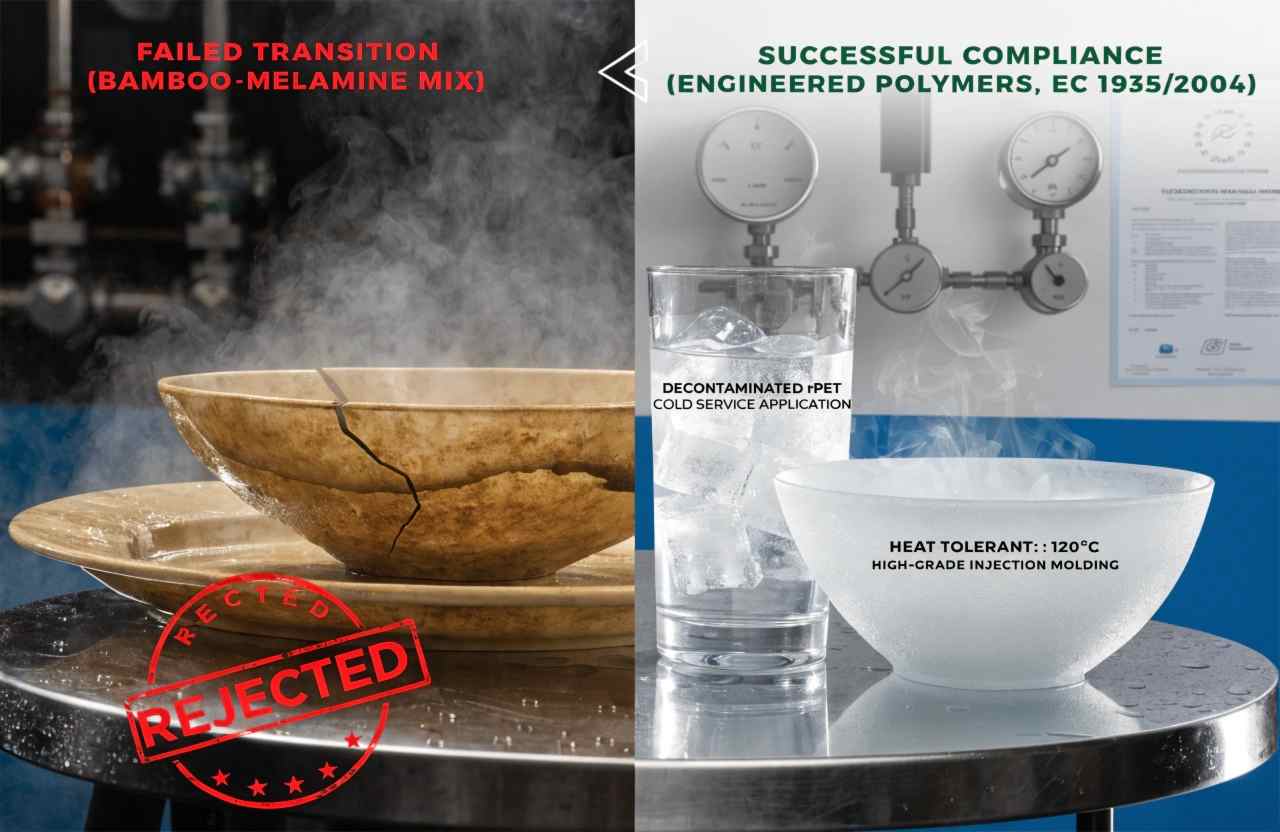
When buyers transition away from non-compliant melamine or bamboo-fiber plastics, they face a severe material gap. Many alternative plastics warp under heavy commercial dishwasher cycles or fail strict heavy-metal migration tests at the European border. Specifying the wrong polymer matrix leads to immediate product recalls, destroyed inventory, and lasting brand damage. Selecting high-grade, structurally stable polymers like engineered rPET and virgin Polypropylene (PP) ensures mechanical durability while passing stringent EU EC 1935/2004 mandates.
To guarantee food safety and mechanical integrity, manufacturers rely on food-grade Polypropylene (PP) for its high thermal tolerance up to 120°C and decontaminated rPET for high-clarity, sustainable cold-service applications. These specific polymers offer predictable melt flow indices and strictly controlled chemical migration profiles during injection molding.
rPET Applications in Commercial Food Service
Processing post-consumer recycled PET (rPET) for direct food contact is a complex engineering task. The material must undergo a "super-clean" recycling process authorized by the European Food Safety Authority (EFSA). We rely on Solid State Polycondensation (SSP) to restore the intrinsic viscosity of the recycled polymer, bridging broken molecular chains. This ensures the final tableware possesses the high tensile strength and optical clarity required for premium commercial cold serviceware. In the factory, processing rPET requires exact moisture control. If the resin is not dried to below 50 parts per million (ppm) before entering the extruder, hydrolysis occurs, causing the material to become brittle and opaque. When manufactured correctly, rPET provides a highly sustainable, closed-loop material choice that actively reduces virgin plastic reliance while meeting all LFGB contact safety parameters.
Polypropylene (PP) Thermal Stability and Migration Tolerance
Polypropylene is the backbone of reusable hot-food tableware. Its semi-crystalline molecular structure provides excellent chemical resistance and high heat deflection temperatures. However, not all PP is created equal. For EU-compliant tableware, we strictly source nucleated, high-isotactic PP grades. These grades accelerate crystallization during the cooling phase in the mold, shrinking the cycle time while maximizing the final product's rigidity.
Migration tolerance is the critical metric here. Under LFGB testing, tableware is exposed to food simulants like 3% acetic acid or 50% ethanol at 70°C for two hours. Low-quality PP compounded with cheap flow enhancers will leach low-molecular-weight substances, failing the Overall Migration (OM) test. By maintaining strict barrel temperatures and using purely compliant additives, we prevent polymer degradation and keep migration levels well below the strict 10 mg/dm² EU threshold.
| Material Feature | Polypropylene (PP) | Recycled PET (rPET) | Crystallized PLA (C-PLA) |
|---|---|---|---|
| Max Continuous Use Temp | 100°C - 120°C | 60°C - 70°C | 85°C - 90°C |
| Optimal Food Application | Hot meals, microwave safe | Cold beverages, salads | Warm foods, hot coffees |
| Moisture Sensitivity in Process | Low | Extremely High (<50 ppm) | Extremely High (<200 ppm) |
| EU/LFGB Compliance Path | Virgin resin certification | EFSA-approved SSP process | Virgin resin certification |
| Impact Resistance | High (Highly ductile) | Medium (Rigid) | Medium-Low (Brittle) |
5. Bio-Based Materials and the Realities of PLA Manufacturing
Polylactic Acid (PLA) is heavily requested for its eco-friendly, bio-based profile. However, standard amorphous PLA deforms at roughly 50°C, making it functionally useless for hot food or dishwasher applications. If a facility simply injects standard PLA into a cold mold without advanced thermal processing, the resulting plates or cups will warp during summer transit or melt under hot water. Mastering bio-polymers requires advanced crystallization techniques, nucleating agents, and aggressive moisture control prior to the melt phase.
Producing heat-resistant bio-plastics requires inducing a semi-crystalline lattice in PLA through precise mold temperature control (typically between 90°C and 110°C) and extended in-mold cooling cycles. Furthermore, raw PLA pellets must be dried to below 0.02% moisture content to prevent severe hydrolytic degradation of the polymer chains.
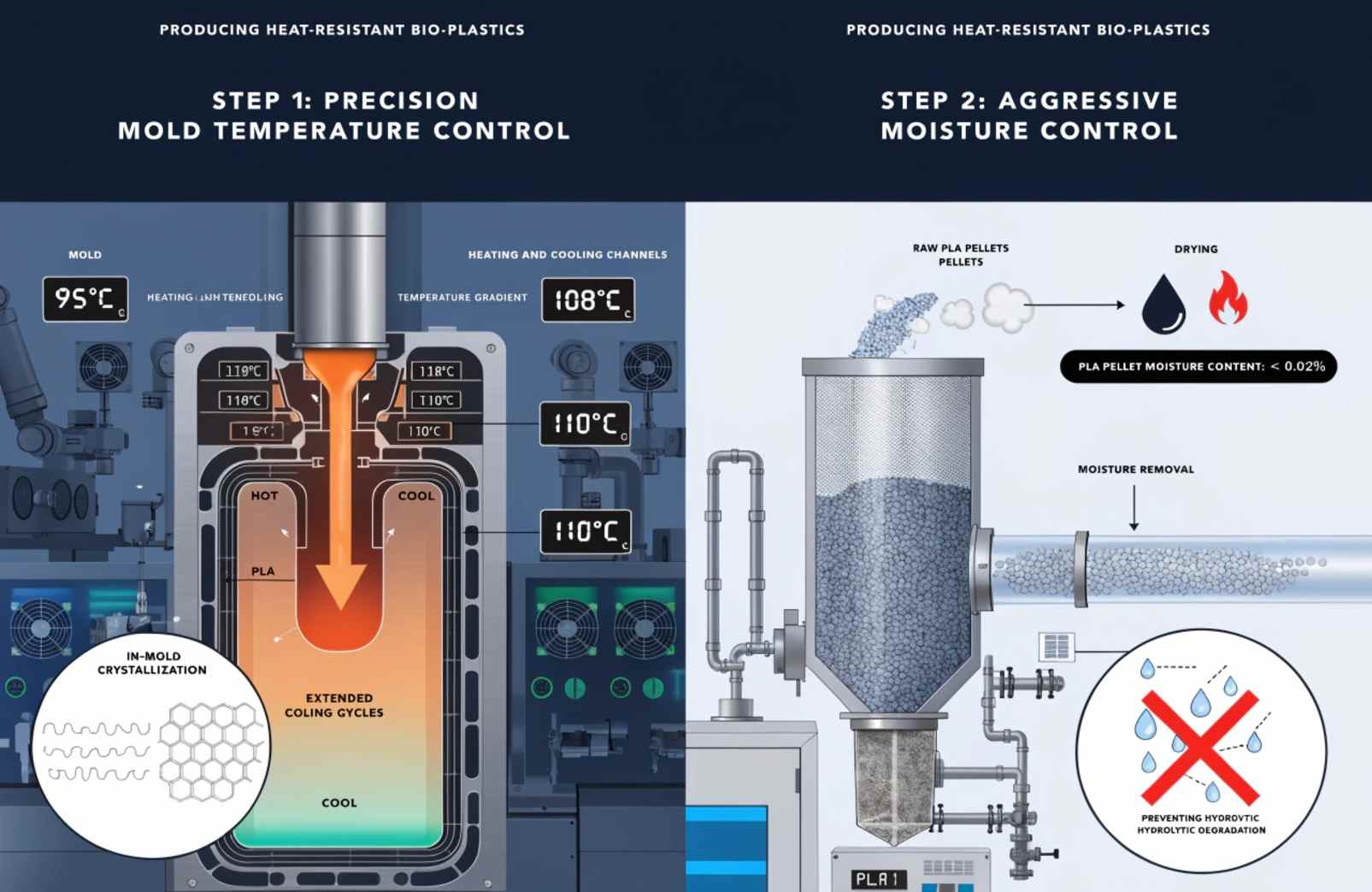
Crystallization Requirements for Heat-Resistant PLA
Standard PLA leaves the mold in an amorphous state, meaning its molecular chains are randomized and highly sensitive to heat. To manufacture durable, heat-deflecting tableware, we must convert this to Crystallized PLA (C-PLA). This is an intensive process. We introduce highly regulated, food-safe nucleating agents into the resin batch. During injection, the mold must be heated—not cooled—often holding at 100°C to allow the PLA molecules time to organize into a rigid, crystalline structure. This structural alignment significantly increases the heat deflection temperature up to 85°C or higher. It requires longer cycle times and specialized high-temperature tooling, but it is the only viable method to produce a bio-based product capable of surviving commercial food service environments without structural failure.
Controlling Moisture Absorption During Extrusion
PLA is highly hygroscopic; it absorbs ambient humidity rapidly. Processing wet PLA is a catastrophic manufacturing error. When moisture interacts with PLA inside the heated extruder barrel (operating around 190°C), it triggers a chemical reaction called hydrolysis. This shears the polymer chains, drastically dropping the melt viscosity and resulting in weak, brittle tableware that cracks upon impact. To prevent this, factories must utilize powerful desiccant dehumidifying dryers. The air dew point inside the drying hopper must be maintained at -40°C, and the resin must dwell in this environment for at least four hours prior to processing. Maintaining this strict atmospheric control directly dictates the mechanical integrity and long-term durability of the final bio-based product.
6. Establishing Robust Quality Control for LFGB Compliance
Passing a single laboratory certification test is relatively straightforward. Consistently manufacturing 100,000 units that all meet LFGB standards across multiple production runs is a significant engineering and logistical challenge. Minor fluctuations in injection barrel temperatures, a dirty hopper, or contaminated regrind can spike chemical migration levels, turning a compliant batch into unsafe waste. Direct source factories implement systemic quality control protocols, treating polymer processing not as mere molding, but as a strictly monitored chemical procedure.
True LFGB compliance relies on automated temperature monitoring at the injection nozzle to prevent polymer chain degradation and rigid batch-level traceability tracking from the raw resin silos down to the final packaged tableware. This zero-tolerance approach eliminates cross-contamination risks.
Rigorous Batch Testing Protocol Implementation
Quality control for food contact materials cannot be a visual inspection alone; it requires analytical chemistry. During production, we pull samples from every batch to conduct internal proxy testing before official third-party lab submission. We simulate harsh food contact scenarios using standard EU simulants: Simulant A (10% ethanol), Simulant B (3% acetic acid for acidic foods), and Simulant D2 (olive oil for fatty foods). If the molding temperature exceeds the resin's thermal limit even slightly, it creates low-molecular-weight breakdown products that migrate into these simulants. By continuously testing these parameters internally, we verify that the polymer matrix remains entirely stable and that no unintended toxicological substances are created during the high-shear injection process.
Traceability Systems in Precision Molding
Cross-contamination is the enemy of food compliance. If an operator mistakenly introduces 5% of an industrial-grade colorant into a food-grade PP run, the entire lot will fail European Specific Migration Limits (SML). To prevent this, stringent traceability systems are mandatory. Every incoming bag of virgin resin or approved color masterbatch is assigned a unique barcode. Silos, drying hoppers, and injection machines are digitally interlocked with these batch codes. We engrave lot-tracking dates directly into the steel molds so that every single plate or cup carries its production history. If a post-market audit occurs, we can trace a specific plate backward to the exact shift, machine, operator, and raw material batch used, providing total transparency to B2B buyers and regulatory bodies.
Final. Transitioning to compliant, eco-friendly tableware requires rigorous material science and precise manufacturing controls. By mastering polymer thermal dynamics, managing complex crystallization in bio-based materials, and enforcing strict traceability, factories ensure safe, highly durable products that consistently meet the world's most stringent food contact regulations.