
Why Glossy rPET Tableware is Outperforming Ceramic in High-End Dining?
High breakage rates and skyrocketing freight costs of ceramic tableware erode your bottom line. Traditional plastic alternatives look cheap, ruining the presentation your premium brand demands.
High-end dining and catering operators are adopting modified glossy rPET because it matches the visual depth and high-gloss finish of premium ceramic while reducing breakage rates to near zero and cutting logistics costs. It serves as a durable, FDA/LFGB-compliant alternative for weight-sensitive or high-turnover scenarios.
![[image placeholder]](https://avecodinnerware.com/wp-content/uploads/2026/05/white-plate-marble-counter.webp "[image placeholder]")
To understand how this polymer performs under heavy commercial use, we must look beyond marketing claims and examine the physical material science on the factory floor.
1. What is Modified Glossy rPET and How Is It Made?
Recycled plastics often carry a reputation for looking cheap, dull, and yellow. This aesthetic failure drives premium hospitality buyers straight back to fragile, heavy ceramics.
We solve this by introducing specific chain extenders and optical brighteners into food-grade rPET, combined with high-temperature mirror-polished steel molds that eliminate surface imperfections during injection.
Introduction to Modified Glossy Process
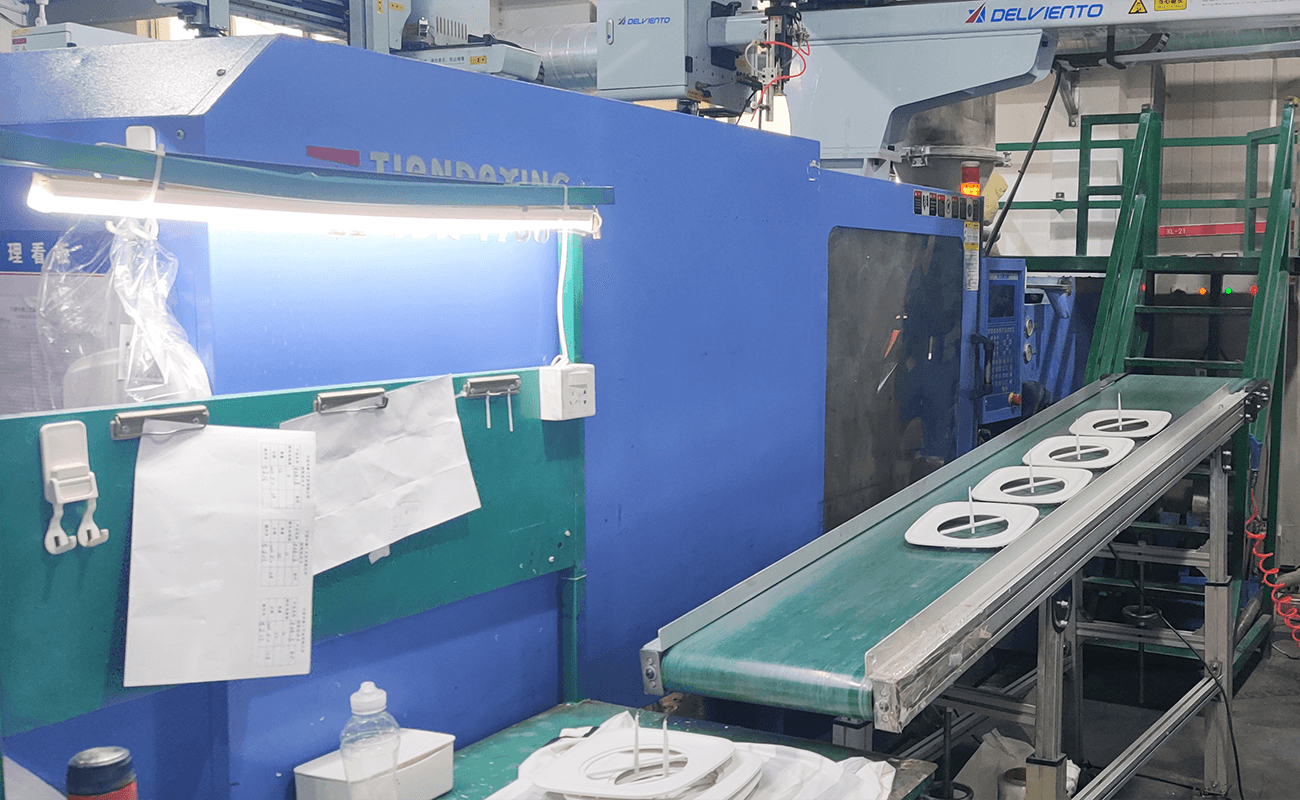
To understand modified rPET, you must look at polymer degradation. When PET is recycled, repeated heat cycles break its molecular chains. This reduces its intrinsic viscosity (IV), leading to a brittle product with a dull surface finish. In our manufacturing facility, we run raw post-consumer rPET flakes through a twin-screw compounding extruder. Here, we add reactive chain extenders. These additives chemically reconnect the broken polymer chains, restoring the material's structural integrity and melt strength.
The high-gloss finish is achieved by injecting the modified melt at pressures exceeding 120 MPa into precision-engineered, chromium-plated molds. We maintain the mold cavity wall temperature close to the polymer’s glass transition temperature (around 75°C to 80°C) before cooling. This ensures the material mimics the micro-surface of the mold perfectly, yielding a mirror-like finish directly out of the machine without requiring secondary polishing processes.
How White rPET Achieves Ceramic-Like Gloss and Texture
In sample discussions, buyers often focus less on the material name and more on whether the finished product supports their brand image. Standard recycled polymers possess a gray or green tint due to their previous life cycle. To achieve a clean, opaque ceramic white, we masterbatch the rPET with a high dispersion of food-safe titanium dioxide (TiO2) and cobalt-based blueing agents.
This precise blend neutralizes the yellow-green tint of recycled feedstock. Additionally, we control the cooling cycle to allow a controlled level of micro-crystallization in the polymer. Unlike completely amorphous PET, which is transparent, this controlled crystallization scatters light internally. It gives the finished plate the optical depth and solid weight-feeling of high-fired porcelain, bypassing the cheap, translucent look of standard polypropylene or polystyrene.
2. How Glossy rPET Achieves Ceramic-Like Appearance
Buyers select ceramic for its weight and premium gloss, yet ignore the high replacement costs of chipped rims. You shouldn't have to trade off visual presentation to protect your bottom line.
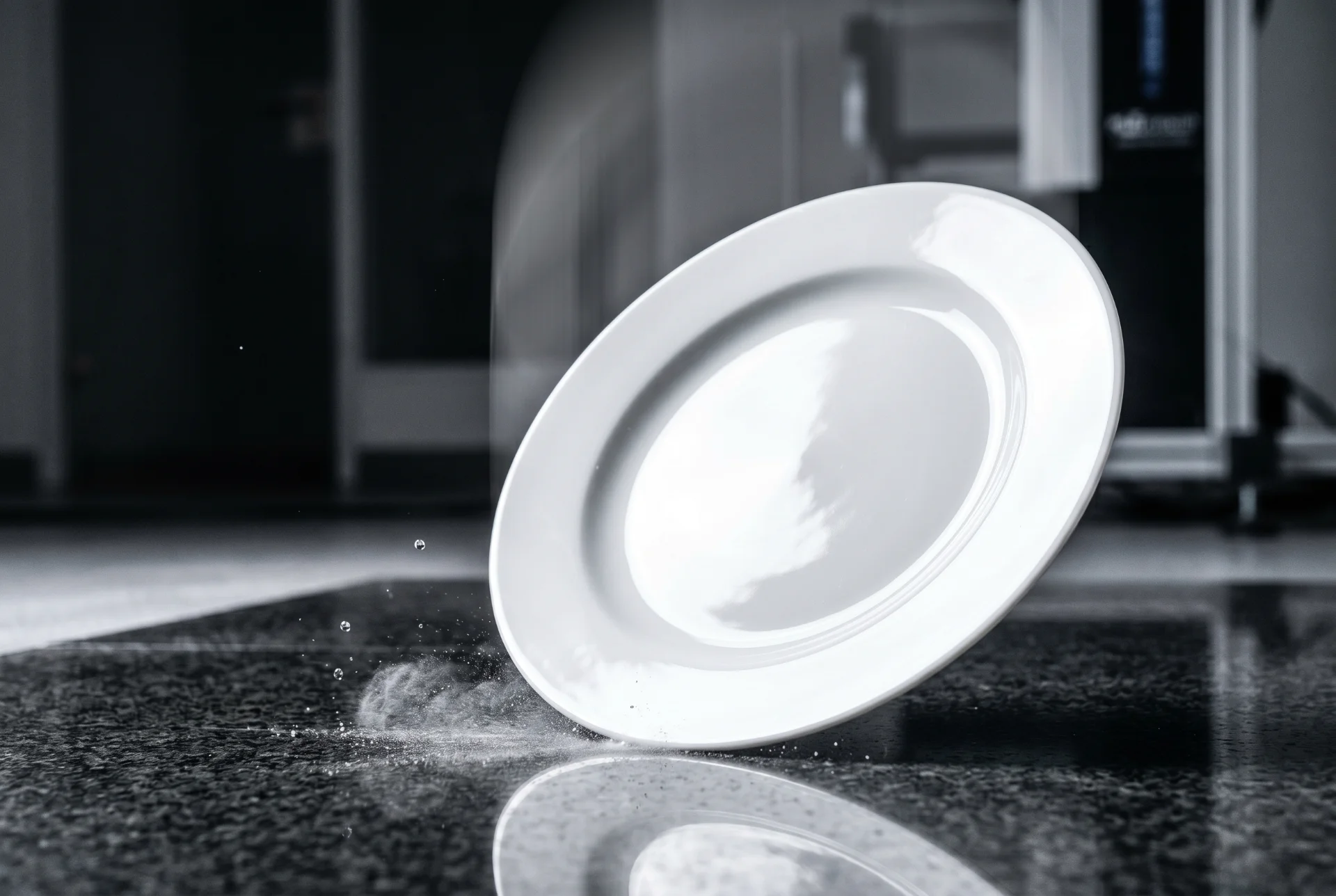
Glossy rPET matches the specular gloss and color consistency of porcelain while providing unmatched shatter resistance, yielding a highly durable alternative for demanding commercial environments.
Comparison of Gloss, Color Uniformity, and Durability
During procurement conversations with importers and large-scale caterers, we often look at the hidden costs of tableware. A premium restaurant might lose 15% to 20% of its ceramic inventory annually to chipping and breakage.
Let's compare the raw material and performance specifications of high-fired ceramic against our modified glossy rPET:
| Performance Metric | Traditional High-Fired Ceramic | Modified Glossy rPET (Aveco) |
|---|---|---|
| Specular Gloss (60° Angle) | 85 - 95 GU | 80 - 90 GU |
| Impact Strength (Izod) | Low (Brittle, high risk of shattering) | High (Non-shattering, high elasticity) |
| Color Deviation (Delta E) | < 5.0 (Varies by kiln batch) | < 1.0 (Highly consistent batch-to-batch) |
| Weight (Standard 10-inch Plate) | ~700g - 900g | ~280g - 320g |
| Operating Temperature Range | -20°C to 250°C | -20°C to 120°C (Limit: Not for ovens/broilers) |
| Dishwasher Cycles (Commercial) | 1,000+ cycles | 500+ cycles (Slight gloss reduction over time) |
The data shows that while ceramic holds a slight advantage in maximum temperature resistance, glossy rPET offers superior color consistency and absolute impact resistance, drastically reducing the ongoing cost of replenishment.
Visual Impact and User Experience in High-End Dining
We do not advise clients to replace ceramic entirely; they serve different dining environments. For formal, high-heat table service where steaks or sizzling hot dishes are served, ceramic remains the correct choice. However, in modern high-end dining scenarios—such as cold-food displays, dessert presentation, banquet catering, poolside dining, and luxury hotel room service—glossy rPET performs exceptionally well.
In these weight-sensitive and high-movement scenarios, the physical weight reduction of rPET cuts down on waitstaff fatigue and heavy lifting. Yet, because the light reflectivity (gloss units) closely matches ceramic, the customer’s visual perception of luxury remains intact. When a guest picks up the plate, they feel a rigid, solid structure that does not flex, maintaining the premium presentation that high-end brands require.
3. Surface Printing & Customization Options
Off-the-shelf white plates make your brand look generic, failing to engage your customers. Traditional printing on plastic easily scratches off, creating a cheap, worn-out aesthetic.
Our factory solves this by using plasma surface treatment and food-grade UV inks to create durable, high-resolution prints that pass strict European migration limits and withstand commercial dishwashing.
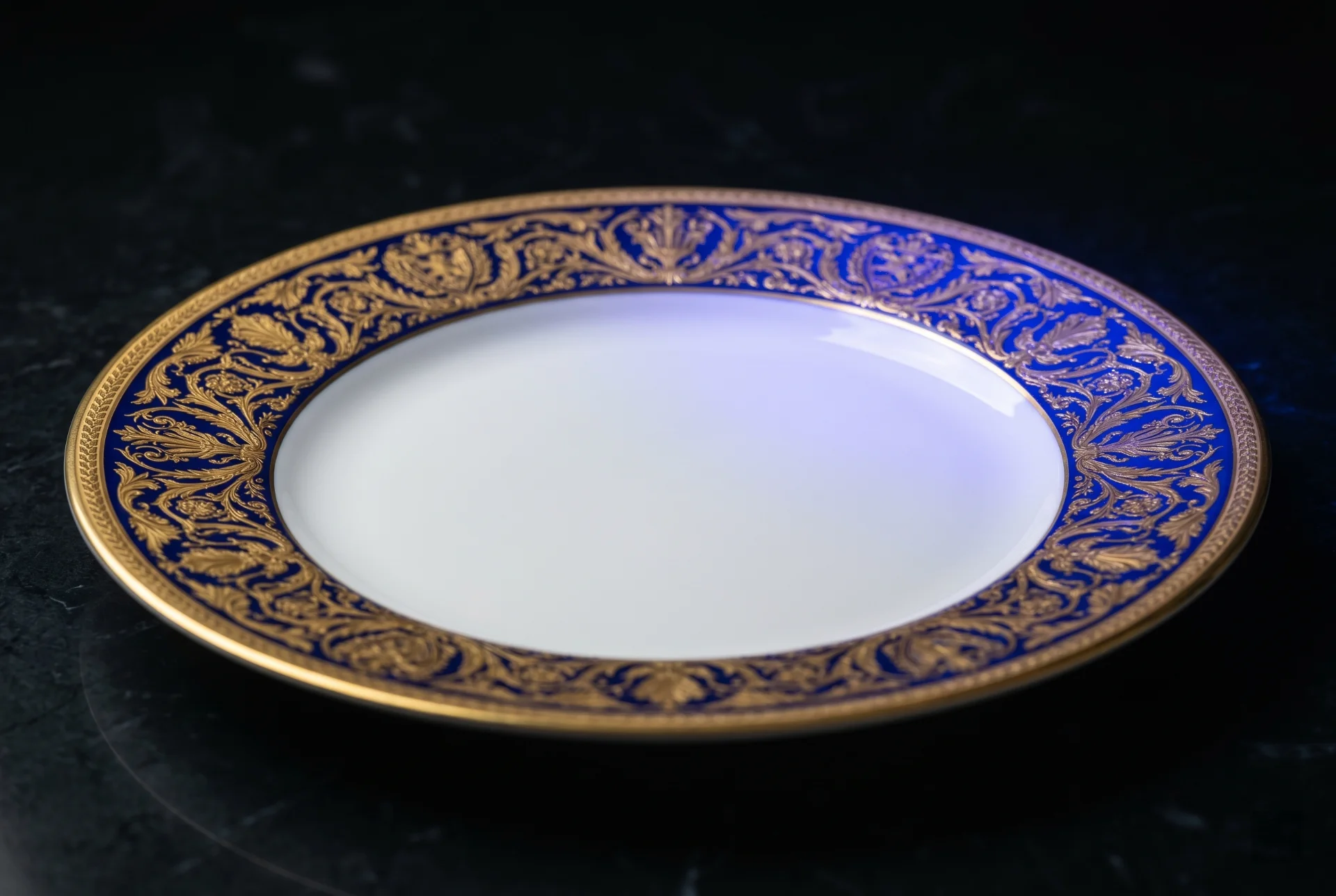
Printing Technology and Diverse Customization
Customizing rPET requires careful chemical engineering. PET has a low surface energy, meaning standard solvent-based inks will not adhere properly and will peel off after a few wash cycles. To bypass this, we run our molded tableware through a plasma or corona surface pre-treatment line. This process temporarily alters the polymer's surface chemistry, allowing our specialized UV-curable inks to wet the surface and form a robust mechanical and chemical bond.
Once printed, the tableware passes under high-intensity UV LED curing lamps. This instantly cross-links the ink monomers, turning them into a hard, scratch-resistant film. This method allows us to print complex, multi-colored brand logos and geometric patterns directly onto the rPET surface with high resolution, ensuring the design remains intact even when subjected to industrial detergents and high-pressure dishwashers.
Real-World Brand Customization Case
In customer inquiries, we often see buyers who want the luxury look of gold-rimmed or patterned porcelain but cannot accept the high breakage rates during transport. In a recent discussion with a large European event catering importer, they needed custom-branded plates for a high-end outdoor gala.
By utilizing our in-house printing capabilities, we produced a customized run of glossy rPET plates with an intricate perimeter pattern. The key challenge was compliance. Because these plates contact food directly, we conducted migration testing in accordance with EU Regulation No 10/2011. Using food simulants (3% acetic acid and 10% ethanol) under repeated-use testing conditions, we verified that the total global migration remained well below the legal limit of 10 mg/dm², proving that custom-printed rPET is both visually premium and fully compliant with strict safety regulations.
Market Impact and Policy Advantages
Unpredictable trade tariffs and shifting export tax rebate policies directly squeeze the margins of high-volume tableware importers. If you rely solely on traditional ceramics, sudden regulatory adjustments can increase your landed cost overnight without warning. Switching to modified polymers provides a stable, predictable pricing structure that insulates your procurement chain from volatile international trade disputes.
Importing modified glossy rPET tableware allows global buyers to bypass heavy anti-dumping duties targeting ceramics and protect their supply chain from zero-export-rebate policies, yielding a more stable, lower-risk import structure.
Impact of New Policy: Ceramic Export Tax Rebate Dropped to 0%
Export tax rebates have historically cushioned the production and logistics costs of Chinese ceramic manufacturers. However, when policies eliminate these rebates—dropping them to 0%—the sudden financial pressure shifts directly to the B2B importer. From our experience managing factory production costs, this policy change forces ceramic manufacturers to raise their FOB prices by 10% to 13% to maintain their thin margins.
For overseas distributors and large retail buyers, this translates to an immediate increase in procurement budgets. Modified rPET, classified under plastic commodity codes, does not face these specific ceramic export rebate cuts. This allows us to maintain long-term price stability for our clients, ensuring your forecasted procurement budgets remain accurate and free from sudden inflation.
Anti-Dumping Risk for European Exports
European buyers frequently ask about anti-dumping duties when discussing long-term sourcing contracts. Traditional Chinese ceramic tableware has been subject to heavy EU anti-dumping duties for years, with rates often exceeding 30% depending on the specific manufacturing batch and producer status. Navigating these customs audits is a logistical headache that can lock up containers at the port.
By shifting product portfolios to recycled plastic categories like glossy rPET, European importers bypass these targeted ceramic anti-dumping measures entirely. The customs clearance process becomes predictable, faster, and free from the threat of retroactive duties.
rPET Advantages: Avoiding Policy and Tariff Risks, Reducing Import Costs
Choosing rPET is a strategic method for optimizing landing costs. Because rPET falls under standard plastic trade classifications, it is subject to standard, predictable import tariffs. In addition, the physical weight reduction of rPET drastically reduces maritime freight costs. You can load significantly more units per shipping container without hitting heavy weight limits.
The table below illustrates the trade and regulatory differences between traditional materials and modified rPET, helping procurement managers assess the total cost of import:
| Policy & Trade Metric | Traditional High-Fired Ceramic | Virgin PET Tableware | Modified Glossy rPET (Aveco) |
|---|---|---|---|
| EU Anti-Dumping Duties | 17.9% to 36.1% (High risk) | 0% (Standard tariff) | 0% (Standard tariff) |
| CN Export Tax Rebate | 0% (Increased FOB cost) | 13% (Stable FOB cost) | 13% (Stable FOB cost) |
| EU Plastic Tax Impact | Exempt | Subject to virgin plastic levy | Exempt or minimized (recycled content) |
| Global Migration Limits | N/A | < 10 mg/dm² | < 10 mg/dm² (Strictly tested) |
| Post-Consumer Content | 0% | 0% | Up to 100% certified content |
From our calculations during B2B client onboarding, this combination of standard tariffs, tax stability, and reduced ocean freight yields a lower total cost of ownership per unit.
Why High-End Restaurants Should Introduce Glossy rPET
High-turnover dining venues lose thousands of dollars each year to broken plates, heavy handling labor, and slow table resets. These operational bottlenecks disrupt your service flow and inflate your replacement budgets. Introducing glossy rPET eliminates these structural inefficiencies by combining commercial durability with premium presentation, directly improving kitchen workflows and table turnover times.

High-end dining operators introduce glossy rPET to virtually eliminate chipping and breakage costs, reduce staff physical fatigue due to its lightweight profile, and satisfy corporate ESG requirements with certified post-consumer recycled materials.
Convenient Procurement: Lightweight, Shatter-Resistant, Dishwasher-Safe
During sample discussions, we show buyers how our modified rPET reacts to impact testing. While ceramic shatters on concrete, rPET absorbs the impact energy without cracking. In high-volume operations, this durability extends the lifespan of the tableware.
However, we advise buyers on the specific boundaries of the material. While rPET is perfectly safe for commercial dishwashers up to 100°C, it should not be exposed to direct flames or microwave ovens above 100°C. In transport-sensitive situations, like cruise ships, outdoor events, and high-end takeaway, the lightweight nature of rPET reduces the physical load on waitstaff and delivery drivers.
Sustainable and ESG Compliant
Multinational hotel chains and corporate catering buyers face strict environmental mandates. Standard virgin plastics are no longer acceptable. Our rPET utilizes post-consumer recycled polyester that is fully compliant with EU Regulation (EC) 1935/2004 and FDA guidelines for direct food contact.
We provide traceability documentation from raw flake collection to the finished injection-molded plate. Utilizing rPET allows your procurement department to report quantifiable plastic waste reduction, contributing directly to your corporate ESG compliance goals while maintaining a luxury aesthetic.
Aveco Customization and Implementation Support
At Aveco, we do not believe in one-size-fits-all manufacturing. We coordinate closely with your procurement team to match the exact weight, wall thickness, and color profile of your existing ceramic collections.
Our material science engineers run custom color-matching processes and test raw polymer batches for physical properties, migration limits, and structural stability. From prototype mold generation to final sample approval, we provide full technical support to ensure your transition from ceramic to rPET is seamless and free of operational risks.
Final. Conclusion
Modified glossy rPET offers B2B buyers a durable, food-compliant alternative to ceramic. By matching porcelain's visual depth while eliminating breakage and high anti-dumping duties, it optimizes operational efficiency, logistics costs, and regulatory compliance in modern high-end dining, retail, and event catering scenarios.