

How Long Does Reusable Plastic Tableware Last?
Commercial buyers constantly struggle with replacing warped or cracked plastic plates too soon, inflating operational costs and raising compliance red flags during food safety audits.
High-quality reusable plastic tableware typically lasts between 300 to 1,000 wash cycles in commercial settings. The exact lifespan depends heavily on the polymer type, molding density, and washing temperature protocols maintained by the facility.
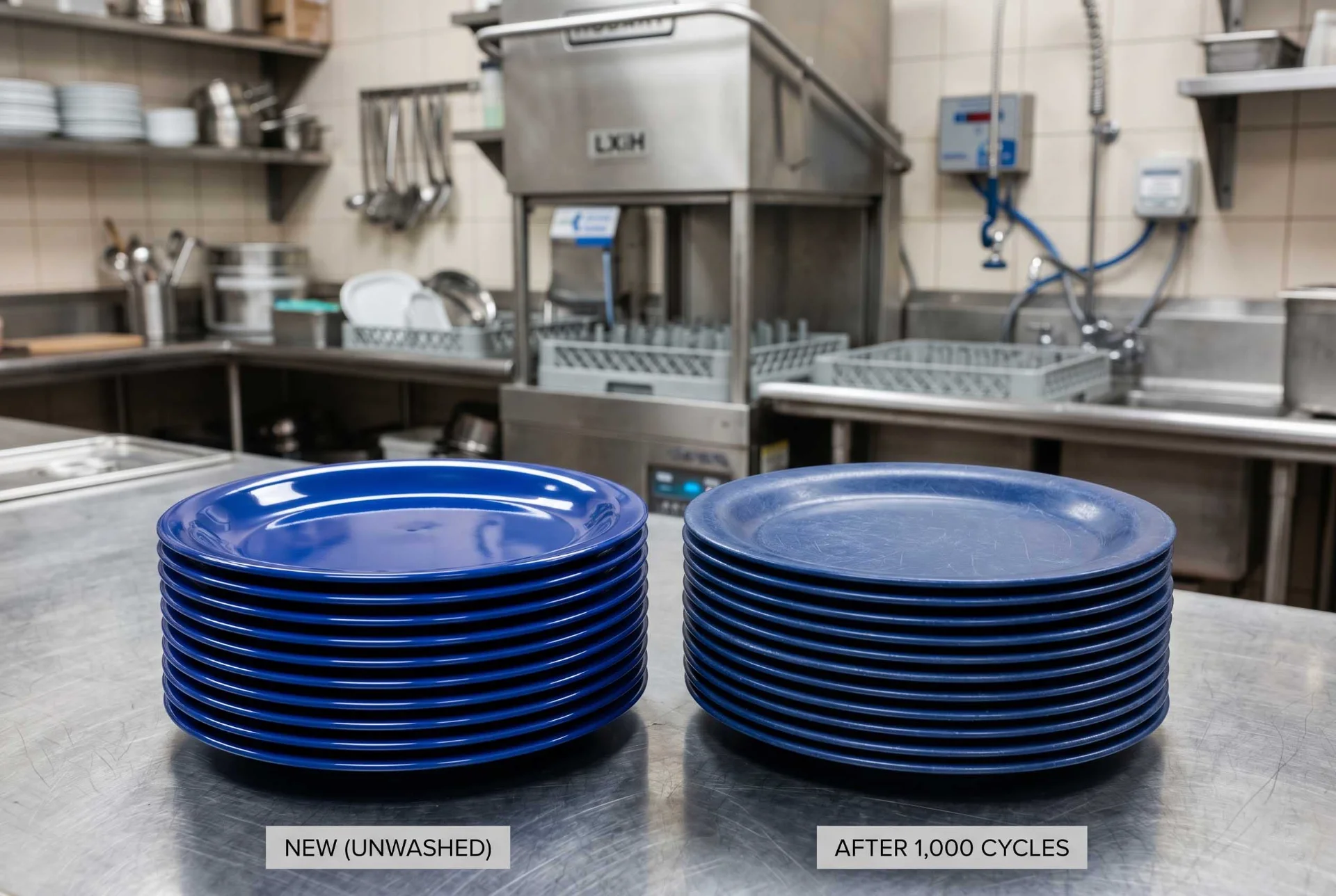
Understanding the exact science behind polymer degradation helps buyers specify materials that genuinely survive industrial wear and tear. At Aveco Group, we evaluate lifespan not by subjective appearance, but through rigorous migration testing and structural integrity data.
What Factors Determine the Lifespan of Reusable Plastic Tableware?
A plate that looks tough on the factory floor might warp within a week in an industrial dishwasher. Failing to match material specs with operational reality wastes budget.
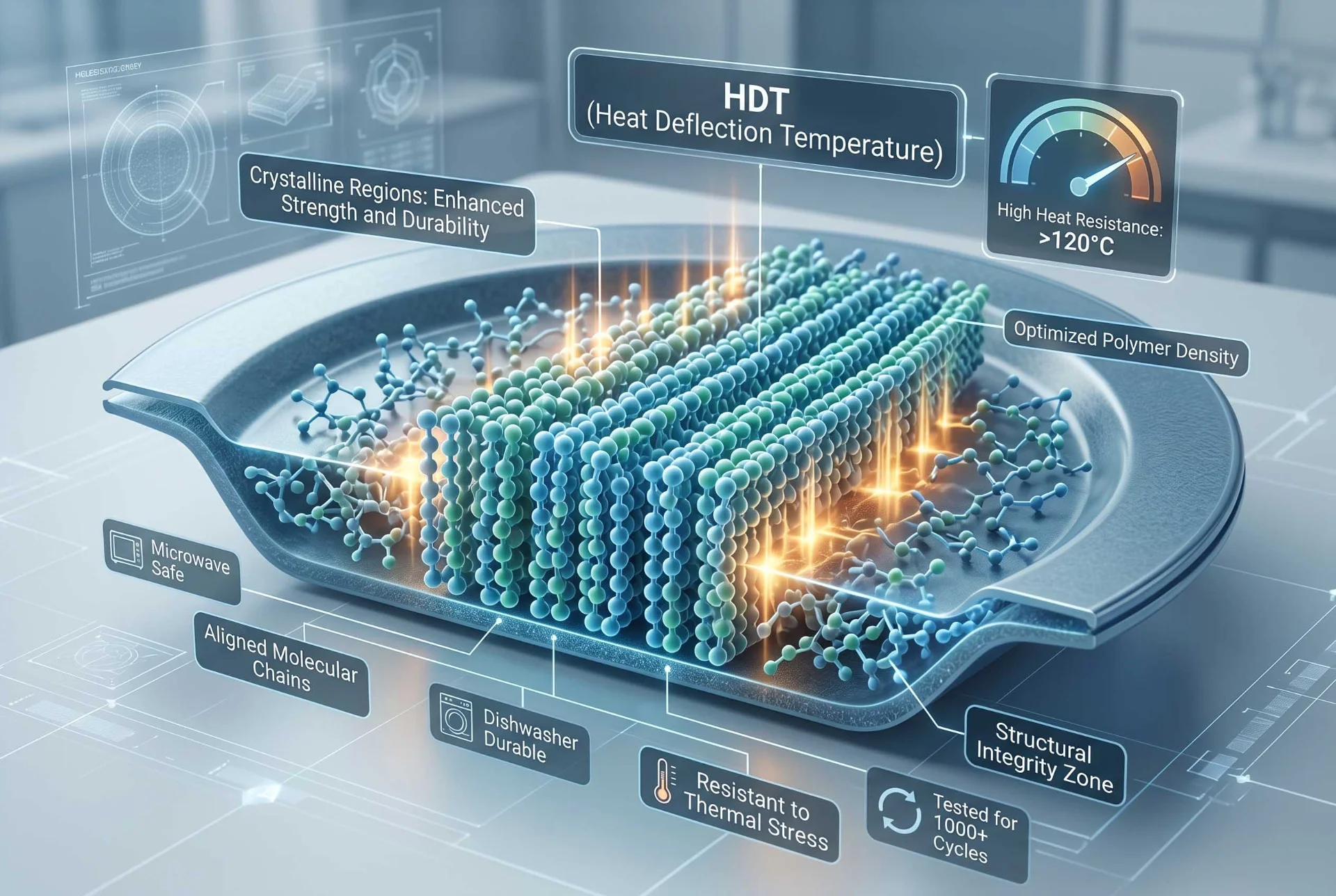
The durability of reusable tableware hinges on its molecular structure and heat deflection temperature. A high-crystallinity polymer resists thermal shock better, extending the product's functional lifespan by hundreds of commercial use cycles.
Material Composition and Polymer Type
The foundation of durability is written in the polymer chain. Polypropylene (PP) and high-density polyethylene (HDPE) possess varying degrees of crystallinity. High-crystallinity PP offers excellent fatigue resistance and withstands the physical stress of commercial kitchens. In our manufacturing process, we control the injection molding cooling rates to lock in optimal molecular alignment, preventing premature brittleness. The choice between PP, rPET, or bio-based composites dictates the base threshold for thermal and mechanical endurance.
Usage Frequency and Handling Practices
Impact resistance degrades over time due to mechanical stress. In a fast-paced cafeteria, a tray or plate experiences constant micro-impacts from being dropped, stacked roughly, or scraped by metal cutlery. These impacts create microscopic stress concentrations. Tableware molded with adequate wall thickness and reinforced ribbing dissipates this kinetic energy safely, whereas poorly designed thin-wall plastics will quickly develop spider-web fractures.
Cleaning Methods and Temperature Exposure
Industrial dishwashers are brutal environments. Exposing plastics to highly alkaline detergents and 85°C (185°F) sanitation rinses causes gradual hydrolysis. If the polymer’s heat deflection temperature (HDT) is lower than the wash temperature, the material softens slightly during every cycle, leading to permanent warping. We rigorously test our tableware against LFGB standards to ensure the polymer matrix remains stable even under aggressive thermal cycling.
Storage Conditions and Environmental Factors
Storage environments actively degrade plastics. Storing plates while still damp accelerates moisture absorption in certain bio-polymers. Furthermore, prolonged exposure to UV light—even from intense indoor fluorescent lighting—can break down polymer bonds through photo-oxidation, causing colors to fade and the plastic to become brittle. Proper dry, temperature-controlled storage is mandatory for maximizing lifecycle yields.
How Many Uses Before Reusable Plastic Tableware Breaks Even Environmentally?
Switching to reusables to meet sustainability mandates often backfires if the items break too quickly. Understanding the break-even math prevents costly procurement mistakes.
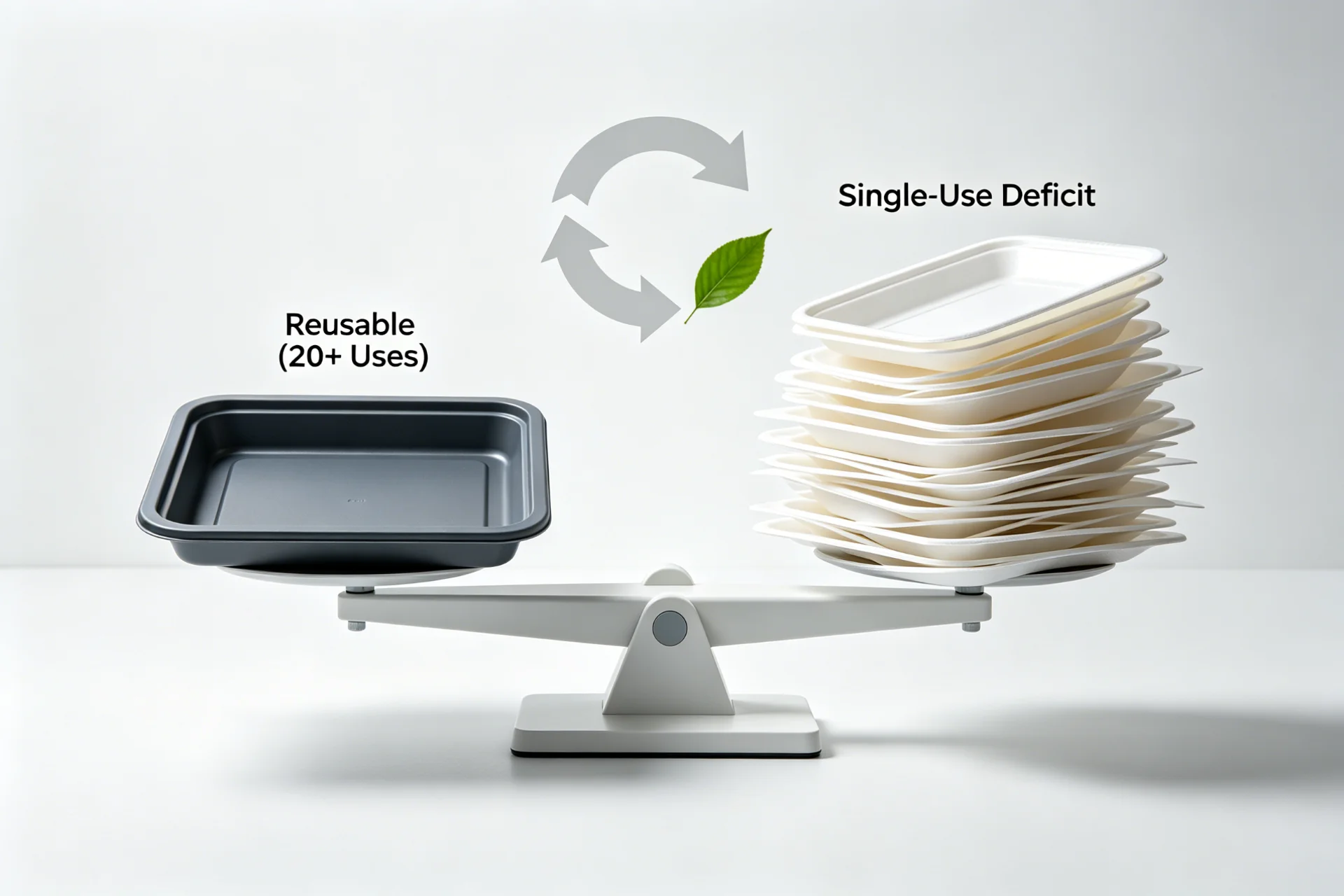
Reusable plastic tableware generally achieves environmental break-even after 15 to 50 uses when compared to single-use plastics, depending on the manufacturing energy footprint and transportation weight.
Break-Even Point Compared to Single-Use Plastics
Manufacturing a heavy-duty reusable PP plate requires significantly more raw material and injection molding energy than forming a thin, single-use polystyrene plate. Life Cycle Assessment (LCA) data shows that a reusable plastic item must survive at least 15 to 20 commercial uses to offset its higher initial carbon and water footprint. If the tableware cracks on use number 10, the environmental deficit is worse than if the facility had used disposables.
Break-Even Point Compared to Compostable Alternatives
Comparing reusable plastics against compostable alternatives like bagasse or PLA requires looking at continuous resource extraction. While bagasse is renewable, it is single-use and demands massive agricultural water inputs. Reusable plastics break even against compostables rapidly when factoring in the ongoing logistics of ordering and disposing of massive volumes of single-use items.
| Material Type | Break-Even Point (Estimated Uses) | Durability in Commercial Washers | End-of-Life Viability |
|---|---|---|---|
| Reusable PP | 15 - 25 uses | High (Resists 85°C heat) | Highly Recyclable |
| Reusable rPET | 20 - 35 uses | Moderate (Prone to scratching) | Highly Recyclable |
| Compostable PLA | Single-use baseline | Low (Warps above 60°C) | Industrial Composting Required |
| Bagasse (Sugarcane) | Single-use baseline | None (Disintegrates) | Biodegradable |
Energy and Resource Recovery Through Extended Use
Every use past the break-even point generates a net positive environmental return. When tableware is engineered to last 500 washes, the carbon footprint per use drops to a fraction of a percent of a single-use item. At Aveco Group, we prioritize manufacturing closed-loop ready materials. When a PP plate finally reaches the end of its lifespan, the clean polymer can be reground and recycled, recovering the embedded energy.
Commercial vs. Home Use Lifecycle Analysis
The break-even timeline accelerates in commercial settings due to high turnover, but the physical degradation happens much faster. A residential dishwasher runs at roughly 60°C and uses mild enzymatic detergents, allowing a reusable plastic plate to last for a decade. In a commercial setting processing multiple 85°C cycles daily with caustic chemicals, that same plate might hit its break-even point in a month, but reach the end of its physical life within a year.
What Are the Signs That Reusable Plastic Tableware Should Be Replaced?
Pushing aging tableware past its limits risks heavy metal migration and bacterial contamination. Recognizing end-of-life indicators is critical for EU and FDA compliance.
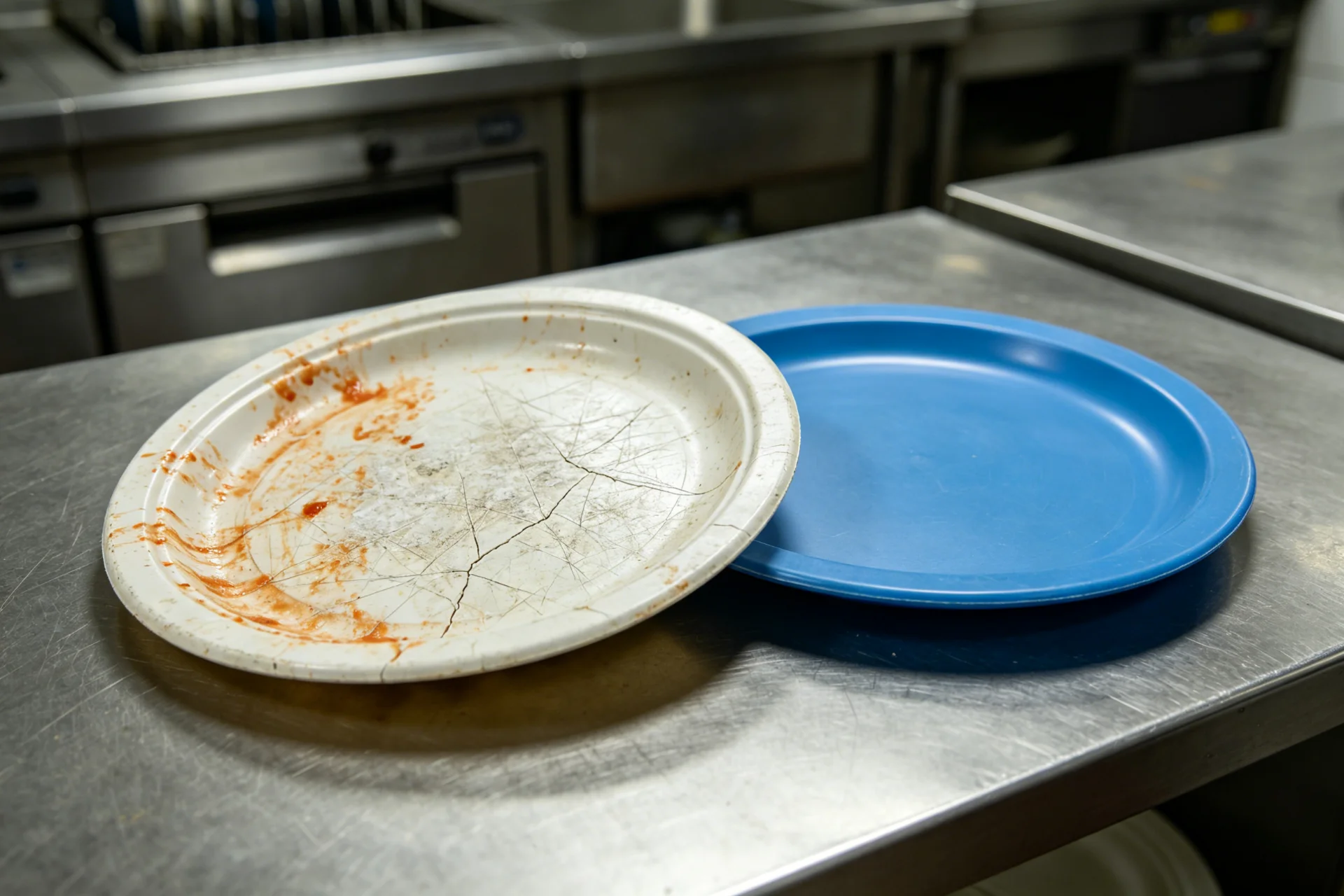
Tableware requires immediate replacement when you detect surface micro-scratching, chalky textures, or persistent odors. These physical changes indicate polymer chain breakdown, which drastically increases the risk of chemical migration into food.
Physical Damage: Cracks, Warping, and Scratches
The most obvious indicator of failure is structural. Warping compromises stackability and creates uneven heating in microwaves. Deep scratches from metal utensils are not just cosmetic flaws; they compromise the sealed surface of the injection-molded plastic. Once the smooth surface is breached, the softer inner polymer matrix is exposed directly to heat, acids, and mechanical wear, accelerating total structural failure.
Chemical Degradation: Staining, Odor, and Texture Changes
When a previously smooth plastic bowl feels chalky or sticky, the polymer is actively degrading. This process, often caused by saponification from alkaline detergents, increases the material's porosity. Increased porosity allows the plastic to absorb food oils and pigments, resulting in permanent tomato stains or lingering garlic odors. Once plastic absorbs organic matter at a microscopic level, no amount of washing will sanitize it effectively.
Safety Concerns: BPA Leaching and Microplastic Release
Compliance with EU EC 1935/2004 dictates strict Specific Migration Limits (SML). Even in BPA-free materials like standard PP, severe degradation can lead to the release of microplastics or unreacted monomers into hot, acidic foods. When plastic tableware shows aggressive surface crazing (a network of fine cracks), it is a clear indicator that the material is shedding microscopic fragments and must be pulled from service immediately to maintain food safety standards.
Hygiene Red Flags: Bacterial Harboring and Seal Failure
Those deep scratches and porous surfaces do more than absorb odors; they create microscopic protective trenches for pathogens. Biofilms can form inside these crevices, shielding bacteria from the thermal and chemical sanitization of commercial dishwashers. For reusable containers with lids, the degradation of silicone or TPE gaskets leads to seal failure, rendering the item useless for safe food storage and transport.
Mitigating Contamination Risks in Bio-Based Plastics
Bio-based plastics are highly sensitive to thermal stress. High processing temperatures easily trigger degradation during production. This thermal breakdown leads to structural failure and increases the risk of chemical leaching into food. Buyers face severe recall risks if the finished tableware fails migration testing at customs. We stabilize the polymer matrix before the material ever enters the mold.
To prevent contamination in bio-based tableware, manufacturers must strictly control moisture content and barrel temperatures during injection molding. If thermal degradation occurs, the material loses its structural integrity, causing the final product to fail Overall Migration Limits (OML) under stringent European standards.
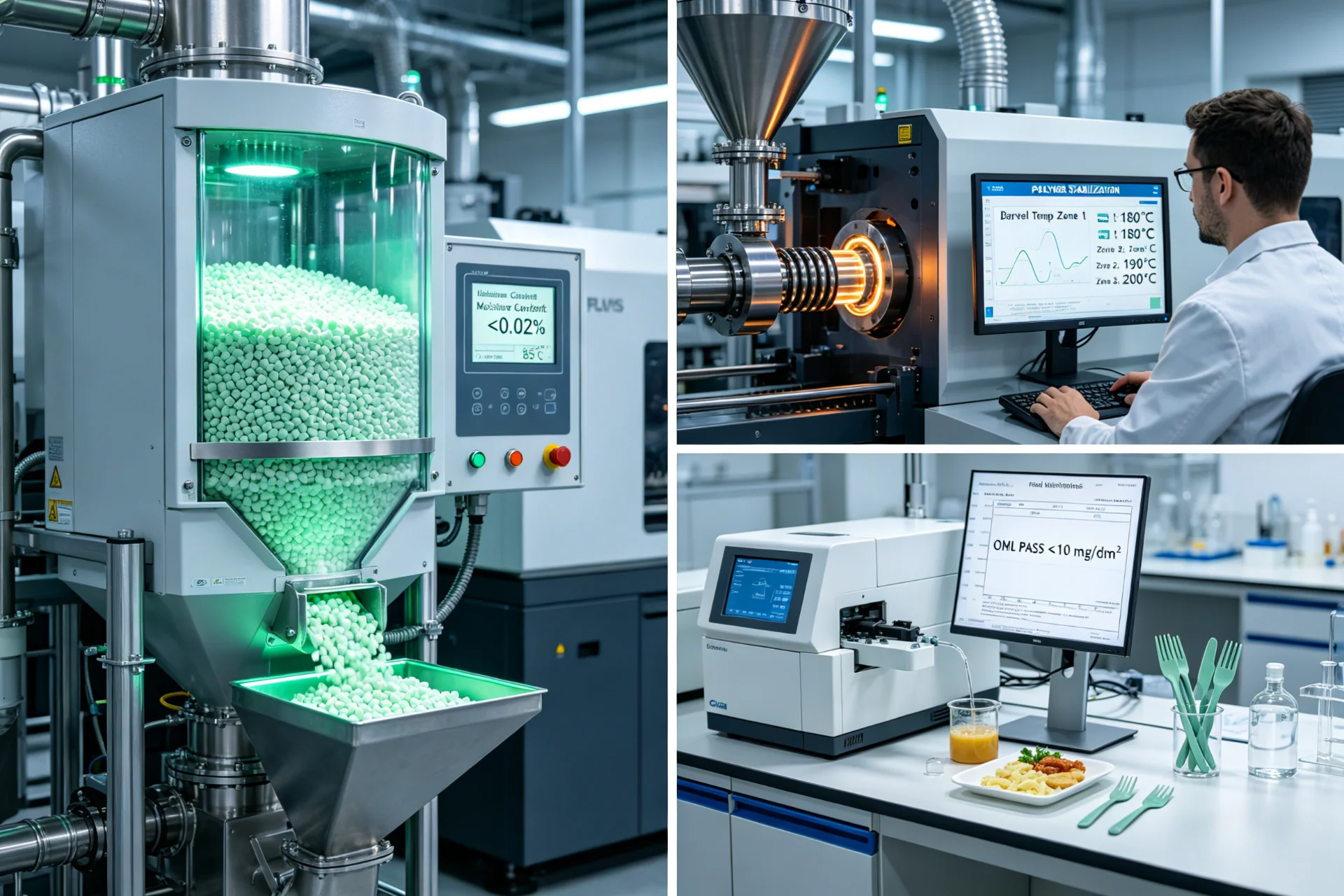
Identifying Polymer Instability During High-Temperature Molding
Bio-based materials like PLA (Polylactic Acid) are hygroscopic. They absorb moisture from the air. If the resin is not dried to a moisture content below 0.02% before molding, hydrolysis occurs in the barrel. This chemical reaction breaks the polymer chains. You will see this as brittleness in the final fork or plate. Melt temperature control is equally critical. Processing PLA above 200°C causes rapid thermal degradation. The material shears, loses molecular weight, and forms low-molecular-weight oligomers. These oligomers are highly mobile and easily migrate into hot food. We monitor barrel zones and screw speeds to maintain polymer chain length. Low shear stress keeps the material matrix intact.
Managing Overall Migration Limits (OML) Under EU EC 1935/2004
The European Union enforces a strict OML of 10 mg/dm² for food contact materials. This means the tableware cannot transfer more than 10 milligrams of total constituents per square decimeter of surface area into food. We validate compliance using food simulants. For acidic foods, we test with 3% acetic acid. For fatty foods, we use olive oil or 95% ethanol. Test conditions mimic real-world use, such as heating at 70°C for 2 hours. If the polymer was degraded during molding, the test results will spike. Stable manufacturing parameters are the only way to ensure batch-to-batch compliance. We do not rely on post-production testing to find failures; we engineer the process to guarantee passes.
Precision Injection Molding for Reusable Tableware
Reusable tableware demands high structural durability to withstand commercial use. Weak cavity walls crack under industrial dishwashing temperatures. Inconsistent wall thickness compromises impact resistance and leads to warping. Precision tooling is the only method to guarantee product longevity. We engineer molds that distribute mechanical stress evenly across the entire polymer structure.
Reusable tableware requires molds with optimized cooling channels and precise gating systems. Controlling the cooling rate ensures uniform crystallization, which directly dictates the mechanical strength and dishwasher safety of the final food-contact product.
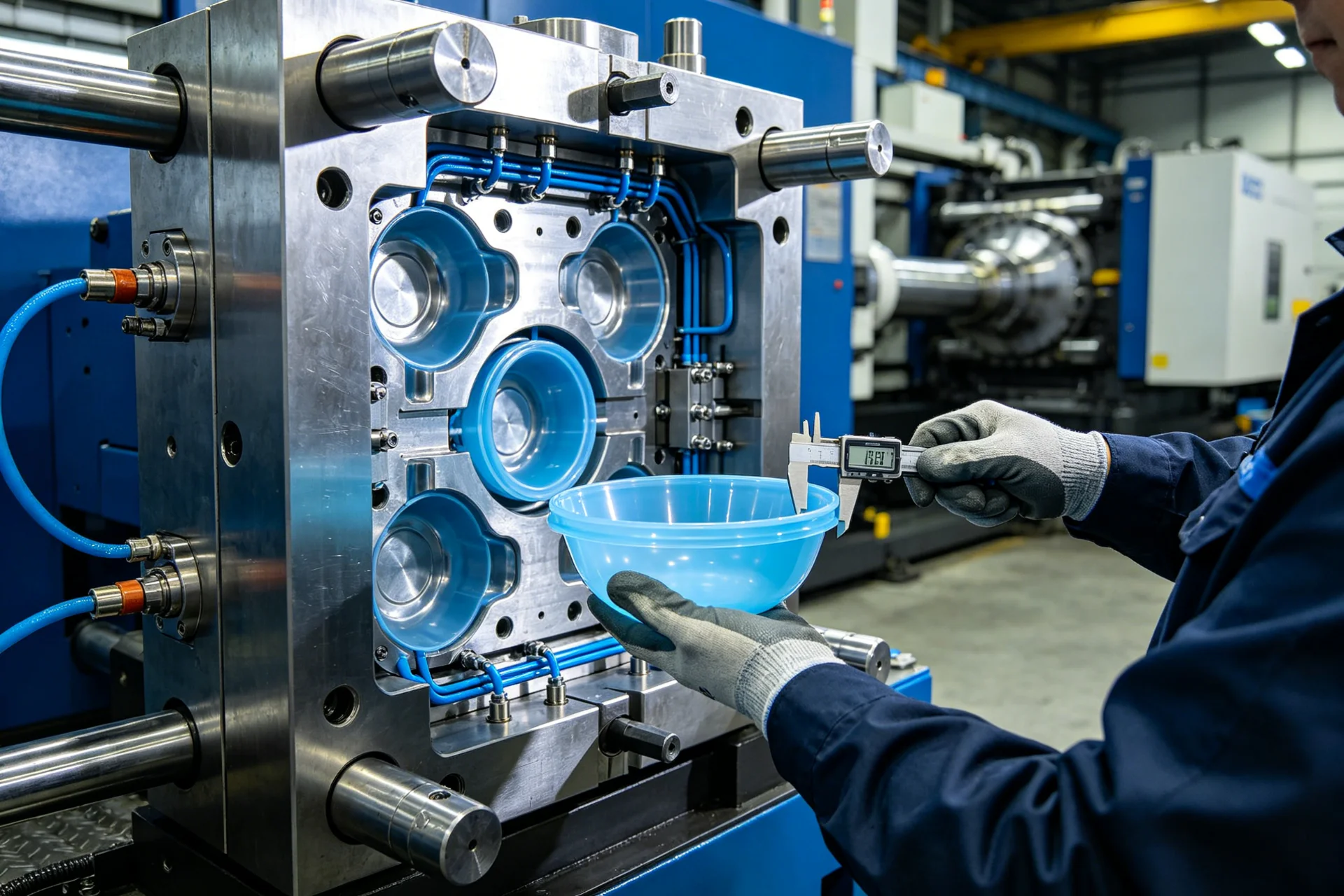
Tooling Design for Structural Integrity
Mold design dictates the physical limits of a reusable container. We utilize hot runner systems to eliminate cold slugs and reduce material waste. Gate placement is calculated to minimize flow marks and weld lines. A weld line in a polymer flow is a structural weak point. In a commercial dishwasher, thermal cycling will cause the product to fracture exactly at that weld line. Draft angles must be precise to allow ejection without mechanical distortion. We polish mold cavities to a mirror finish. This reduces surface porosity on the plastic, preventing bacterial buildup during its lifecycle. Internal stress from packing pressure is relieved by controlled hold times, ensuring the plate remains flat during hot food service.
Cycle Time Optimization for rPET and PLA
Cycle time affects both cost and material properties. Pushing cycle times too fast causes warping. Cooling times differ vastly between materials. PP crystallizes quickly, allowing shorter cycles. rPET requires specific cooling parameters to maintain its Intrinsic Viscosity (IV) and prevent hazing. Amorphous PLA requires cold molds, while crystalline PLA (cPLA) needs hot molds (around 90°C to 100°C) to achieve high heat deflection temperatures.
| Material Type | Heat Deflection Temp (HDT) | Shrinkage Rate | Dishwasher Durability | Migration Risk if Mis-molded |
|---|---|---|---|---|
| PP (Polypropylene) | 100°C - 120°C | 1.5% - 2.0% | High (>100 cycles) | Low |
| rPET (Recycled PET) | 65°C - 70°C | 0.2% - 0.8% | Medium (Top-rack) | Moderate (Acetaldehyde) |
| cPLA (Crystallized PLA) | 85°C - 90°C | 0.3% - 0.5% | Medium (Top-rack) | High (Oligomers) |
Compliance is a strict operational baseline. Selling non-compliant tableware results in seized shipments and destroyed reputations. Regulatory thresholds vary significantly between the US and the European Union. Understanding these chemical limits prevents costly border rejections. We build material traceability into every production batch to verify origin and safety.
Meeting global FCM regulations requires passing specific chemical extraction tests. LFGB testing in Germany requires strict checks for heavy metals and sensory changes, while FDA compliance focuses on distinct extraction thresholds based on polymer types and specific food simulants.
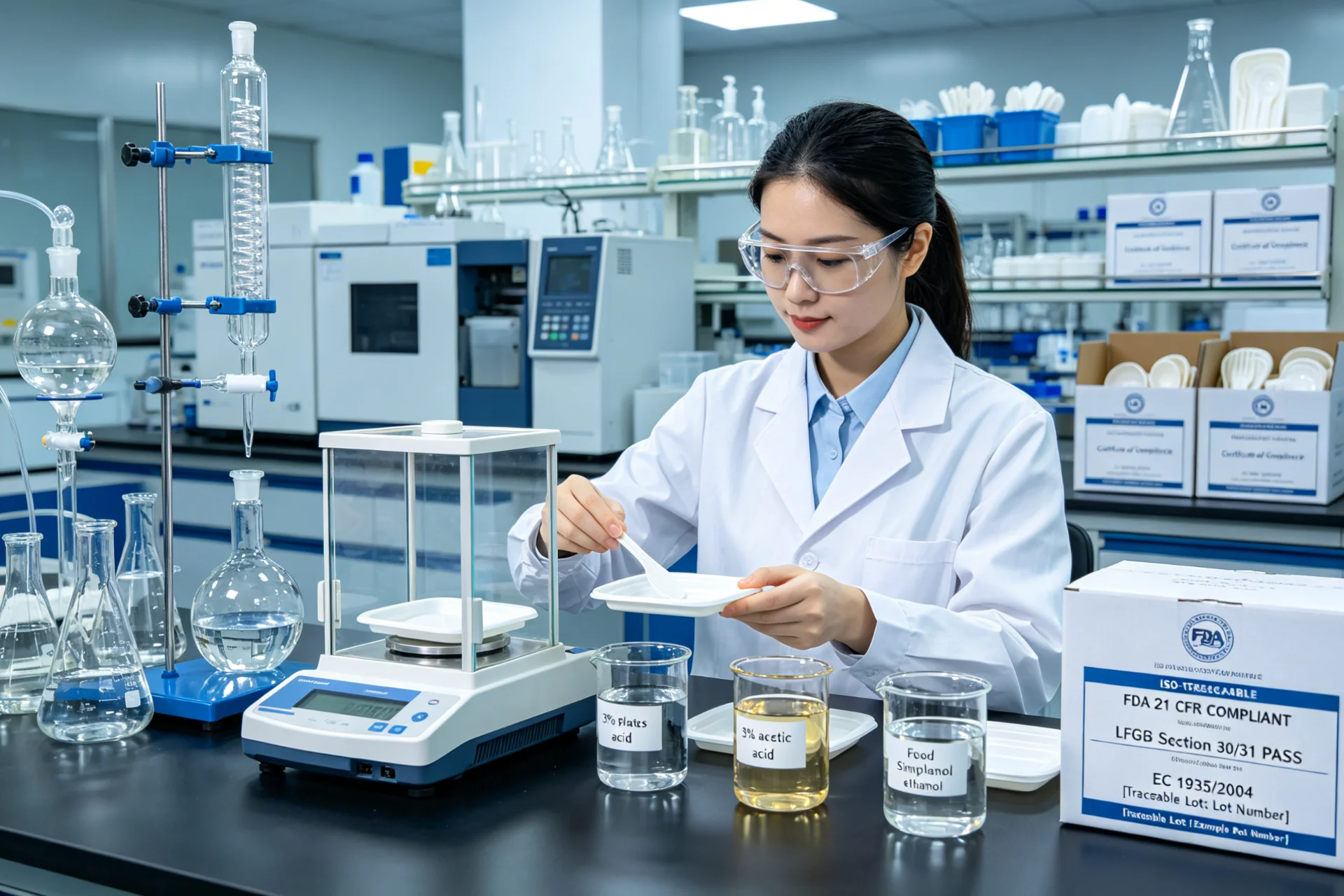
FDA vs. LFGB Compliance Standards
The FDA regulates plastics under 21 CFR 177. Polypropylene must meet 21 CFR 177.1520, which dictates maximum extractable fractions in n-hexane and xylene. The FDA focuses primarily on what chemicals migrate out. The German LFGB standard goes further. LFGB Section 30 and 31 mandate sensory testing. The tableware must not alter the smell or taste of the food it contacts. Even if a product passes chemical migration limits, it will fail LFGB if it imparts a plastic odor to water after heating. We use high-purity resins and strict outgassing protocols during manufacturing to ensure neutral sensory profiles. European EC 1935/2004 also requires a Declaration of Compliance (DoC) stating all monomers and additives are on the union positive list.
Traceability in B2B Supply Chains
Traceability proves compliance. A lab test is only valid for the specific batch it represents. We maintain ISO-level lot tracking from raw resin silos to finished pallets. Every batch of rPET or PLA is logged with its original Certificate of Analysis (CoA). If a buyer faces a regulatory audit in France or California, we can trace the exact molding temperature, moisture content, and resin lot used for that specific order. This data transparency is mandatory for brands making verifiable sustainability claims. Without raw material traceability, eco-friendly tableware is just a liability.
Validating food-grade tableware requires strict control over polymer degradation, precise injection tooling, and rigorous adherence to global FCM regulations. Material stability and process traceability define safe, reusable products. Objective manufacturing oversight ensures long-term compliance and structural integrity across international markets.