

Why Are Brands Switching to rPET Tableware?
Sourcing teams are trapped. Between aggressive EU anti-dumping duties on ceramics and sudden border bans on composite materials, finding compliant, durable tableware has never been more difficult.
Brands are transitioning to rPET tableware because it provides a food-safe, fully recyclable alternative to heavily regulated melamine. Modern heat-resistant rPET achieves ceramic-like finishes, allowing buyers to bypass ceramic anti-dumping duties and secure EU FCM compliance without sacrificing durability.
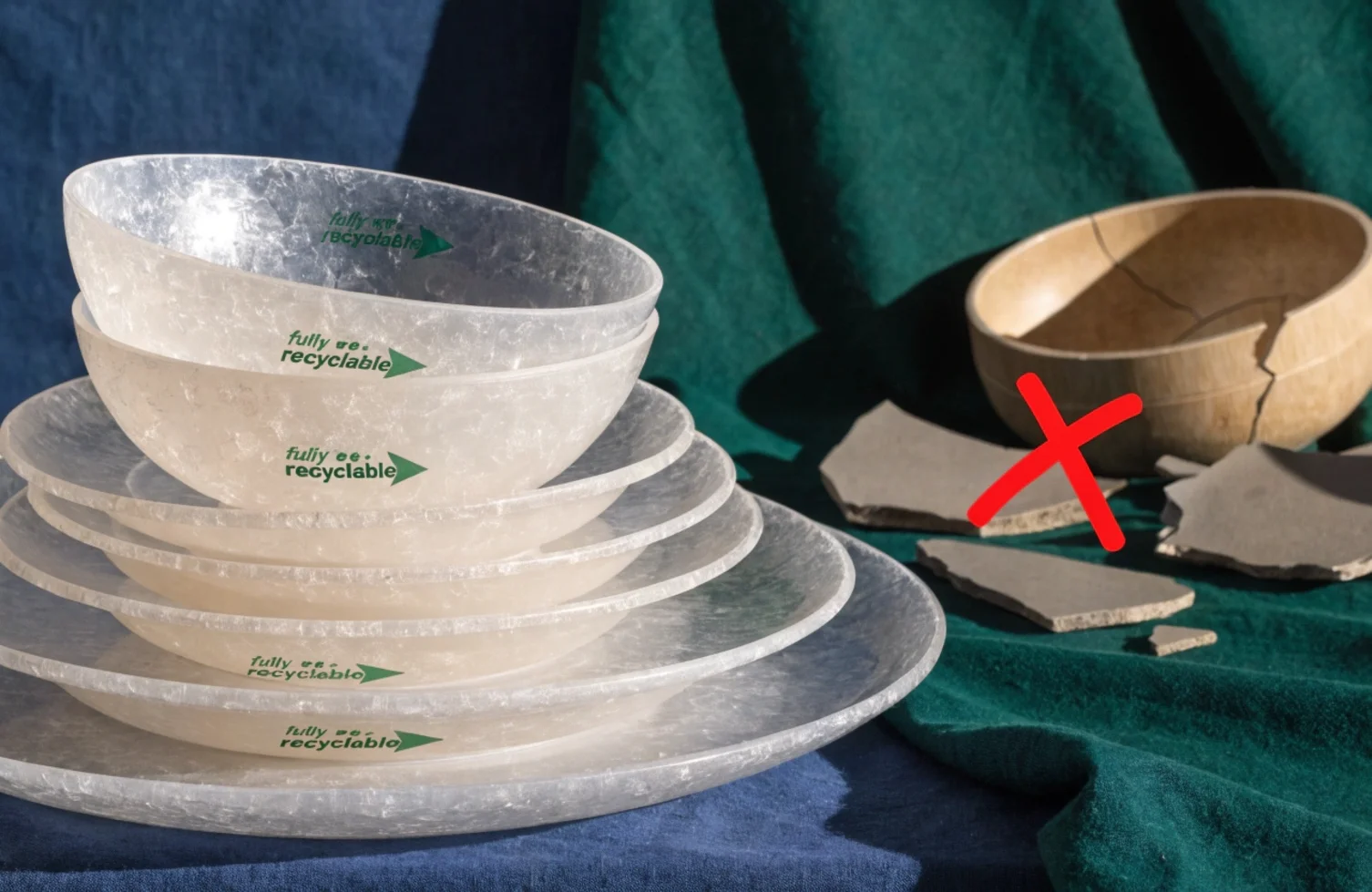
To understand why this shift is happening across global supply chains, we need to examine the material properties of recycled polyethylene terephthalate and the manufacturing realities driving its adoption on the factory floor.
What is rPET tableware and how is it made?
Buyers often confuse standard recycled packaging with food-grade rPET tableware. If the polymer is not processed and crystallized correctly, it will deform in a commercial dishwasher and fail rigorous food safety audits.
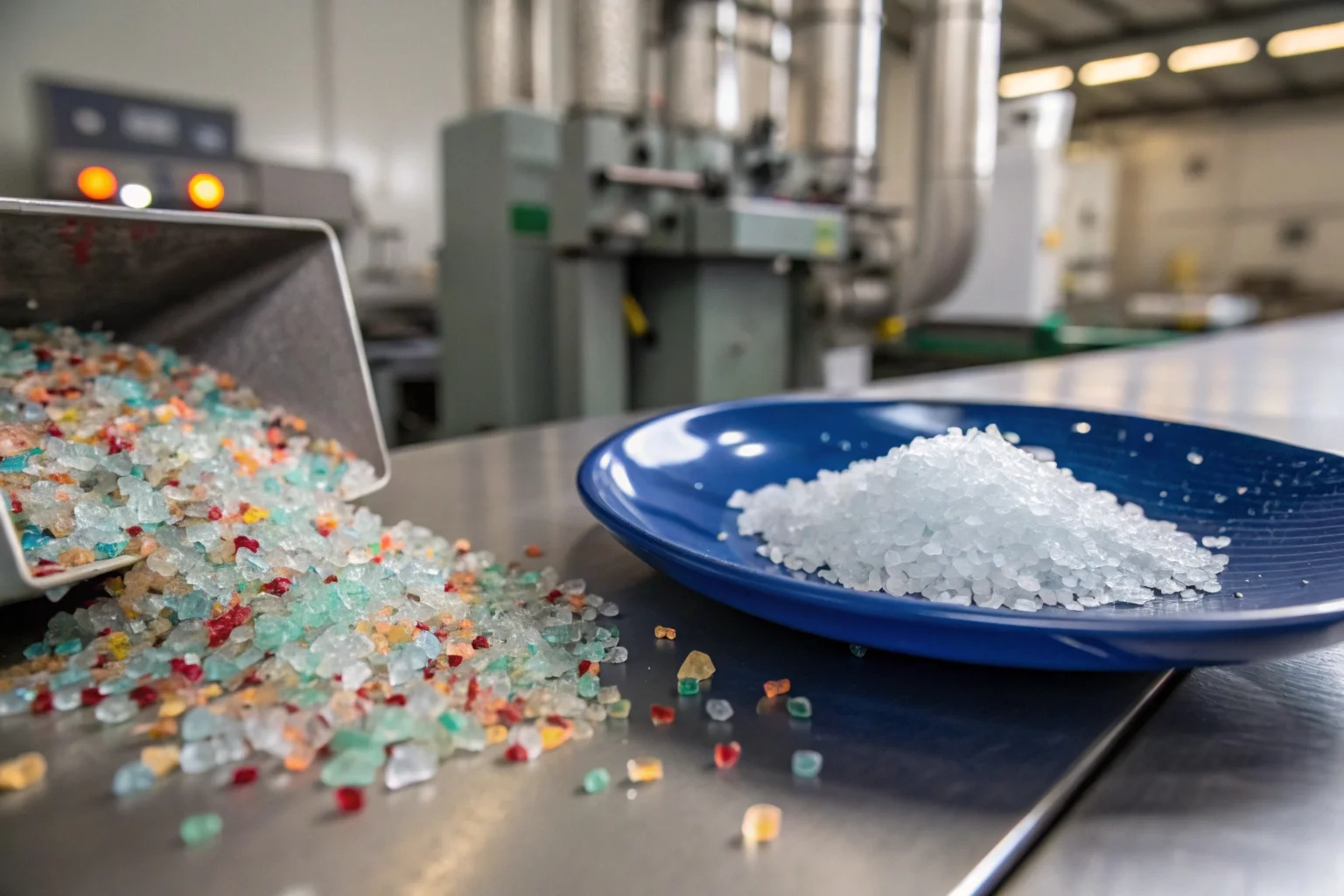
rPET tableware is manufactured from post-consumer plastic waste that undergoes intense decontamination and solid-state polycondensation. This process restores the polymer's intrinsic viscosity, resulting in a high-density, heat-resistant material suitable for repeated food contact.
The Decontamination and Polymerization Phase
Producing safe rPET tableware begins long before injection molding. Sourced post-consumer PET bottles are sorted, shredded into flakes, and subjected to a high-temperature caustic wash. However, washing alone is insufficient for EU EC 1935/2004 compliance. To meet EFSA (European Food Safety Authority) standards for food contact, the material enters a vacuum reactor where solid-state polycondensation (SSP) occurs. This process removes volatile organic compounds (VOCs) at a molecular level and rebuilds the polymer chains, raising the intrinsic viscosity of the resin. This ensures the mechanical strength of the rPET matches or exceeds that of virgin plastics.
Precision Injection Molding and Crystallization
Transforming rPET resin into a durable plate or bowl is highly technical. Standard PET is amorphous and cannot withstand high temperatures. To produce tableware that survives hot foods and dishwashers, material engineers modify the injection molding process. We introduce specific nucleating agents into the hopper and precisely control the mold temperature—often keeping the tooling heated to over 130°C. This forces the rPET to crystallize rapidly inside the mold cavity. The resulting semi-crystalline structure drastically increases the material's thermal stability, preventing warping while achieving a premium, heavyweight feel.
Why are brands moving away from traditional plastic tableware?
The regulatory net is tightening globally. Materials that were standard across the industry five years ago are now routinely failing border inspections, forcing procurement teams to scramble for immediate, compliant replacements.
Brands are abandoning traditional plastics due to stricter European FCM regulations and frequent border rejections. High-risk materials like melamine face severe migration limits, while bamboo-fiber composites are explicitly banned, making rPET the most viable drop-in replacement.
The Melamine and Bamboo Fiber Crisis
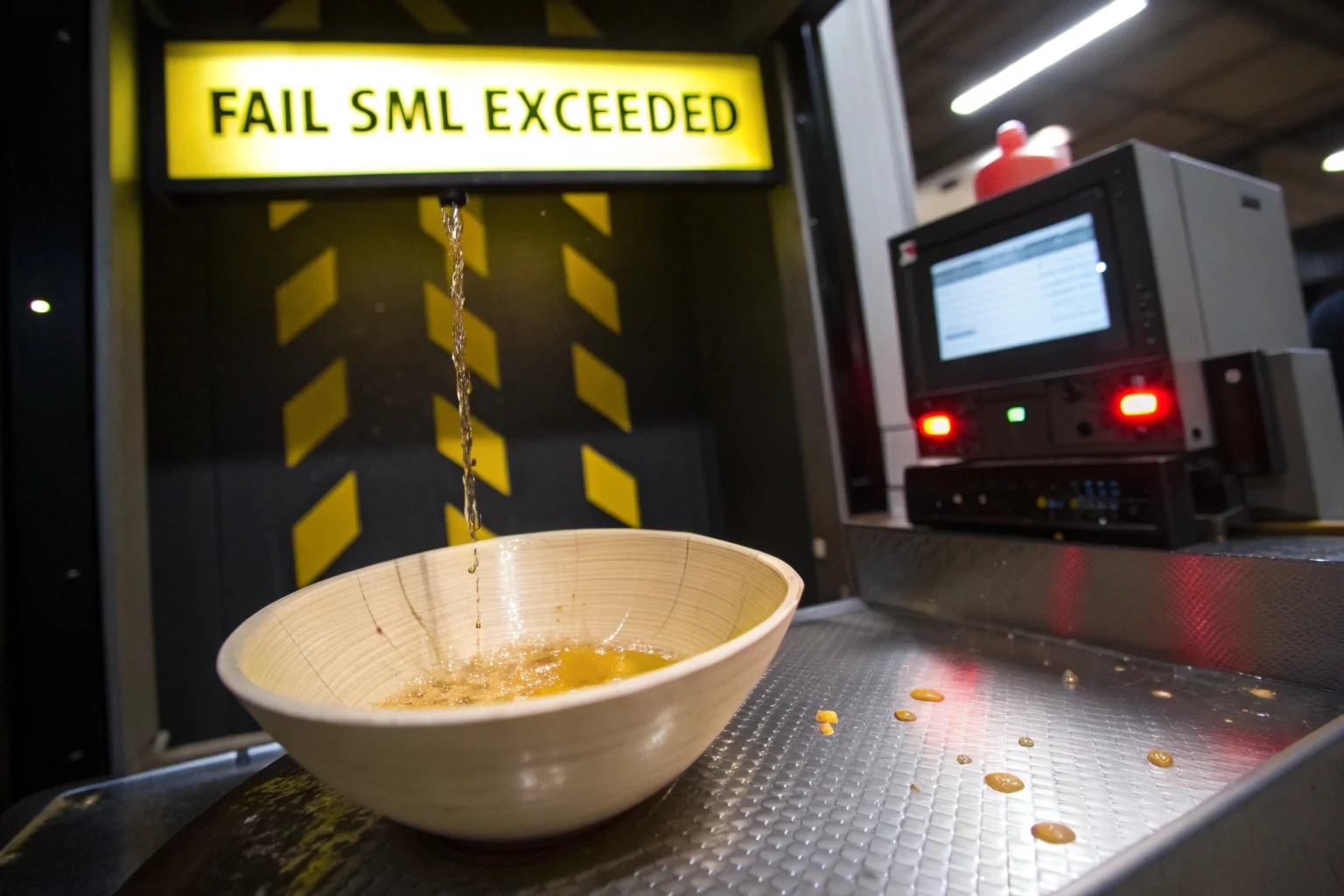
For decades, melamine and bamboo-fiber blends dominated the reusable tableware market. That era is over. The European Union has rigorously tightened regulations on melamine due to the severe health risks associated with formaldehyde and melamine monomer migration under high heat. Passing LFGB testing for melamine now requires flawless raw materials and prolonged curing times, driving up costs and rejection rates.
Furthermore, the EU has enforced a strict ban on bamboo-fiber composite tableware, classifying the bamboo dust as an unauthorized additive in plastics that accelerates formaldehyde release. Brands caught holding this inventory face total product recalls. Sourcing teams are abandoning these risky materials and pivoting to rPET, which contains zero formaldehyde and easily clears stringent EU migration tests.
Bypassing Ceramic Anti-Dumping Duties
A major catalyst for the shift to rPET is happening behind the scenes in global trade. Modern crystallization technology has advanced to the point where rPET can mimic the exact weight, gloss, and acoustic resonance of porcelain. This heavily impacts the traditional ceramic tableware industry.
Currently, EU-based importers are plagued by aggressive anti-dumping duties on ceramic imports from Asia. Compounding this issue, the export tax rebate for ceramics from China has dropped to 0%, obliterating profit margins for buyers. High-temperature rPET tableware offers a direct workaround. By providing the aesthetic appeal of ceramics without the crushing tariffs or heavy freight costs associated with fragile stoneware, rPET is rapidly replacing ceramics in commercial dining and retail shelves.
| Material | EU Compliance Status | Heat Resistance | Breakage Risk | Trade / Tariff Risks |
|---|---|---|---|---|
| rPET (Crystallized) | Highly Compliant (EFSA approved) | Up to 120°C | Very Low (Impact resistant) | Low (Standard plastic tariffs) |
| Melamine | High Risk (Strict migration limits) | Up to 120°C | Low | Moderate |
| Bamboo Fiber | Banned in the EU | N/A | Low | High (Product seizure risk) |
| Ceramic | Compliant | Excellent (>1000°C) | High (Shatters easily) | High (Anti-dumping duties, 0% rebate) |
What sustainability benefits does rPET offer to brands?
Consumers demand eco-friendly products, but empty greenwashing claims fail under regulatory scrutiny. B2B buyers require verifiable environmental metrics backed by traceable manufacturing data.
rPET offers brands a genuine circular economy solution by diverting post-consumer waste from landfills. It requires significantly less energy to manufacture than virgin fossil-based plastics or traditional ceramics, directly lowering the supply chain's overall carbon footprint.
Closed-Loop Manufacturing Life Cycles
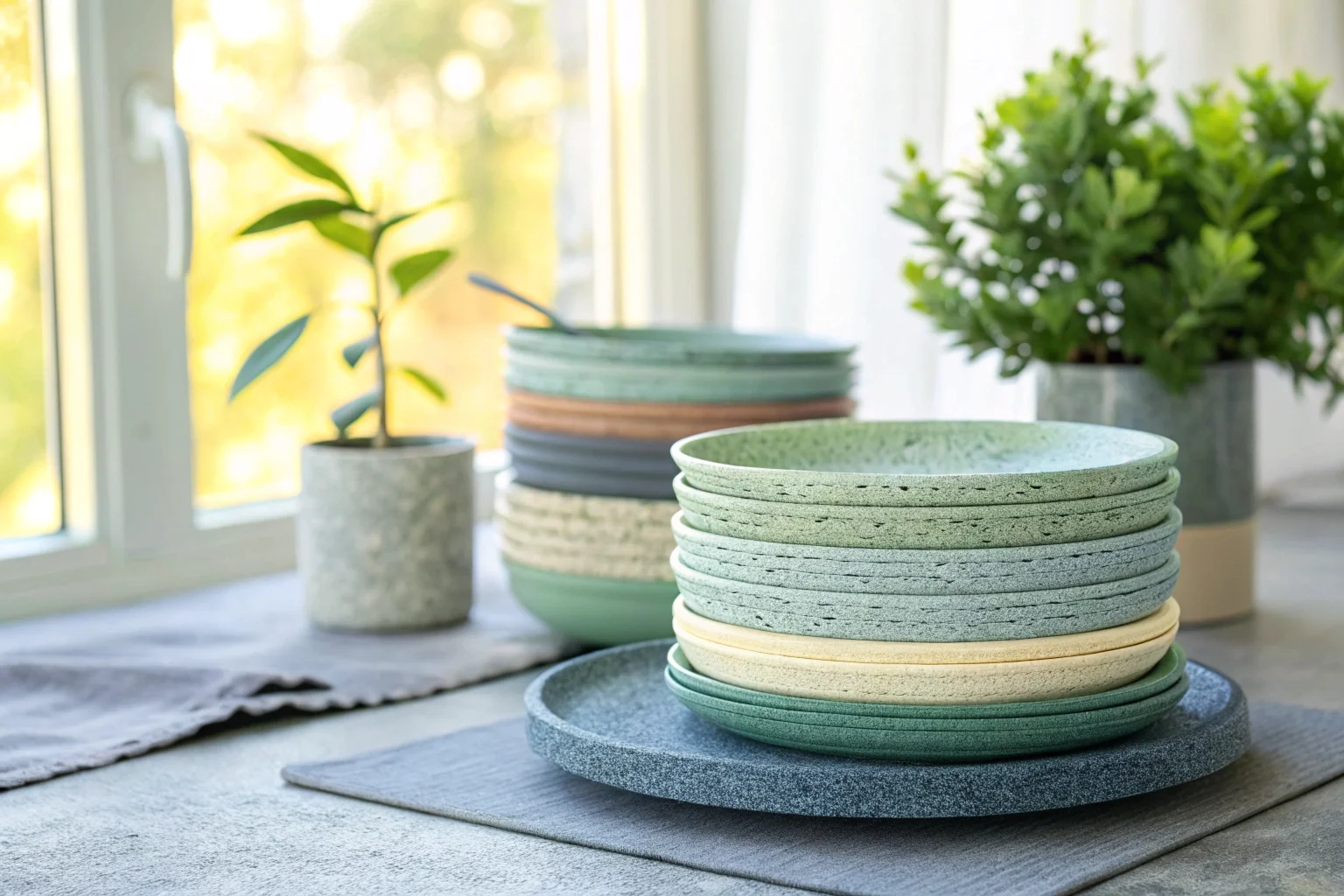
The core sustainability metric of rPET is its ability to decouple production from fossil fuel extraction. By utilizing GRS (Global Recycled Standard) certified post-consumer PET flakes, factories directly remove discarded single-use bottles from the environment. Every ton of rPET tableware produced diverts roughly 30,000 plastic bottles from landfills and oceans. More importantly, unlike thermoset plastics such as melamine—which cannot be melted down and reused once formed—rPET is a thermoplastic. This means at the end of the tableware's long lifespan, it remains 100% recyclable, fulfilling the strict circularity requirements increasingly mandated by European environmental legislation.
Carbon Footprint Reduction on the Factory Floor
Sustainability is also measured in energy consumption. The thermal footprint required to manufacture rPET is a fraction of that needed for traditional materials. Firing ceramic or porcelain tableware requires massive industrial kilns operating at temperatures exceeding 1200°C for hours at a time, consuming vast amounts of natural gas. In contrast, the injection molding process for rPET operates at melting temperatures around 260°C to 280°C. This massive reduction in energy consumption drastically lowers the Scope 3 carbon emissions for brands purchasing these goods, providing them with hard, auditable data to support their corporate sustainability reports.
Material Selection: Assessing Polymer Stability for Reusable Tableware
Buyers often face severe issues when tableware warps, cracks, or degrades after a few weeks of use. Repeated exposure to industrial dishwashing machines breaks down weak polymer chains. This leads to micro-cracking, surface degradation, and ultimately, failed chemical migration limits. Choosing materials with high structural integrity—such as optimized Polypropylene (PP) or crystallized Polylactic Acid (PLA)—ensures long-term compliance and robust durability under heavy commercial stress.
When selecting food-contact materials, focus primarily on polymer crystallinity and thermal resistance. High-density molecular structures prevent chemical leaching under heat, ensuring the tableware survives repeated industrial dishwashing cycles while maintaining strict structural stability.
The Role of Crystallinity in rPET and PLA
Polymer performance depends heavily on its internal molecular structure. Standard PLA is amorphous. It begins to soften at around 55°C to 60°C. This makes it useless for hot food or commercial dishwashers. To fix this, manufacturers use an annealing process in the mold. By controlling the cooling rate, we force the polymer chains to arrange into a highly ordered, crystalline structure. Crystallized PLA (CPLA) can withstand temperatures up to 90°C without losing its shape.
Similarly, recycled PET (rPET) requires strict control over its intrinsic viscosity. When PET is recycled, its polymer chains break down, lowering its molecular weight. We must ensure the rPET resin undergoes solid-state polycondensation (SSP). This process rebuilds the molecular weight and increases the material's structural density. Tableware made from high-viscosity rPET resists impact damage and prevents liquid absorption.
Thermal Resistance and Dishwasher Durability
Thermal resistance dictates a product's lifecycle. Polypropylene (PP) naturally offers excellent heat resistance, routinely handling continuous exposure to temperatures above 100°C. However, standard PP can become brittle at freezing temperatures. We often blend specific impact modifiers into the PP matrix to balance high-heat tolerance with cold-weather impact strength.
Durability in dishwashers involves resisting both heat and harsh alkaline detergents. Polyamide and melamine historically dominated this space, but regulatory scrutiny on formaldehyde migration has forced shifts toward safer alternatives. Optimized PP and durable bio-composites now fill this gap. They resist hydrolysis—the chemical breakdown of polymers due to water exposure at high temperatures. By keeping water molecules from penetrating the polymer matrix, we prevent internal degradation and extend the lifespan of the reusable tableware.
Customs rejections due to failed laboratory tests are a constant threat in international trade. A single spike of heavy metals or unauthorized monomers above regulatory limits will cause entire shipments to be quarantined or destroyed. Understanding the exact testing parameters and using highly purified raw materials is the only reliable way to guarantee consistently passing scores under demanding LFGB, EU EC 1935/2004, and FDA standards.
Food safety compliance relies on stringent laboratory testing using food simulants like acetic acid and ethanol. Manufacturers must strictly control both the Overall Migration Limit (OML) and the Specific Migration Limit (SML) to verify that no harmful compounds transfer into food under elevated heat or acidic conditions.
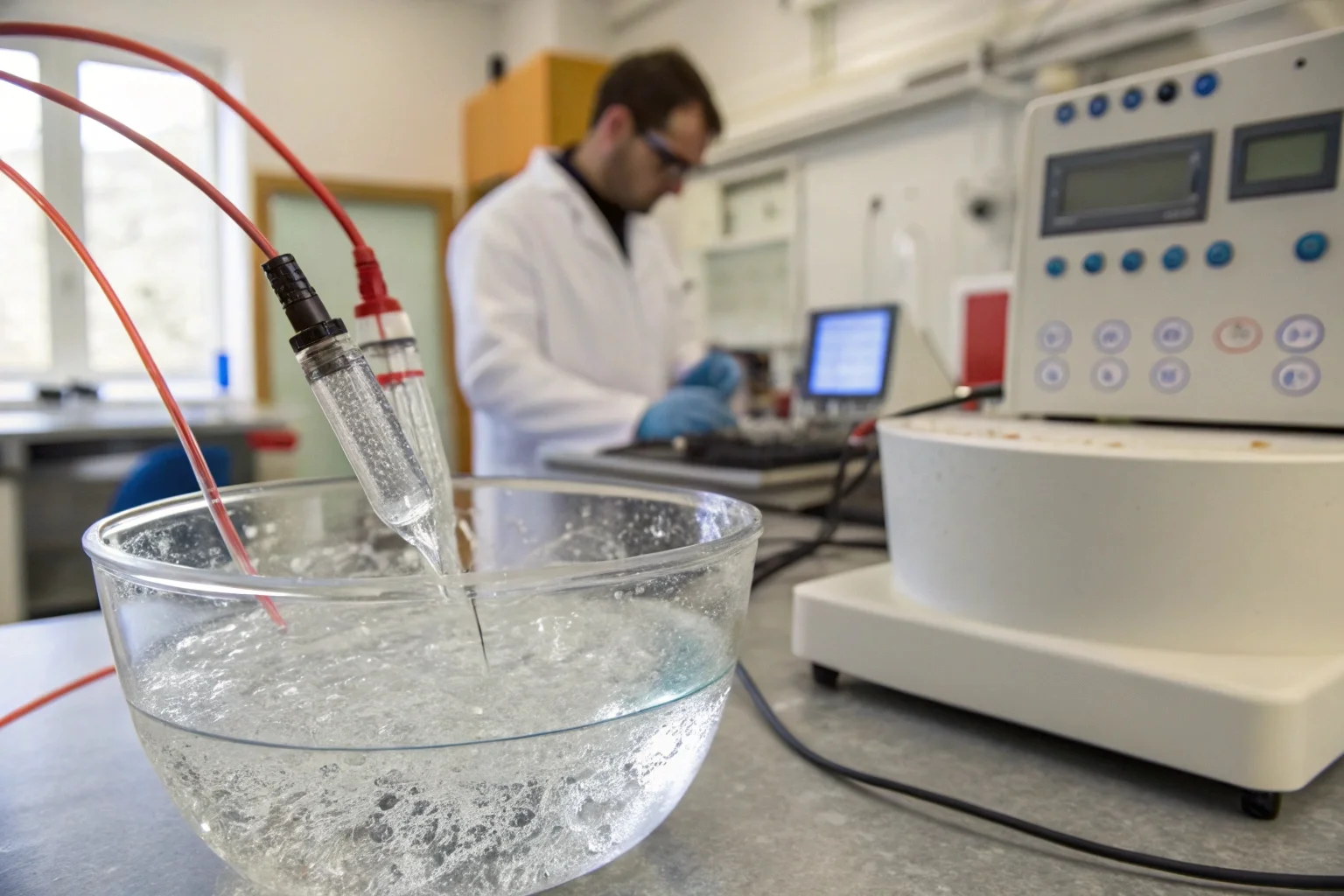
Overall Migration Limit (OML) vs. Specific Migration Limit (SML)
Migration testing measures how much material transfers from the plastic into the food. The Overall Migration Limit (OML) evaluates the total mass of non-volatile substances released. Under European regulations (EU No 10/2011), the strict limit is 10 milligrams of total released substance per square decimeter of surface area (10 mg/dm²). Passing OML proves the overall chemical stability of the plastic matrix.
The Specific Migration Limit (SML) is far more targeted. It tests for precise toxicological hazards. For instance, if manufacturing PET, we test for antimony. If processing certain bio-plastics, we test for heavy metals or specific residual monomers. Failing an SML test means a specific chemical bond in the polymer chain broke down during processing. We control SML risks by using medical-grade or premium food-grade virgin resins and strictly controlling extrusion temperatures to prevent thermal degradation of the raw material.
| Regulation Standard | Focus Area | Key Testing Simulants | Permitted Migration Limit Example |
|---|---|---|---|
| EU EC 1935/2004 | General safety, no taste/odor change | Varies based on plastic type | N/A (General framework) |
| EU No 10/2011 | Plastics specific, OML & SML | 3% Acetic Acid, 10% Ethanol | OML: max 10 mg/dm² |
| German LFGB | Highly stringent chemical safety | 3% Acetic Acid, Olive Oil | Strict SML for heavy metals |
| FDA 21 CFR 177 | Polymer extraction limits | Distilled water, n-Heptane | Varies by polymer (e.g., PP, PET) |
Simulants Used in Laboratory Testing
Laboratories do not test tableware with real food. They use chemical simulants that aggressively mimic different food types. Simulant A (10% ethanol) represents aqueous foods. Simulant B (3% acetic acid) mimics highly acidic foods like tomatoes or citrus. Simulant D2 (vegetable oil) replicates fatty foods.
For reusable tableware, products undergo testing in three successive phases. The lab exposes the same plate to the simulant three separate times. The results from the third test dictate compliance. This proves the product does not start leaching chemicals after the outer surface layer wears down. If injection molding temperatures are too high during production, polymer chains break, and the third migration test will expose these loose monomers.
Manufacturing Tolerances and Production Scalability
Scaling from a prototype to mass production often introduces unexpected defects. Inconsistent molding temperatures cause sink marks, uneven cooling rates, and hidden structural weaknesses that inevitably fail mechanical drop tests. Maintaining strict control over primary injection parameters and mold design ensures every production batch perfectly matches the certified golden sample.
Reliable mass production demands exact control over injection molding pressures, barrel temperatures, and mold cooling rates. Maintaining tight tolerances prevents dimensional warping and guarantees consistent material density across hundreds of thousands of production cycles.
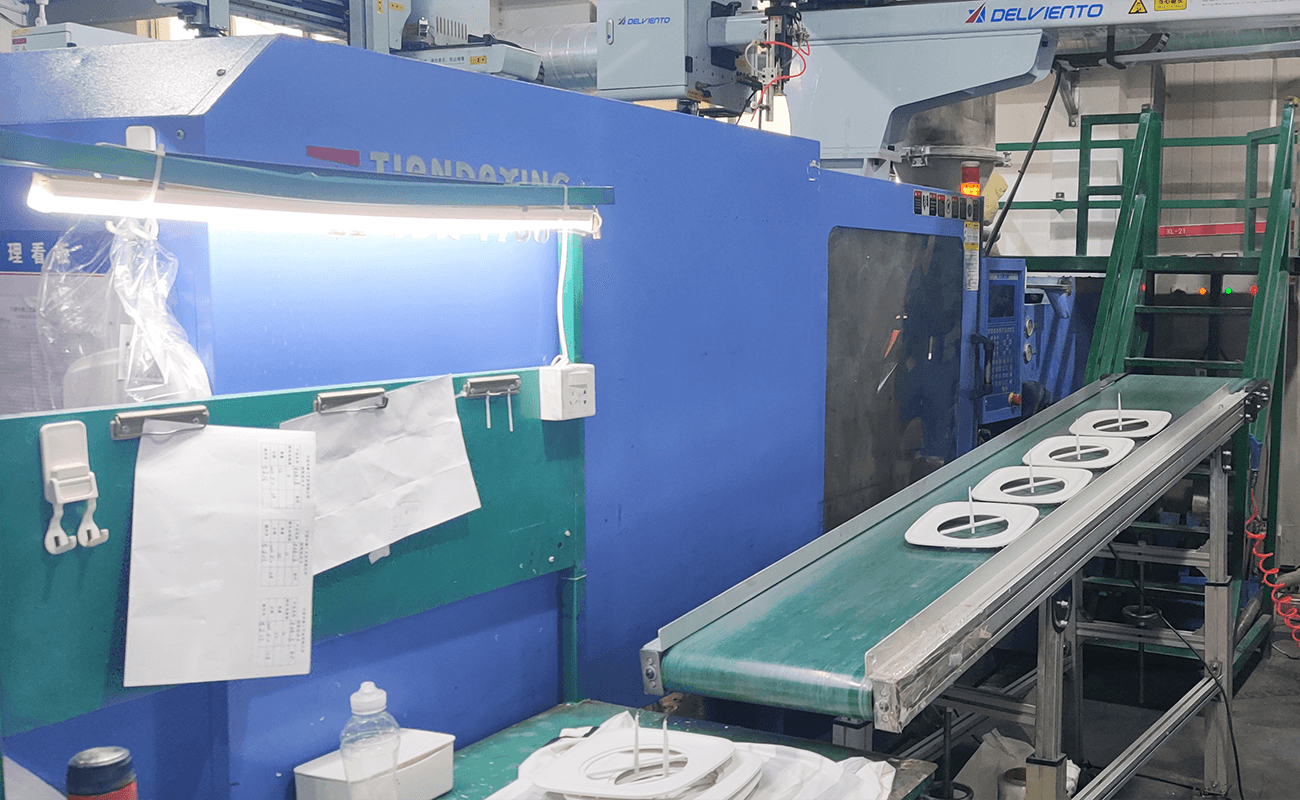
Injection Molding Pressure and Cycle Times
Producing structurally sound tableware requires mastering shear stress and packing pressure. When molten plastic flows into a mold, it experiences intense friction. If the injection speed is too fast, the friction generates excessive shear heat, degrading the polymer. This thermal degradation leads to brittle plates that shatter upon impact.
We utilize specific packing pressures to force extra material into the mold cavity as the plastic cools and shrinks. This eliminates internal voids and prevents surface sink marks. Cycle times must be optimized down to the second. Rushing the cooling phase forces the ejection of a soft product, leading to severe dimensional warping. A stable cycle time ensures the polymer matrix solidifies evenly, locking in the physical strength required for high-volume commercial use.
Quality Control Across High-Volume Batches
Quality control in mass manufacturing goes far beyond visual inspection. We implement inline automated weight checks. A drop in product weight indicates a short shot—meaning the mold did not fill completely. An increase in weight signals flash, where excess plastic escaped the mold cavity. Both scenarios indicate pressure instability in the injection machine.
We pull samples from the production line every hour for mechanical stress testing. This includes drop tests from fixed heights onto concrete floors to verify impact resistance. We also conduct thermal shock tests, moving plates rapidly from sub-zero freezers into boiling water. This verifies the polymer can handle extreme temperature shifts without cracking. By linking these physical tests to specific machine data logs, we trace any structural failure back to a specific barrel temperature or pressure drop, ensuring immediate correction on the factory floor.
Validating food-grade tableware requires strict adherence to polymer science and global migration limits. By controlling material crystallinity, injection molding parameters, and rigorous testing against EU and FDA standards, manufacturers ensure reusable plastics and bio-based alternatives remain safe, durable, and structurally intact over their intended lifecycle.